Discover the most moving Palm Sunday quotes from Jesus that will strengthen your faith. Perfect for church, reflection & sharing. Save these Easter season verses now!
Most Palm Sunday content leads with the triumph. The waving palms, the crowd, the donkey. It’s beautiful, and it’s real. But there’s one detail in Luke 19 that quietly gets skipped over in the holiday rush — Jesus wept.
Not at the cross. Not in Gethsemane. He wept on the road into Jerusalem while people were still cheering around him. That single detail changes the emotional texture of the entire day. He could see what was coming. He could see what had already been missed. And he rode in anyway.
That’s what Palm Sunday actually holds — joy and grief braided together, a king arriving not in armor but in a love that knew its own cost. If your faith has ever felt like that — hopeful and heavy at the same time — these words from Jesus aren’t just history. They’re address.
When Praise Costs You Something
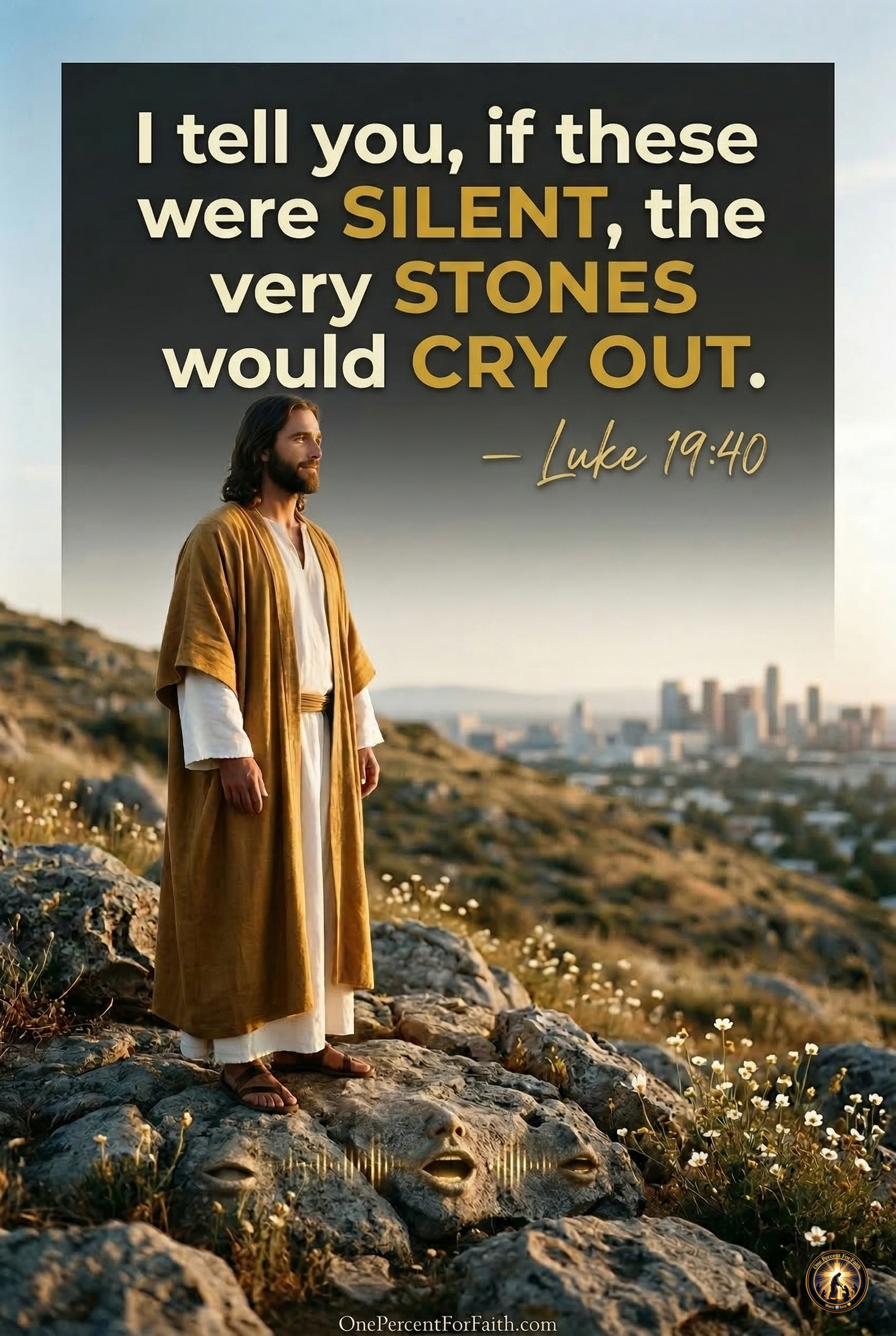
“I tell you, if these were silent, the very stones would cry out.” — Luke 19:40
The Pharisees wanted the crowd quieted. Jesus said no — not with a sermon, but with this single image: if the people stopped, the stones themselves would start shouting.
There’s something important here. When God moves, the created order responds. Jesus wasn’t embarrassed by the crowd’s noise. He endorsed it. If you’ve ever felt self-conscious about how much you believe, how loudly your faith shows, how emotional you get in worship — this verse is talking directly to you.
Praise isn’t performance. Sometimes it’s just what happens when you can’t contain what you know. You’ve been there. Maybe not with a palm branch, but close enough.
The Grain That Has to Fall First
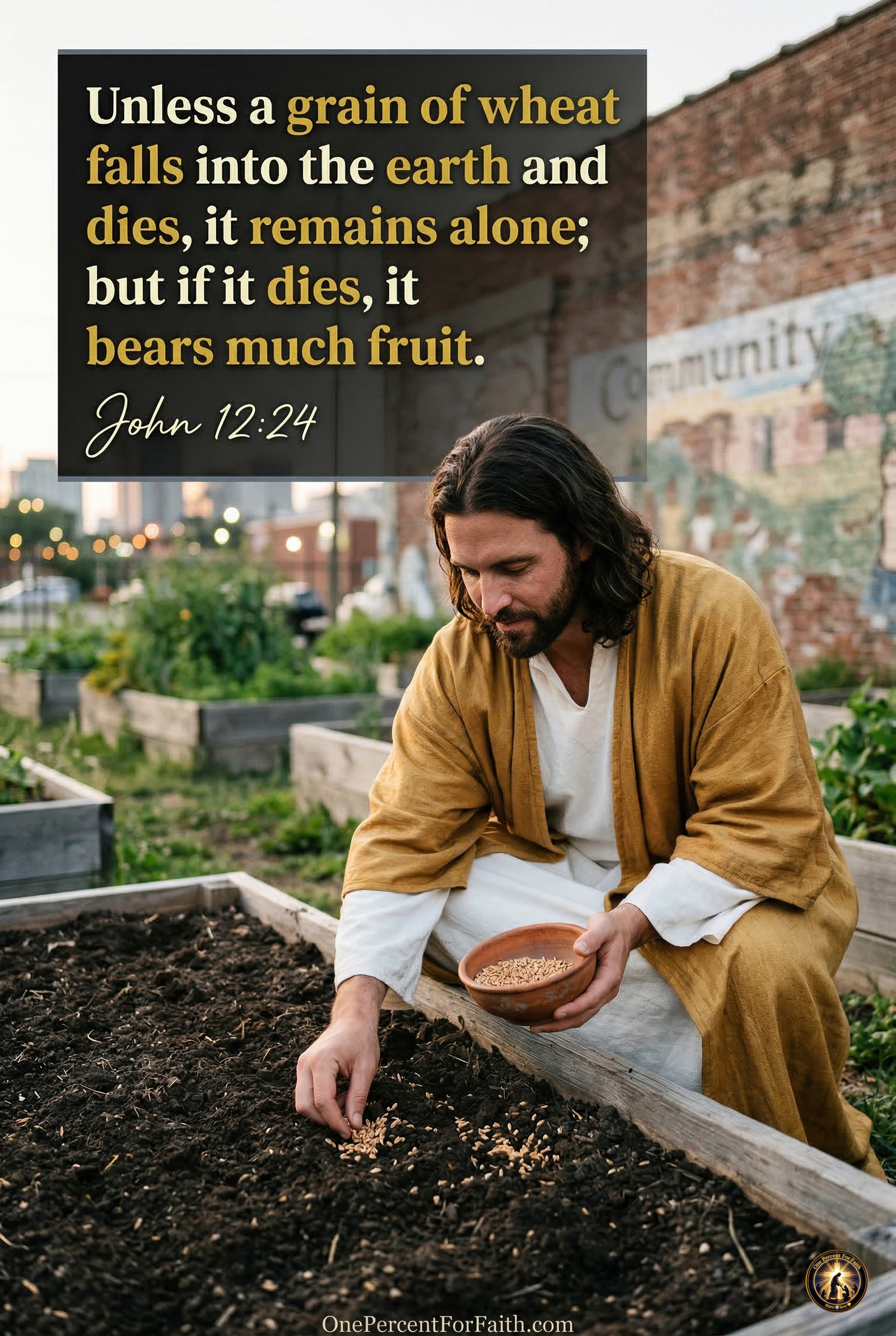
“Unless a grain of wheat falls into the earth and dies, it remains alone; but if it dies, it bears much fruit.” — John 12:24
Jesus said this while people were still cheering. While they were projecting their own expectations of a military deliverer onto him. He told them that what was coming — what would look like total defeat — was actually the mechanism of everything.
The grain doesn’t produce fruit by staying whole. It produces fruit by being buried. That’s not motivational reframing. That’s how transformation actually works, confirmed by both agriculture and human experience.
Whatever you feel like you’re losing right now — a version of yourself, a plan you were certain God endorsed, a relationship you couldn’t hold together — this verse asks you to sit with the possibility that burial isn’t the end of your story. It might be the hinge.
The Honest God
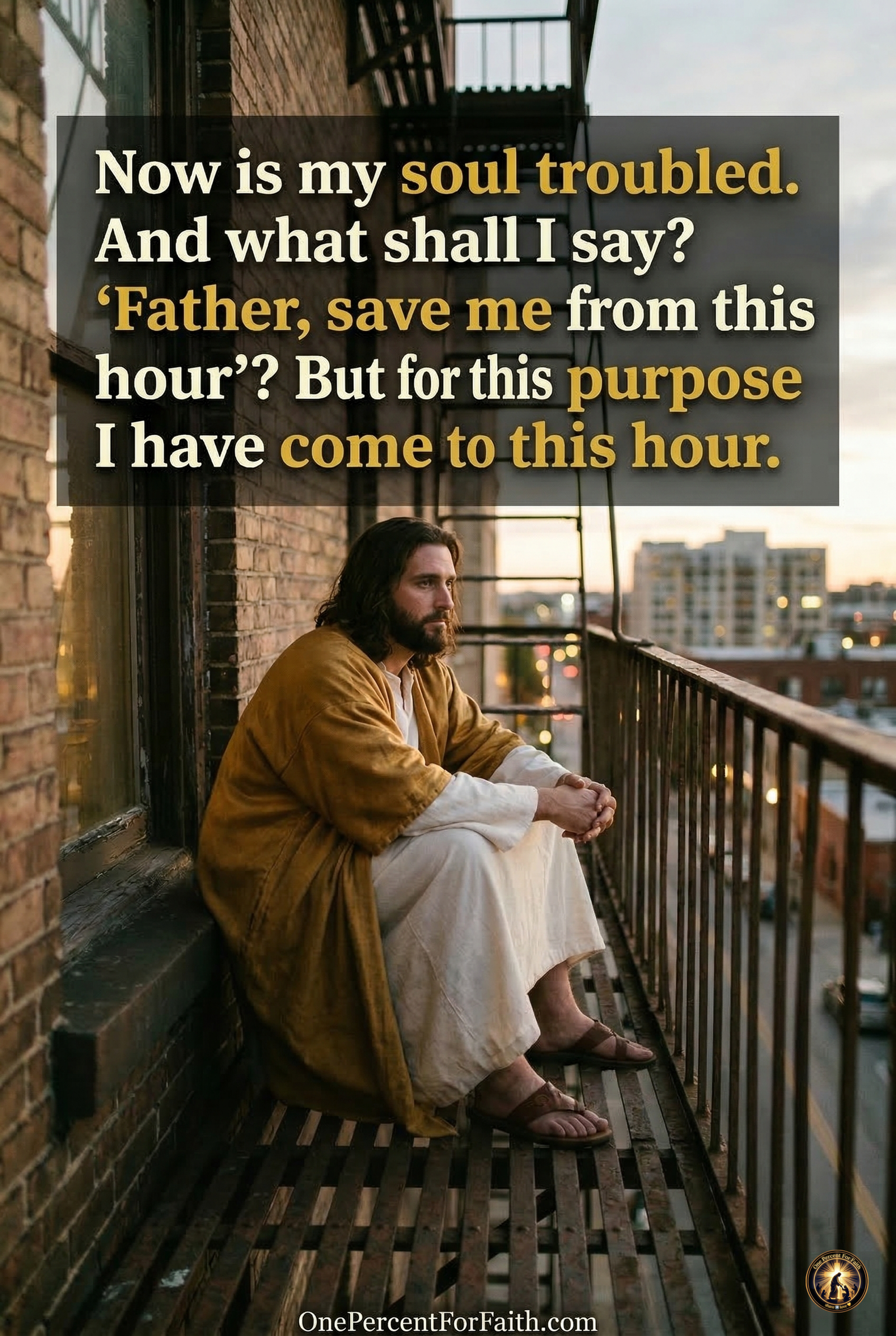
“Now is my soul troubled. And what shall I say? ‘Father, save me from this hour’? But for this purpose I have come to this hour.” — John 12:27
Jesus didn’t suppress what he felt. He said it out loud — my soul is troubled — and then immediately said he wasn’t asking to be rescued from it. That’s not resignation. That’s someone choosing to stay inside a hard thing because the meaning is inseparable from the difficulty.
When your soul is troubled — and it will be, maybe right now — you are not outside of what Jesus understood. You’re inside it. The question isn’t whether to feel it. The question is whether the purpose holds anyway.
This is one of the most honest things Jesus ever said, and it gets skipped constantly because it’s harder to put on a banner than the triumphant stuff.
The Magnetic Pull of a Different Kind of Power
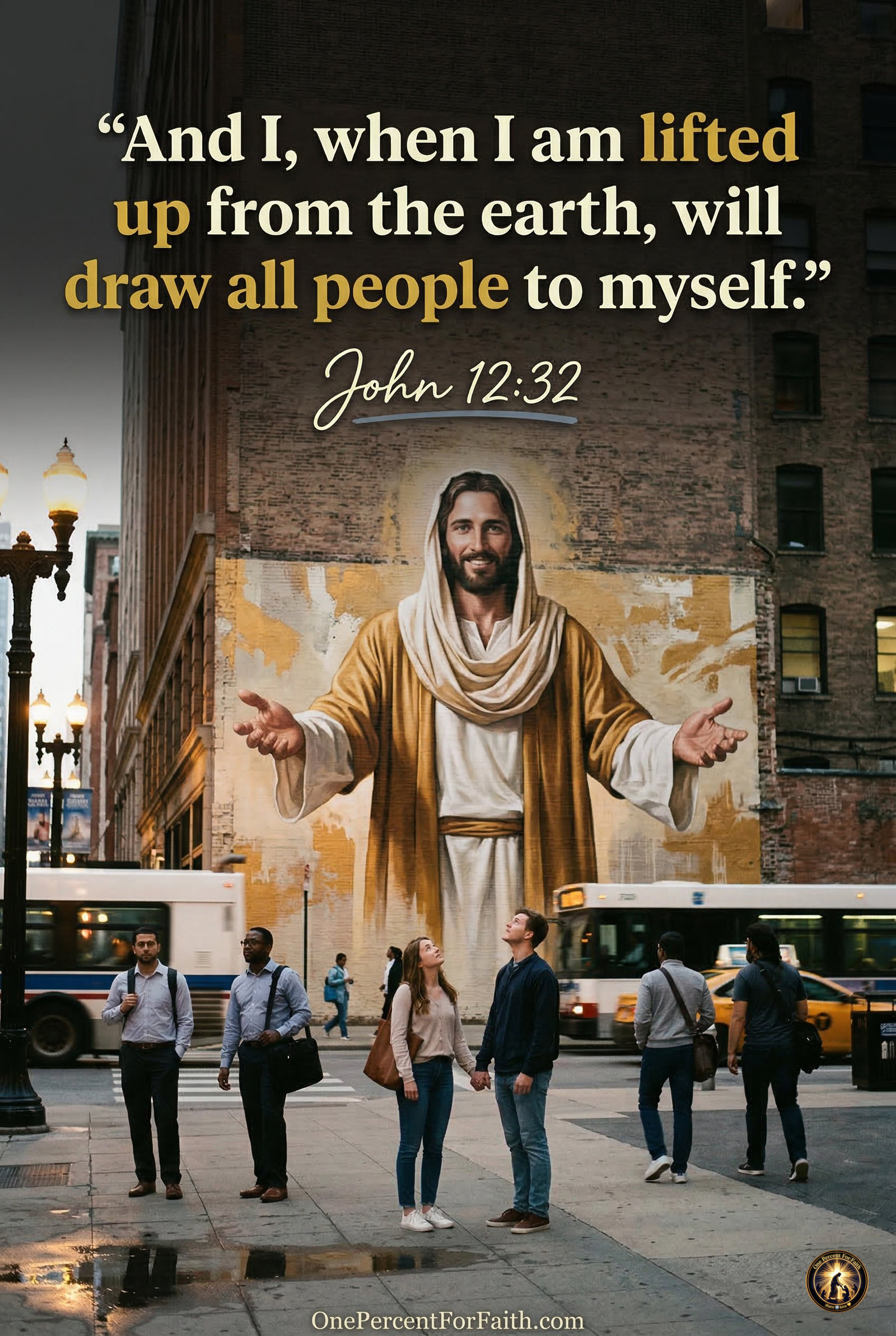
“And I, when I am lifted up from the earth, will draw all people to myself.” — John 12:32
Jesus said this about the cross before the cross happened. When he was lifted up — meaning crucified — he would pull all people toward him.
That’s a strange kind of gravity. Not power that pushes people into compliance. Power that draws. There’s a real difference. Every leader who wanted Jesus silenced operated on push energy: control, manage, suppress. Jesus described pull energy: be lifted, and watch what happens.
If your faith feels too quiet or too small to matter, here’s what this verse is actually saying — the thing that looks like defeat is often what moves people most. You don’t have to manufacture reach. You have to live honestly. The rest finds its own momentum.
For the Ones Living in the Fog
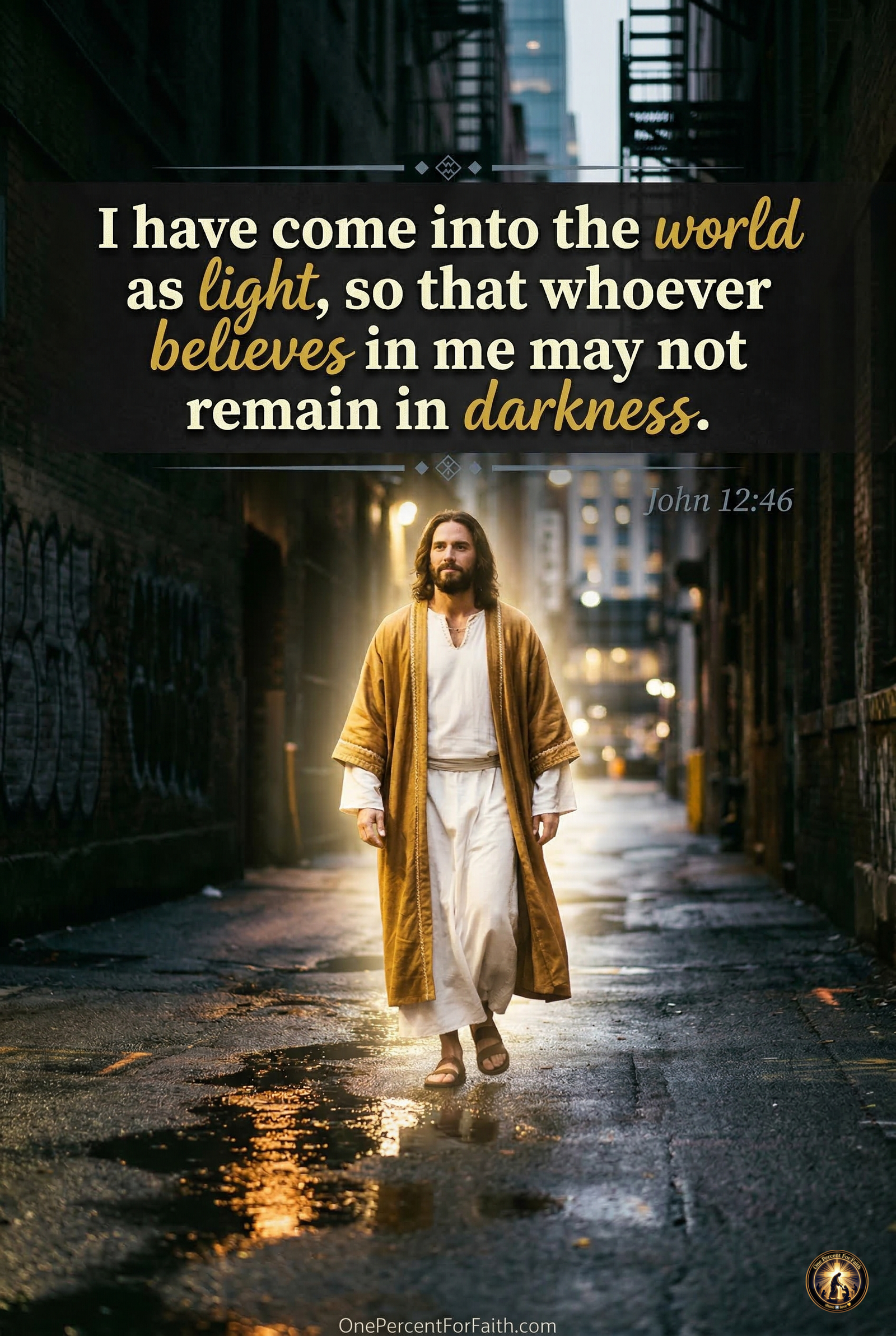
“I have come into the world as light, so that whoever believes in me may not remain in darkness.” — John 12:46
Jesus didn’t say he came to explain the darkness or manage it. He came as light. And the word that matters here is remain — implying you might pass through dark seasons. You might spend real time there. That’s not failure. But staying there, losing your bearings, accepting fog as permanent — that’s what the light addresses.
If Palm Sunday feels too triumphant to meet you where you actually are right now, this verse is specifically for you. Jesus arrived as light into a crowd that didn’t fully understand what it was cheering for. He arrived anyway. The light doesn’t wait for you to have it figured out first.
What the Crowd Knew Without Knowing
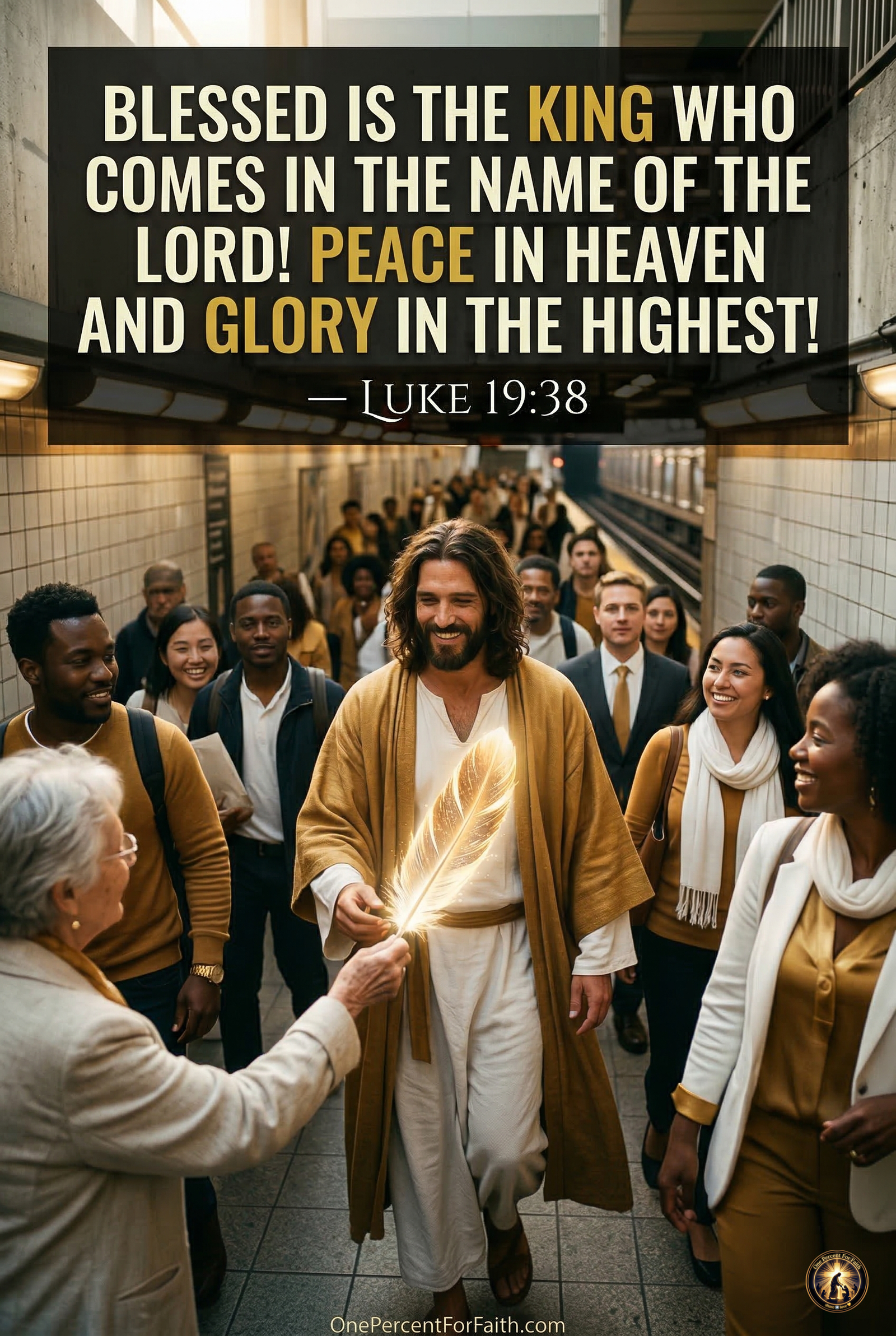
“Blessed is the King who comes in the name of the Lord! Peace in heaven and glory in the highest!” — Luke 19:38
The crowd was quoting Psalm 118, probably half-instinctively, caught up in the moment. They were more right than they realized. They didn’t have a complete theology. They just responded to what they perceived, and their spirits moved before their minds caught up.
You don’t always need a complete theology to respond correctly to what God is doing. Sometimes recognition happens before comprehension. If you’ve ever felt something shift in worship before you could explain it, you understand what this verse is describing. Don’t underestimate the faith that precedes explanation. It counted that day. It counts now.
When Jesus Cleared the Temple Right After the Parade
“It is written, ‘My house shall be called a house of prayer,’ but you make it a den of robbers.” — Matthew 21:13
Immediately after the Palm Sunday entrance, Jesus walked into the temple and turned over tables. He wasn’t having a bad moment. He was drawing a line.
The space meant for genuine encounter with God had been filled with noise, commerce, and convenience. He reclaimed it. The same love that wept over Jerusalem had edges.
If the interior life of your faith has gotten cluttered — with performance, with busyness, with things that crowd out real prayer — this isn’t a threat. It’s an invitation. The clearing isn’t punishment. It’s restoration.
The Most Uncomfortable Prayer Instruction He Ever Gave
“Whatever you ask in prayer, believe that you have received it, and it will be yours.” — Mark 11:24
Jesus said this the morning after Palm Sunday. And it’s been quietly misread — or quietly avoided — for centuries because it doesn’t always match our experience.
Believe that you have received it. Past tense. Before the evidence shows up.
This isn’t a formula for magical thinking. It’s a description of the posture faith takes before the outcome is visible. Not certainty without questions — commitment without the emergency exit. You’re choosing to live as if the relationship is real, the promises are true, and the answer is already in motion. That’s terrifying before it’s freeing. Jesus didn’t say it would feel comfortable. He said it works.
When Your Faith Looks Too Small to Count
“Have you never read, ‘Out of the mouth of infants and nursing babies you have prepared praise’?” — Matthew 21:16
The religious leaders were irritated by children shouting in the temple. Jesus quoted a psalm back at them. The implication is pointed: sometimes the people least expected to understand something are the ones who see it clearest.
Children weren’t theological authorities. They were just responding to what they perceived. And Jesus said: yes, exactly. That.
If your faith feels underdeveloped compared to people who’ve been believers longer, who read more theology, who seem more certain — this verse is a quiet recalibration. God receives praise from the simplest, least polished sources. Your faith doesn’t have to be sophisticated to be real. It just has to be honest.
The Grief Underneath the Triumph
“Would that you, even you, had known on this day the things that make for peace!” — Luke 19:42
This is where Jesus wept over Jerusalem. Not because the crowd was too loud. He was grieving over what was about to be missed — the shalom, the wholeness, the deep integration of things being right that was being offered and wouldn’t be taken.
He didn’t lecture the city. He lamented for it.
If you’ve ever stood at a threshold in your own life — a season where something was available and you didn’t take it, or couldn’t — this verse holds that grief without condemning it. Your missed moments are not outside his awareness. He sees what could have been, and he still rides in.
Not the Absence of Question — The Presence of Trust
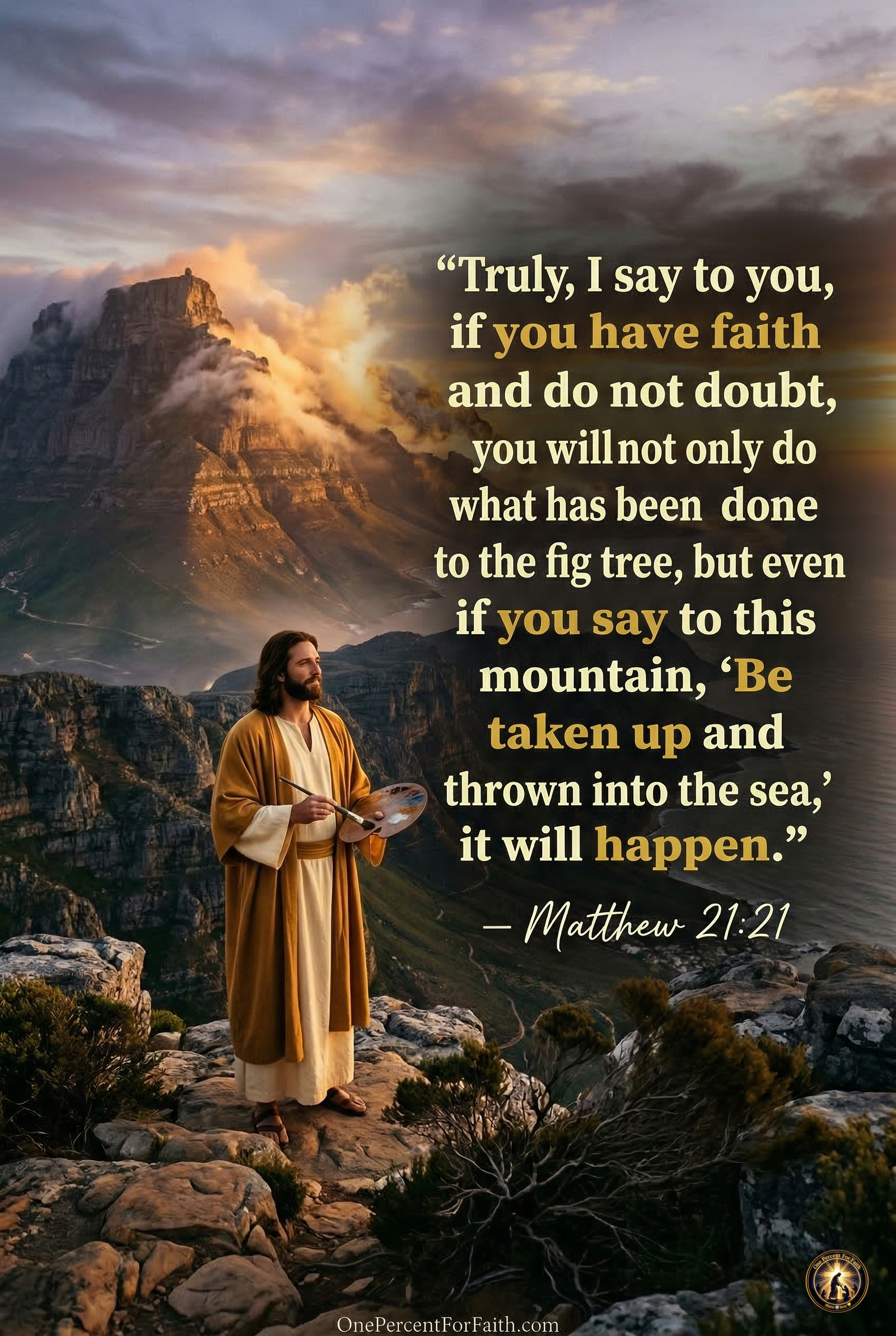
“Truly, I say to you, if you have faith and do not doubt, you will not only do what has been done to the fig tree, but even if you say to this mountain, ‘Be taken up and thrown into the sea,’ it will happen.” — Matthew 21:21
This verse has been used against struggling believers for generations. But the Greek word translated as doubt here describes a divided heart — someone standing with one foot in and one foot out. It’s not about intellectual certainty. It’s about full commitment.
The invitation isn’t to stop asking hard questions. It’s to stop holding your faith in reserve — keeping that quiet emergency exit open just in case God doesn’t come through.
Full trust looks foolish before outcomes are visible. Jesus didn’t say it would feel safe. He said it moves mountains.
You’re Not Just Following a Man
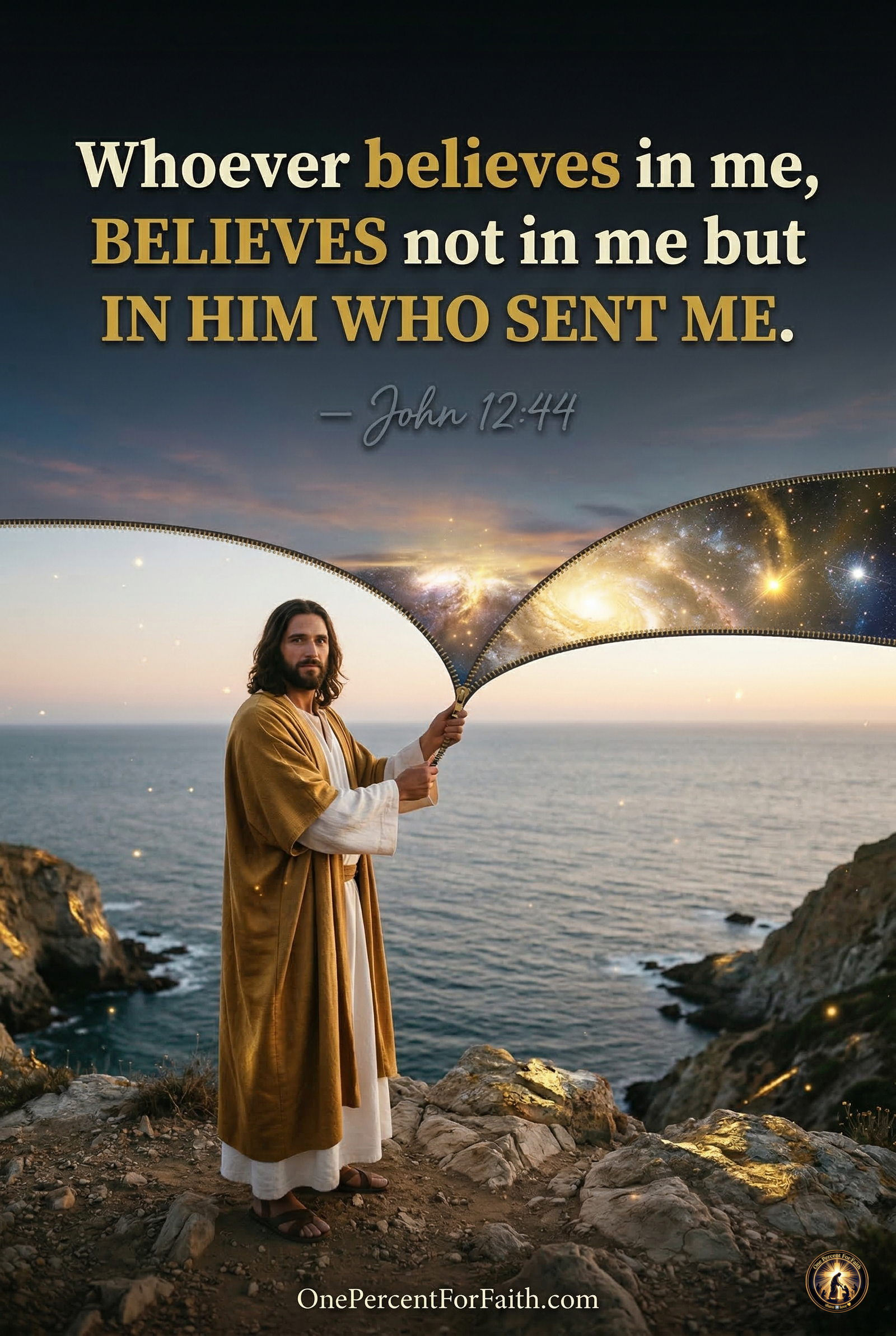
“Whoever believes in me, believes not in me but in him who sent me.” — John 12:44
On Palm Sunday, some people saw a prophet. Some saw a political threat. Some saw a wonder-worker. Jesus clarified: believing in him was an entry point into something larger than him alone — a connection back to the Father who sent him.
Your faith isn’t a personal relationship with a religious idea. It’s a thread that runs back further than you can trace. When Palm Sunday feels like just a church service, just a date, just tradition — this verse pushes back. You’re not commemorating a parade. You’re orienting yourself toward the source.
What Stays After the Palms Are Down
The week starts with crowds and noise and a king who doesn’t match anyone’s expectations. It ends somewhere most people don’t want to look at yet.
But that arc — from celebration to suffering to what comes after — is the shape of the Christian story. And honestly, the shape of a lot of human lives. You’ve probably lived a version of it. Something that looked like a beginning that turned complicated before it became clear.
These words weren’t spoken from a safe distance. Jesus said them inside the week, inside the tension, knowing what was coming. That’s why they carry weight — not because they’re uplifting quotations, but because they came from someone who meant every word with full knowledge of what it cost.
Palm Sunday doesn’t ask you to feel triumphant. It asks you to pay attention.
FAQs
Why does Palm Sunday matter when Easter gets all the attention?
Palm Sunday sets the emotional stakes for everything that follows. Easter is the resolution, but Palm Sunday is where you understand what that resolution cost. Without it, the resurrection can feel like a fact to accept rather than a story to be changed by. The arc matters because the week matters.
Is it okay to feel sad or spiritually conflicted on Palm Sunday?
Yes, completely. Jesus wept on Palm Sunday. If he held grief and joy simultaneously on the same road into Jerusalem, you’re not doing anything wrong by feeling both. This is not a one-note holiday. It was always emotionally complex, which is part of why his words still land so personally today.
How do I actually use these verses in my daily life, not just during Holy Week?
The most honest answer: let them disrupt your assumptions before you try to apply them. John 12:24 disrupts the idea that preservation is the goal. Mark 11:24 disrupts how you hold unanswered prayer. Luke 19:42 disrupts the impulse to avoid your own grief. These verses work best when read slowly, not when immediately converted into action steps.
What did Jesus mean when he said stones would cry out?
He was responding to religious gatekeeping — the idea that worship needed to be managed or silenced for the sake of order. His point was that genuine response to God’s presence can’t be permanently suppressed. Creation itself would respond. If you’ve ever been told your emotional or expressive faith was too much, this verse is worth sitting with for longer than one reading.
Why did Jesus weep over Jerusalem on one of his most triumphant days?
Because he could see what the crowd couldn’t. He wasn’t grieving the parade — he was grieving a city on the verge of missing what was being offered. He used the word “peace,” shalom, wholeness. His grief was about people standing at the edge of something life-changing and about to walk past it. Most of us understand that kind of grief in some form.
Are all of these quotes actually from Palm Sunday week, or are some from other parts of Jesus’s ministry?
Most of the John 12 verses were spoken during the Palm Sunday events specifically — as Jesus entered Jerusalem and addressed both the crowds and his followers. Others, like Mark 11:24 and Matthew 21:21, were said during that same week as he taught following his entrance into the city. Reading them together gives you a picture of what Jesus was communicating in the narrow days between arrival and crucifixion — things he needed to say while there was still time to say them.