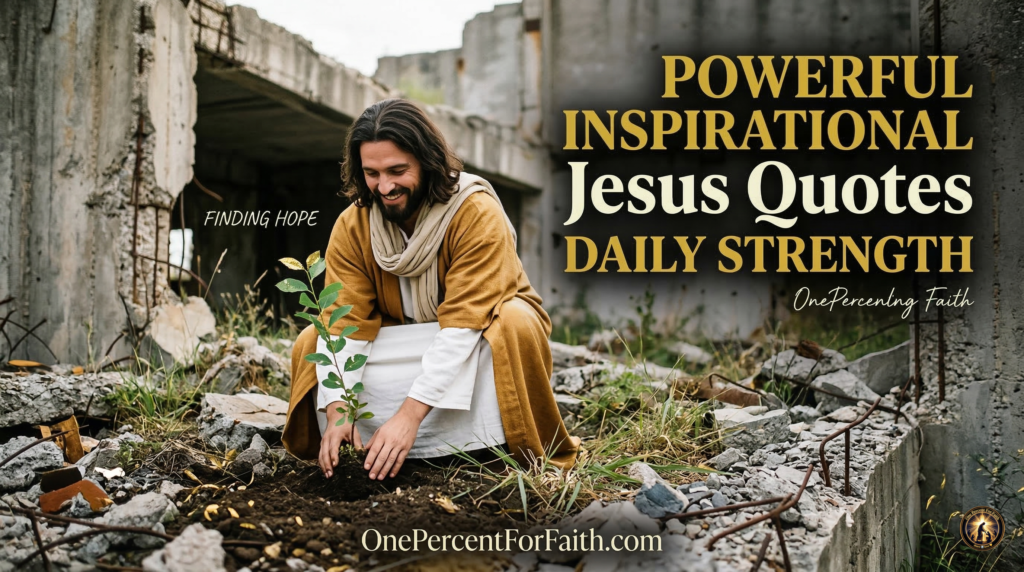
Find the most powerful short Jesus quotes for peace, strength & hope. Perfect for your daily devotional or sharing. Save these today!
Nobody tells you this, but grief doesn’t always arrive loud. Sometimes it shows up as a Tuesday afternoon where everything technically fine, and yet something inside you is quietly exhausted. You’re not broken. You’re just carrying more than people can see.
On those days, long sermons don’t land. Devotionals with seven steps don’t stick. What actually reaches you — what cuts through the fog — is a sentence. A short, quiet, true sentence from someone who knew what sorrow felt like from the inside.
Jesus didn’t always speak in paragraphs. Some of his most enduring words were short enough to fit on a sticky note. And somehow, those are the ones that survive the chaos of an ordinary hard day.
“Peace I leave with you.”
(John 14:27)
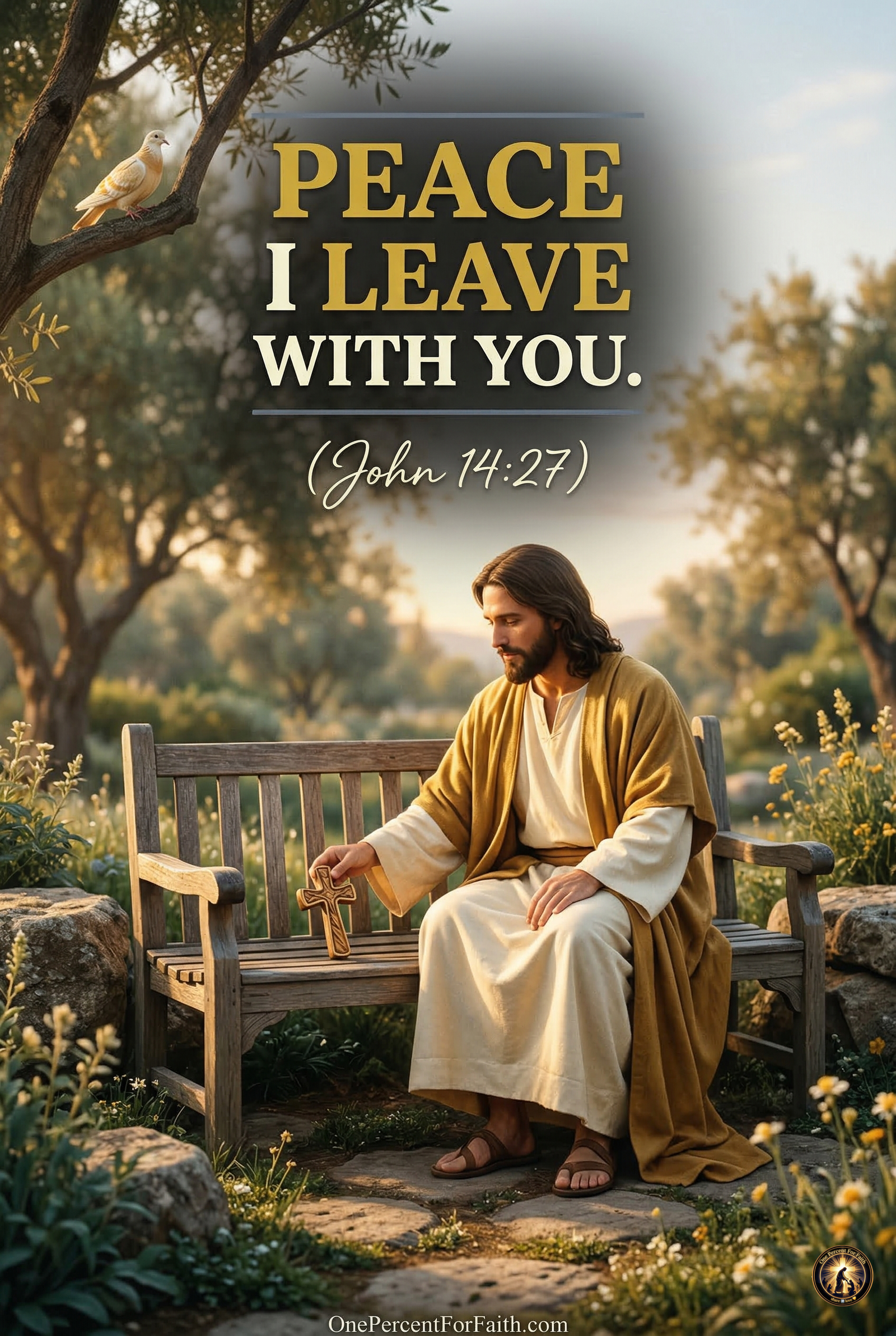
He said this the night before his death. Think about that. The night before everything went wrong, he was handing peace to someone else. Not promising it eventually. Handing it over like a physical thing.
When your day has gone sideways — the diagnosis, the argument, the silence from someone who should’ve called — this verse isn’t asking you to manufacture calm. It’s telling you that peace already belongs to you. It was left here. You don’t earn it. You receive it. That’s a different posture entirely, and it matters more than most people admit.
“I Am With You Always.”
(Matthew 28:20)
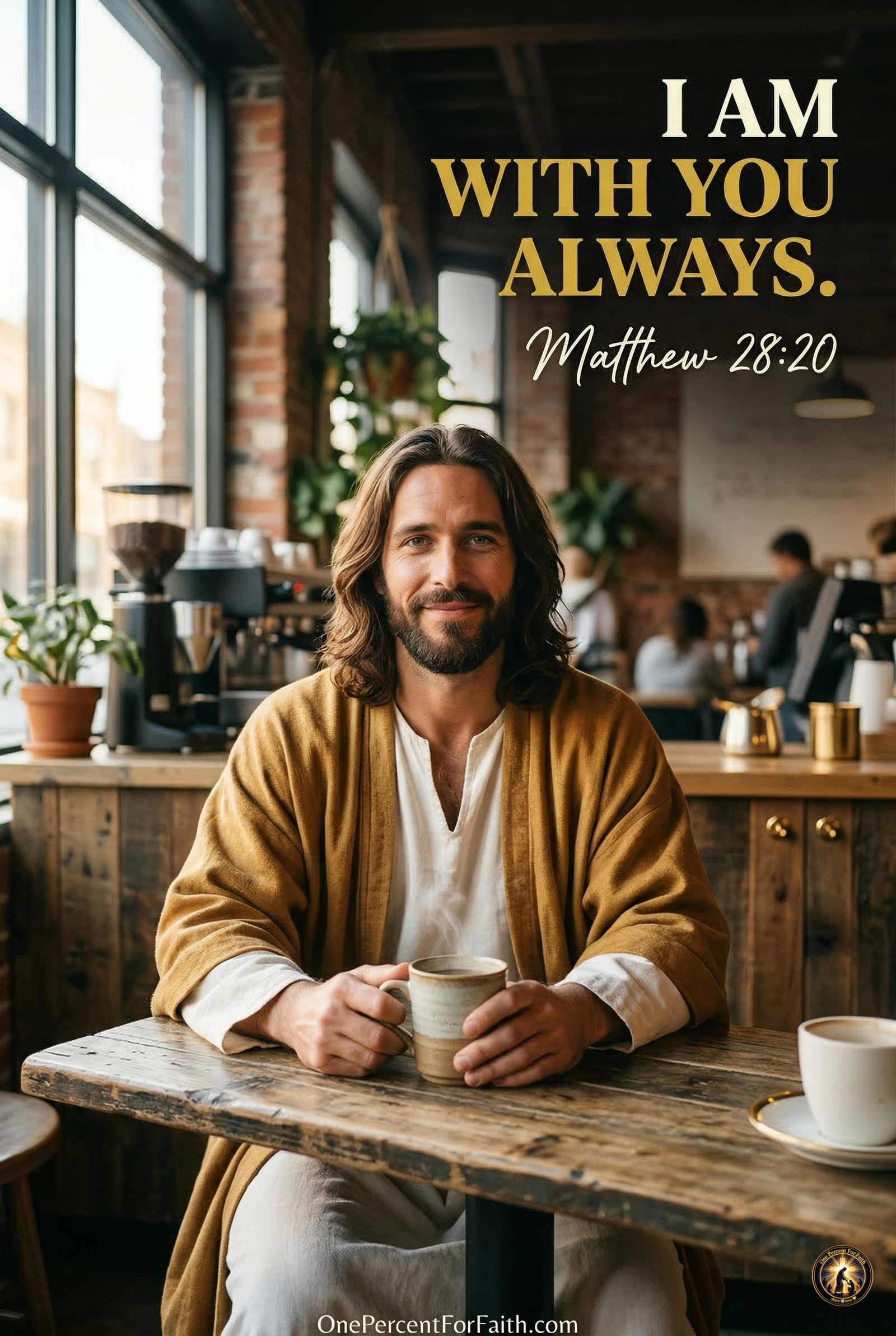
Four words. No conditions attached. Not “I’ll be with you when you get it together” or “I’ll be with you when you start reading your Bible more.” Just: always.
There’s something almost uncomfortable about unconditional presence. We’re used to relationships that respond to our effort. This one doesn’t move based on your performance. On the days you feel most alone — the 3 a.m. kind of alone — this verse isn’t a comfort strategy. It’s a fact being stated plainly. He doesn’t leave. You’re not navigating this solo, even when it feels that way.
“Do Not Let Your Hearts Be Troubled.”
(John 14:1)

This one is easy to read wrong. It sounds like a command to feel better. It’s not. It’s an invitation to redirect your trust — away from the circumstance, toward something steadier.
Your heart is going to react. That’s not failure, that’s being human. But there’s a difference between your heart being troubled and your heart staying there. Jesus isn’t dismissing what you’re going through. He’s pointing to a different foundation to stand on while you go through it. That’s not denial. That’s actually a pretty sophisticated response to suffering.
“Come to Me, All Who Are Weary.”
(Matthew 11:28)
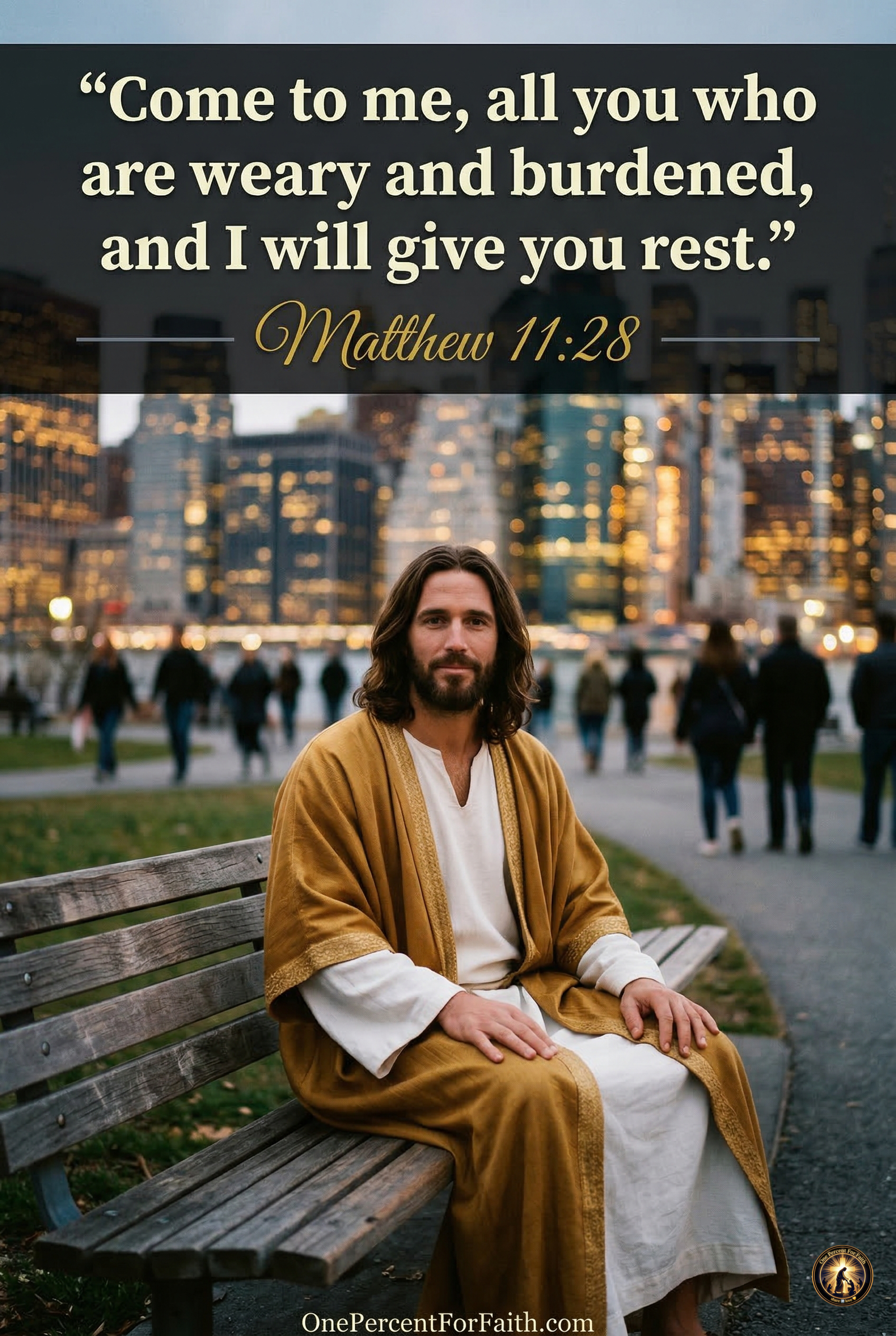
He didn’t say “come to me once you’ve figured it out.” He specifically called the tired ones. The burdened ones. The people who have been holding things up for too long and are starting to buckle under the weight.
If you’ve ever felt like you needed to arrive at prayer already composed — this verse dismantles that. You don’t have to clean up before you show up. The weariness itself is the invitation. Bring the mess. Bring the unresolved thing. Bring the version of yourself that hasn’t slept well in weeks. That’s exactly who he’s talking to here.
“Your Faith Has Made You Well.”
(Mark 5:34)
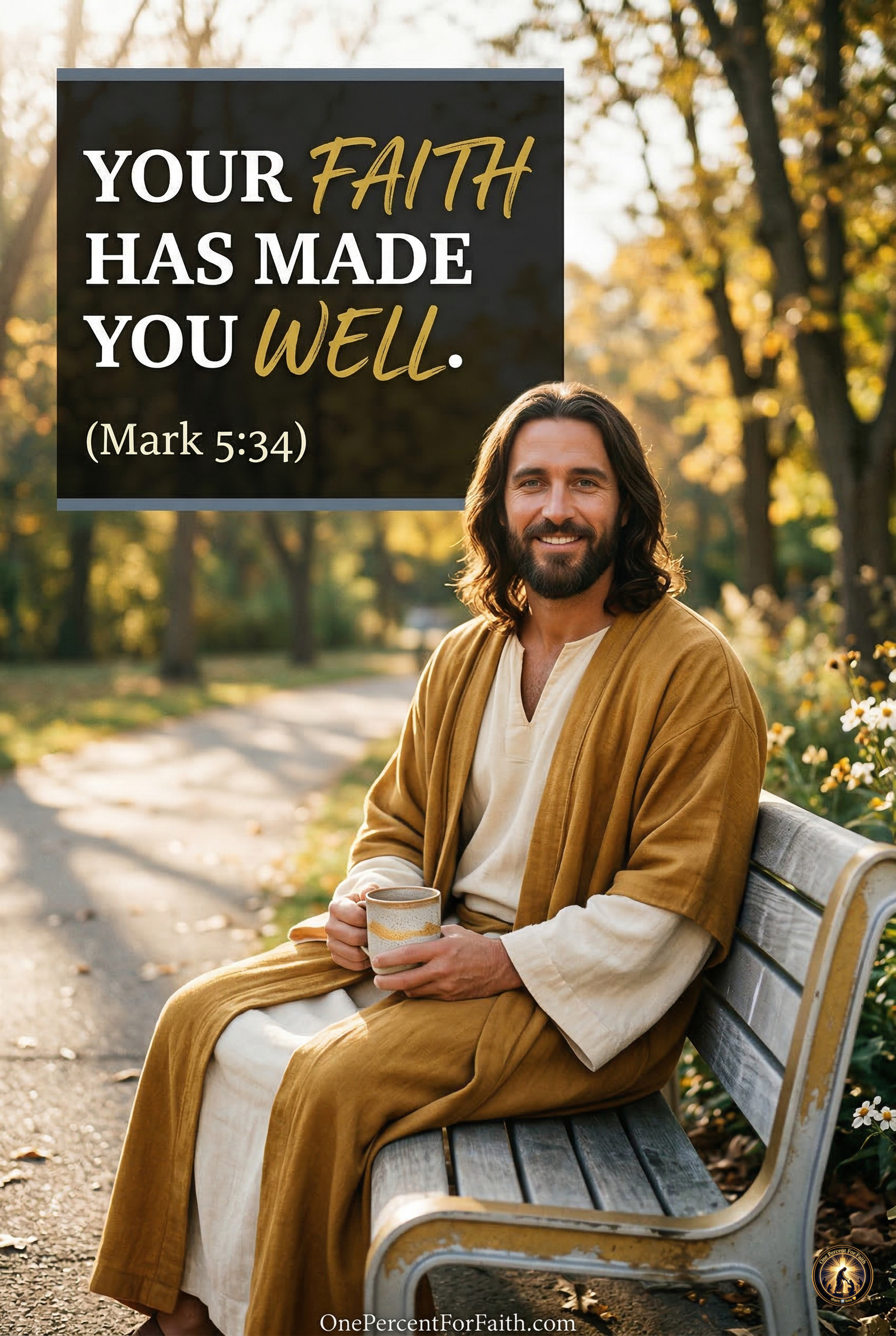
There’s a woman in this story who had been sick for twelve years. She didn’t make an appointment. She didn’t wait for the right moment. She pushed through a crowd and reached. That’s it. Just reached.
And he noticed. Not because she did it perfectly, but because she did it at all. On the days your faith feels thin — barely a thread — this verse is worth holding. Small faith that actually moves is worth more than polished faith that sits still. You don’t need more of it. You just need to reach with what you have.
“In This World You Will Have Trouble. But Take Heart.”
(John 16:33)
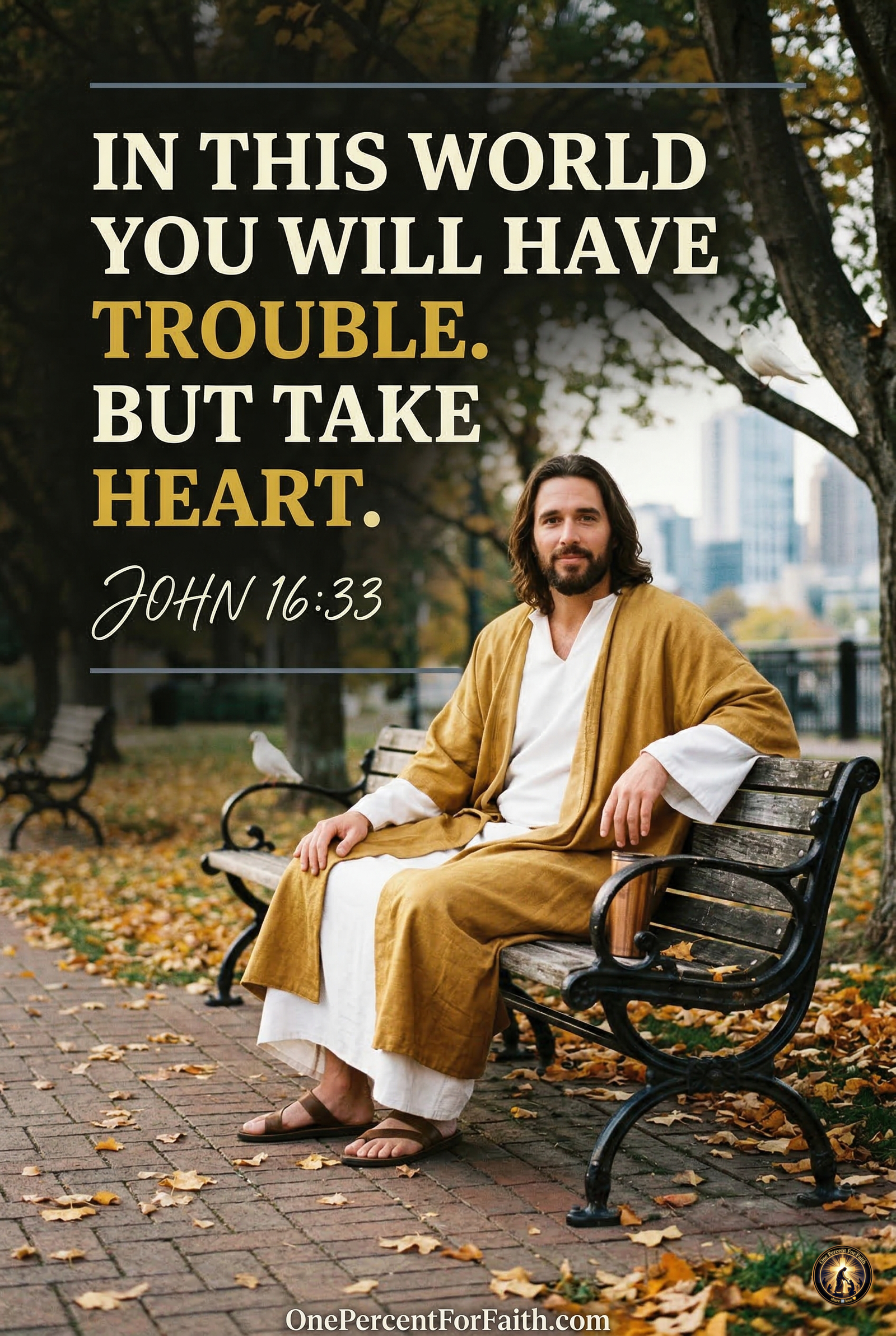
This might be the most honest thing Jesus ever said. He didn’t offer a workaround. He confirmed the trouble. Then immediately followed it with a reason not to collapse under it.
The sequence matters. He acknowledged hard days before offering comfort — which is the opposite of how a lot of well-meaning advice works. Most people rush to the silver lining. Jesus sat in the real for a moment first. That honesty is part of why the comfort lands. He’s not selling you a version of life that doesn’t exist. He’s speaking into the one you’re actually living.
“Blessed Are Those Who Mourn.”
(Matthew 5:4)
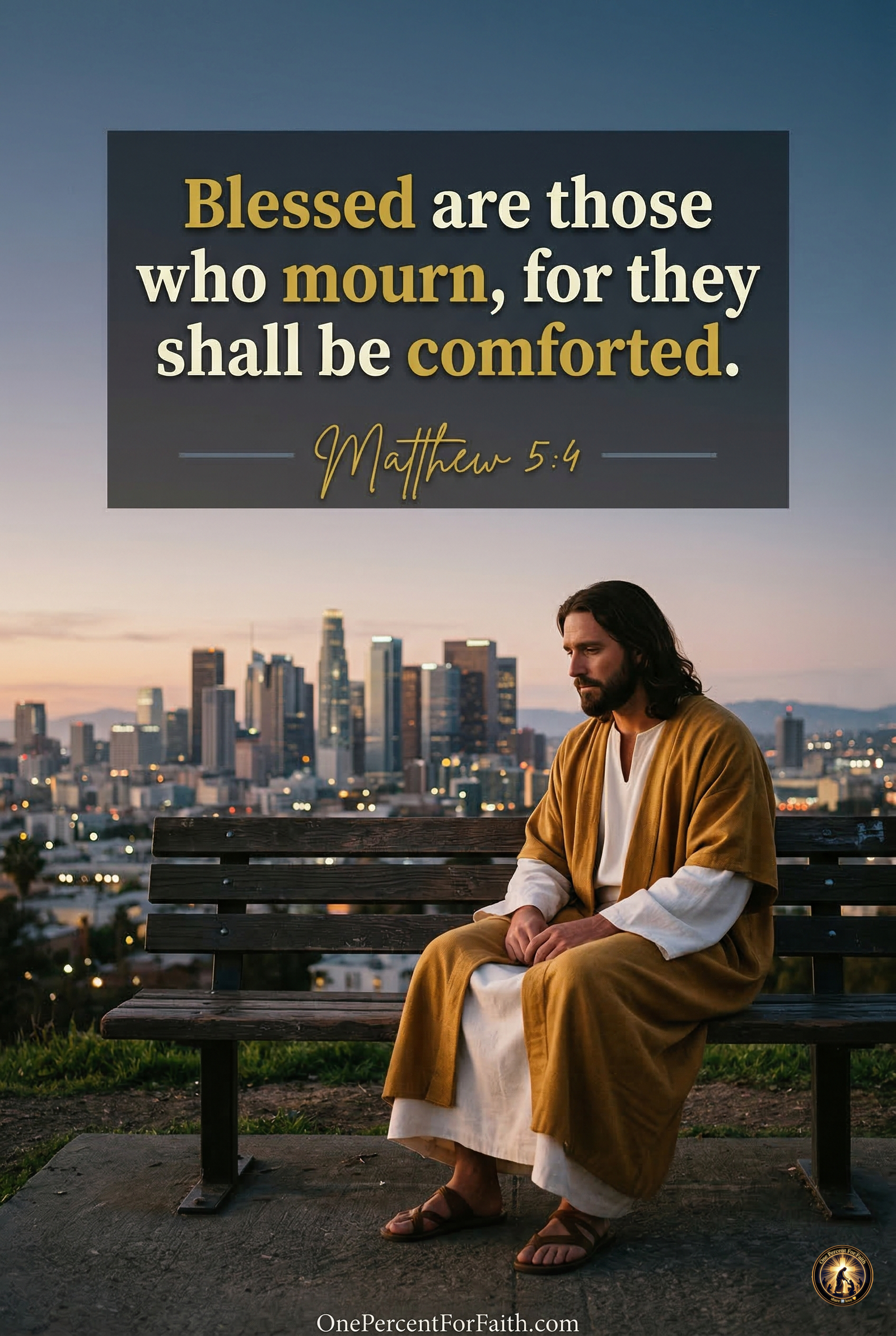
Grief gets treated like a problem to solve in American culture. Move through it quickly, find closure, get back to functioning. Jesus took a different view entirely.
He called mourning people blessed. Not “they will be blessed eventually” — blessed now, in the mourning. There’s something here that doesn’t resolve neatly, and maybe it’s not supposed to. Your sorrow isn’t evidence that something went wrong with your faith. It might be evidence that you loved something real. And that, apparently, is something worth honoring rather than rushing past.
“I Am the Light of the World.”
(John 8:12)
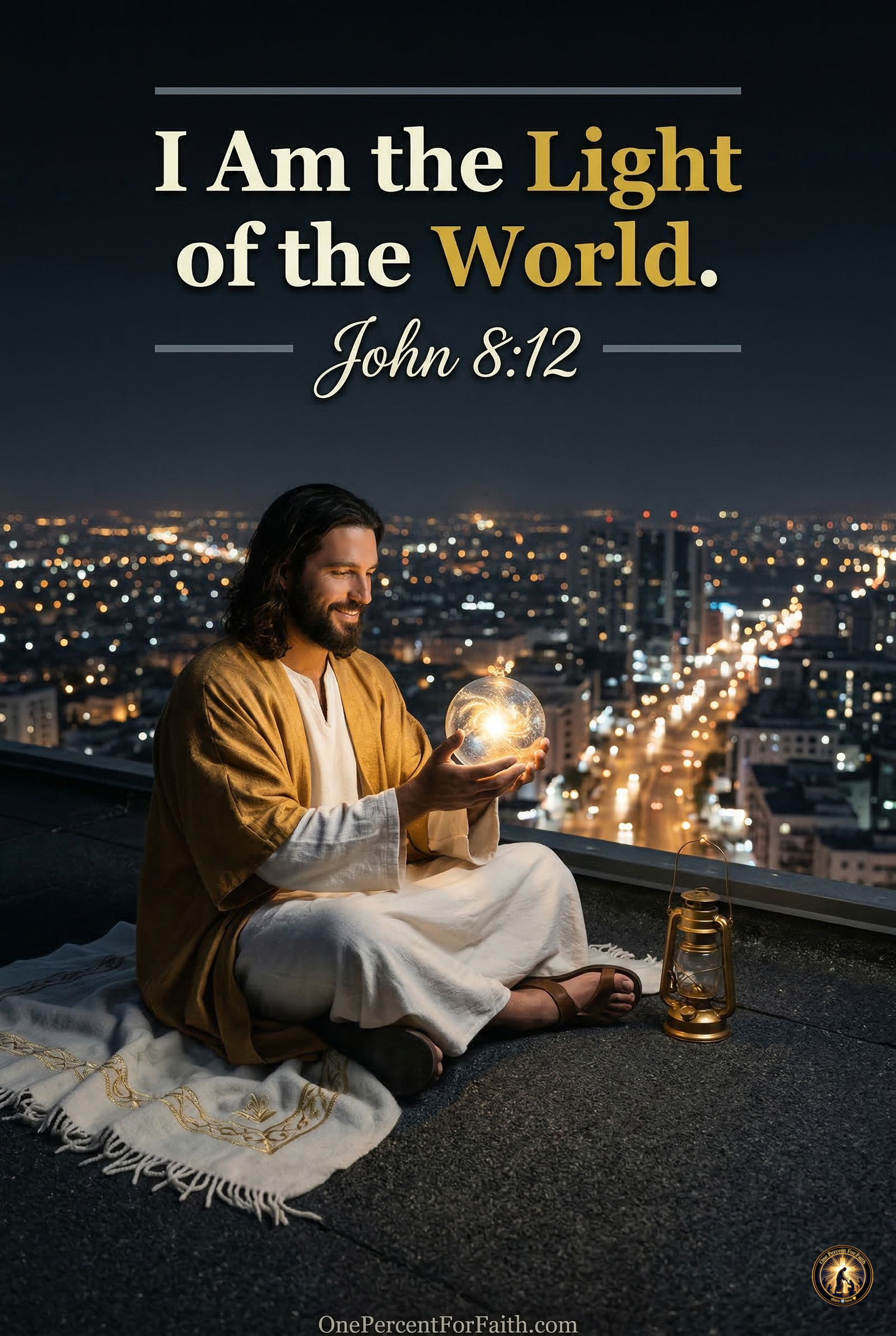
Short. Almost too simple. But try sitting with it on a day where the future looks genuinely dark — not metaphorically, but in the way that only real uncertainty can feel.
Light doesn’t explain the darkness. It doesn’t hand you a map. It just makes the next step visible. That’s enough to move. You don’t need to see the whole path to take a step. You need enough light for the step you’re standing at. This verse is quietly practical in a way that gets overlooked because the language sounds so elevated.
“Ask and It Will Be Given.”
(Matthew 7:7)
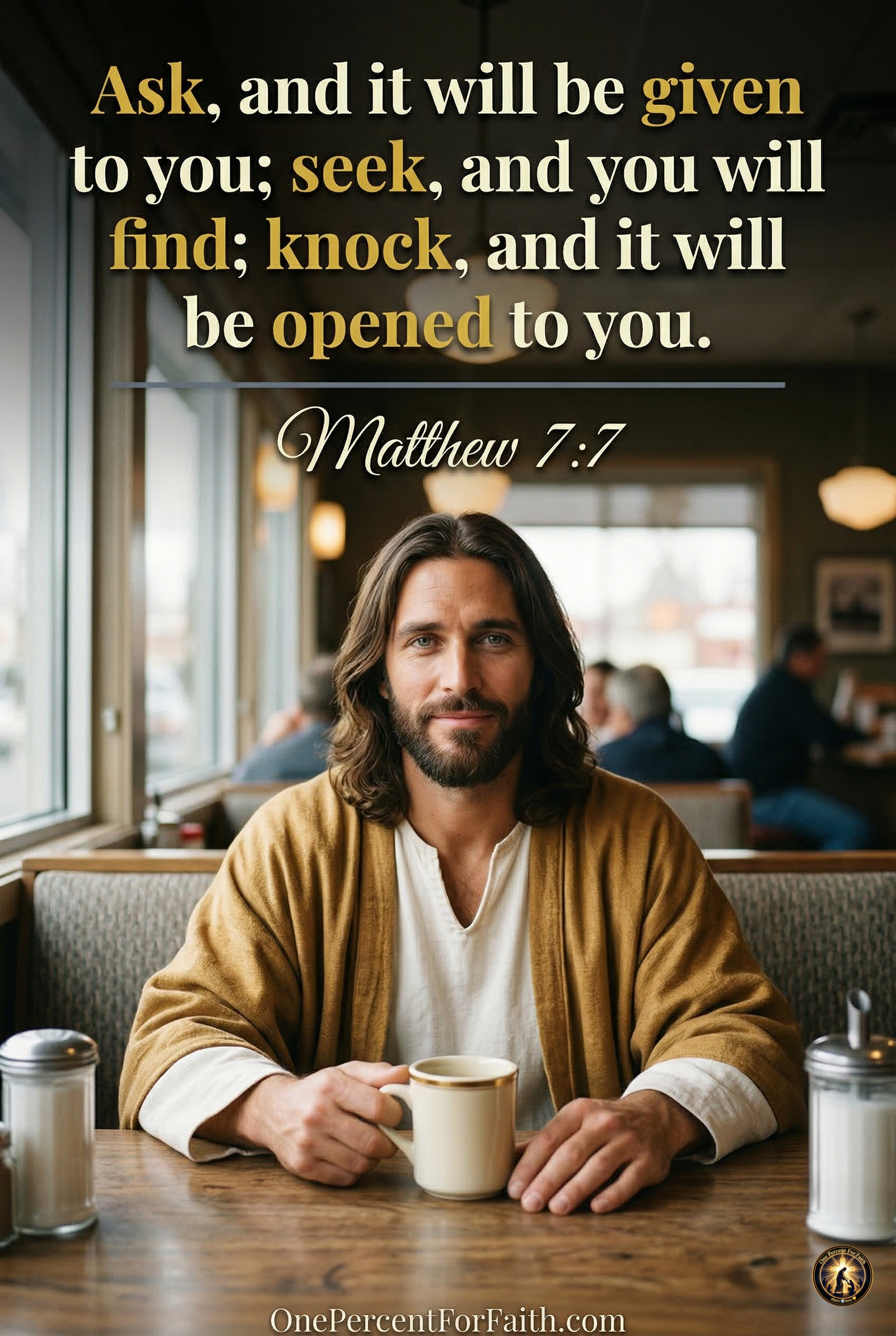
There’s a version of faith that becomes very reluctant to ask for specific things — afraid of disappointment, or of seeming greedy, or of bothering God with small problems. This verse doesn’t endorse that posture.
It’s blunt. Ask. The instruction is simple enough to be suspicious, which is maybe why people complicate it. You’re not required to figure out the right formula. You’re not required to ask with enough confidence or enough theological precision. You’re just asked to ask. Bring the actual need, in plain language, and trust the response to someone who has a longer view than you do.
“Follow Me.”
(Matthew 4:19)
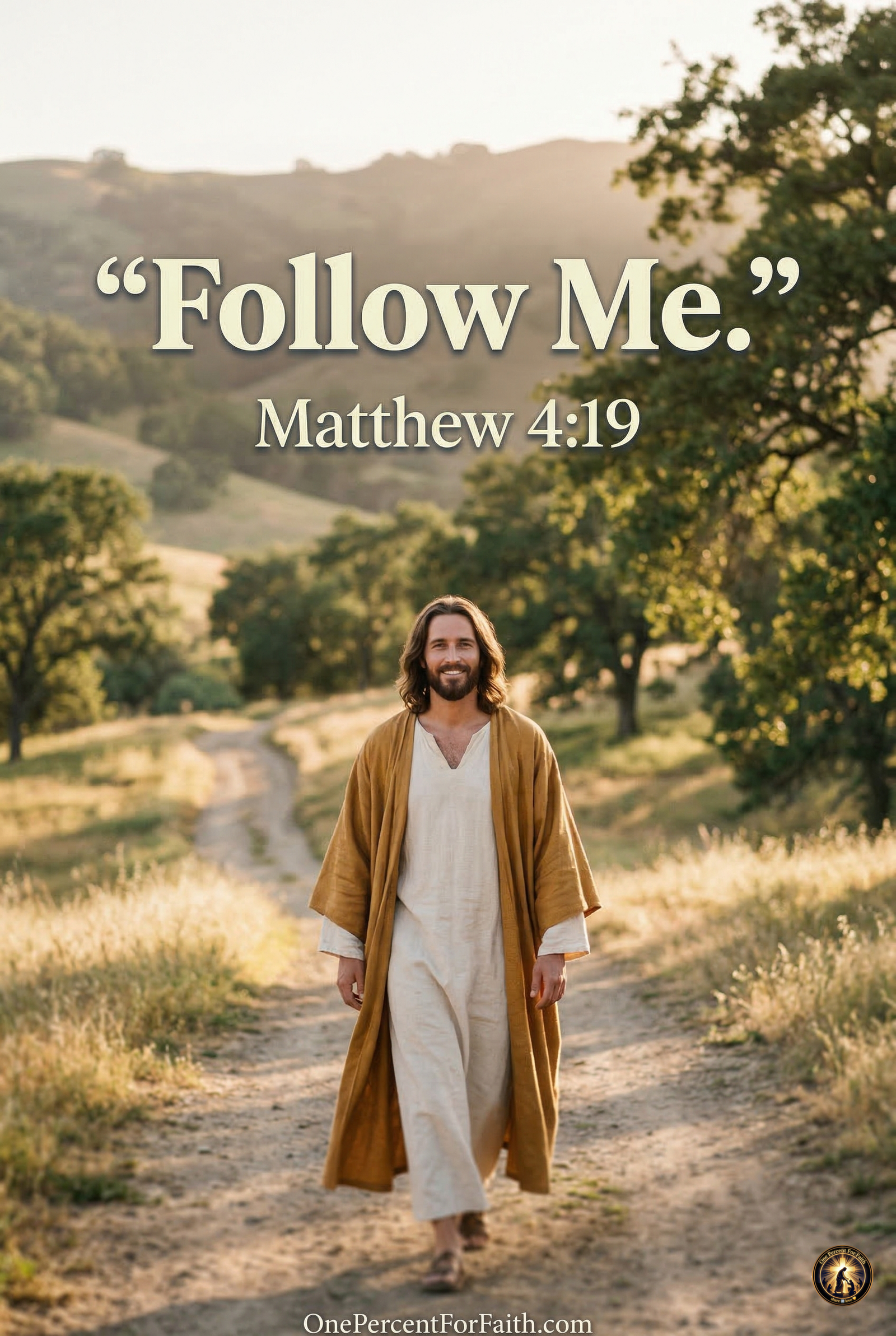
The fishermen in this story left their nets immediately. They didn’t ask for a five-year plan. They asked nothing, actually. There’s something both terrifying and freeing about that level of simplicity. On the days when faith feels complicated — when you’re not sure what to believe or how to pray or whether any of this makes sense — “follow me” is a starting point that doesn’t require you to have answers first. It just requires movement. One step toward, not a full system of belief perfectly assembled.
“I Am the Resurrection and the Life.”
(John 11:25)
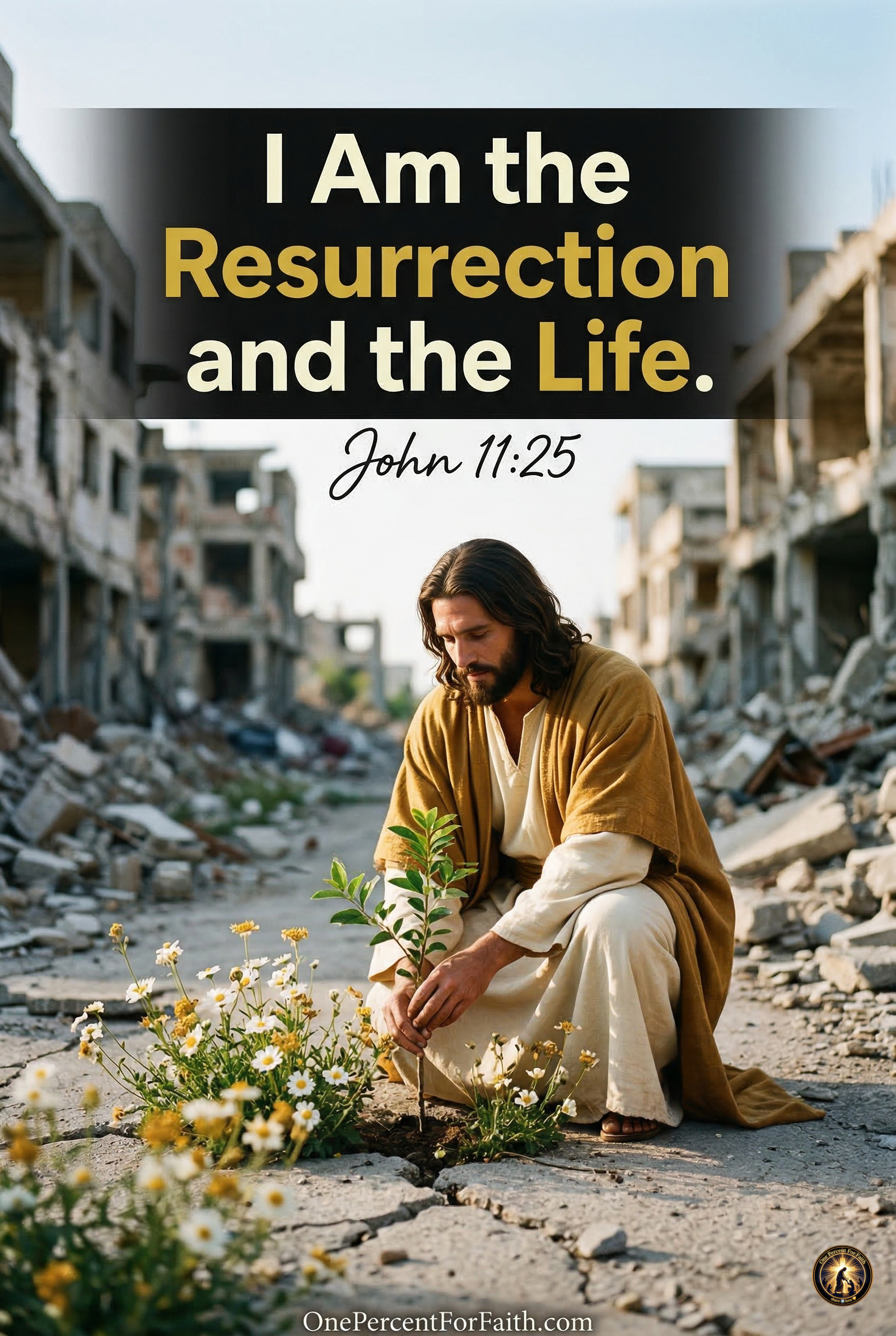
He said this to a grieving woman, standing outside her brother’s tomb. Not in a synagogue. Not on a hillside with a crowd. At a grave.
The location is important. He didn’t wait for a better setting to make this declaration. He said it where death was most present and most real. Whatever you’ve lost — a relationship, a version of yourself, a season that ended badly — this verse doesn’t skip over the loss. It speaks directly into it. Resurrection isn’t the erasure of what was buried. It’s what comes next, on the other side of something real ending.
“You Are the Light of the World.”
(Matthew 5:14)
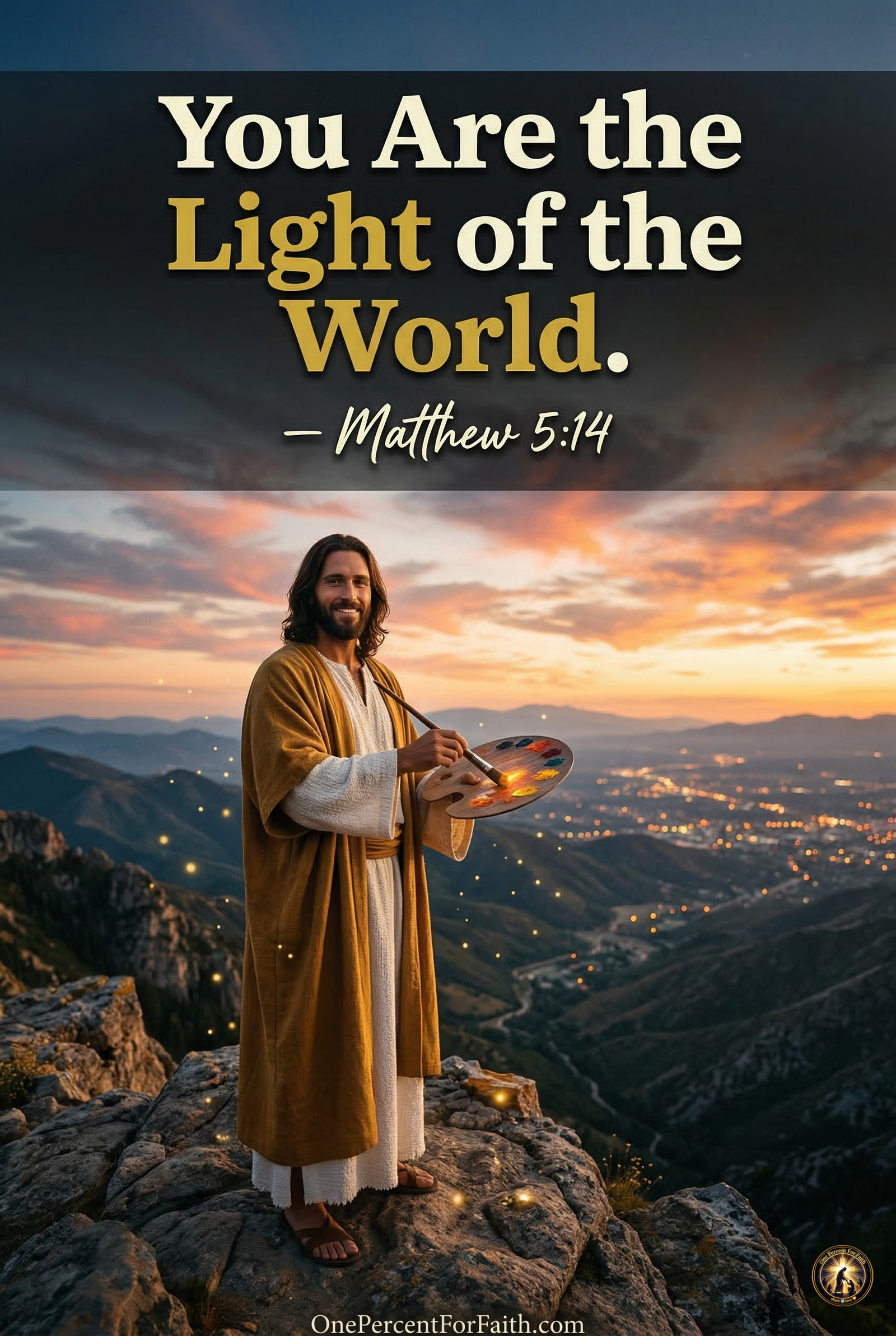
He said “I am the light” — and then turned around and said the same about you. That’s either a mistake or it’s the most significant transfer of identity in the New Testament.
On the days you feel small, invisible, like nothing you do matters — this verse is a confrontation. Not a pep talk. A confrontation with a truth you’ve been avoiding. You carry something worth carrying. Your ordinary Tuesday, the kindness you showed that no one saw, the way you held things together when things wanted to fall apart — it counts. It illuminates something. Even when it doesn’t feel that way.
Where These Words Actually Land
There’s no technique to this. You don’t apply these verses like a formula and expect the hard day to dissolve. That’s not how this works, and pretending otherwise would be doing you a disservice.
What these short quotes actually do — when you let them — is interrupt the closed loop of anxious thought. They introduce a different voice into the noise. Not louder. Just steadier. And sometimes that’s enough to get you from this hour to the next one without losing your footing entirely.
Hard days don’t disappear because you read the right verse. But they change shape when you’re not facing them alone. That quiet shift is worth more than most people give it credit for. Let it work slowly. It usually does.
FAQs
Why do short Jesus quotes seem to hit harder than long devotionals on tough days?
Because your cognitive capacity narrows under stress. When you’re overwhelmed, dense text bounces off. A short, direct sentence can actually get through. Jesus spoke in a way that was accessible to exhausted people — fishermen, grieving parents, sick strangers. That wasn’t accidental.
Is it okay to cling to just one verse when I’m going through something hard?
Yes. Depth isn’t found by cycling through more verses faster. A single verse repeated throughout a difficult season can do more than twenty verses skimmed once. Familiarity with one truth is more stabilizing than surface contact with many.
What if these quotes don’t make me feel better right away?
They might not. Comfort isn’t always emotional — sometimes it’s structural. Meaning: you might not feel peaceful immediately, but you’re standing on something that holds regardless of how you feel in the moment. The feeling sometimes follows much later. That’s not a failure of faith.
Are there Jesus quotes specifically for anxiety versus grief?
The distinction matters less than you’d think. Anxiety is often anticipatory grief — fear of loss. Many of the same verses speak to both because they address the root: the sense of being alone in something threatening. “I am with you always” works equally well for dread and for sorrow.
How do I make these verses stick instead of forgetting them by afternoon?
Write one on paper — not typed, written. Put it somewhere physical in your space. Your brain processes handwritten text differently, and physical placement creates environmental reminders that apps and lock screens can’t replicate. One verse. Rotate weekly, not daily.
Can I share these quotes with someone who isn’t religious?
You can share them without the theological framing if needed. Many of these verses address universal human experiences — exhaustion, fear, grief, invisibility. The words carry weight even when someone isn’t ready to engage with their source. Let the sentence do what sentences do.