Discover beautiful pink Jesus quotes for faith, hope & healing. Perfect for Christian wallpapers, vision boards & scripture art. Save your favorite today!
There’s a reason you stopped scrolling.
It wasn’t the word “Jesus.” You’ve seen that word on a thousand posts. It wasn’t the promise of inspiration — you’ve been handed that before, too, neatly packaged and quickly forgotten. Something about the softness caught you. The pink. The quiet. The idea that faith could feel less like armor and more like a warm room you hadn’t visited in a while.
Here’s the thing nobody says out loud: tenderness is hard to receive. Not because it’s weak — but because somewhere along the way, most of us learned to distrust it. We got used to faith that came with weight, obligation, expectation. We forgot that the same Jesus who flipped tables in the temple also said, “Come to me, all you who are weary.” Both things are true. But today, this is the side you need.
These quotes and verses aren’t here to fix your theology. They’re here to do something quieter — to loosen something in your chest that’s been held tight for too long. That’s the whole point. Let them.
The Quotes That Will Reach You Where You Are
He Doesn’t Wait for You to Get It Together First
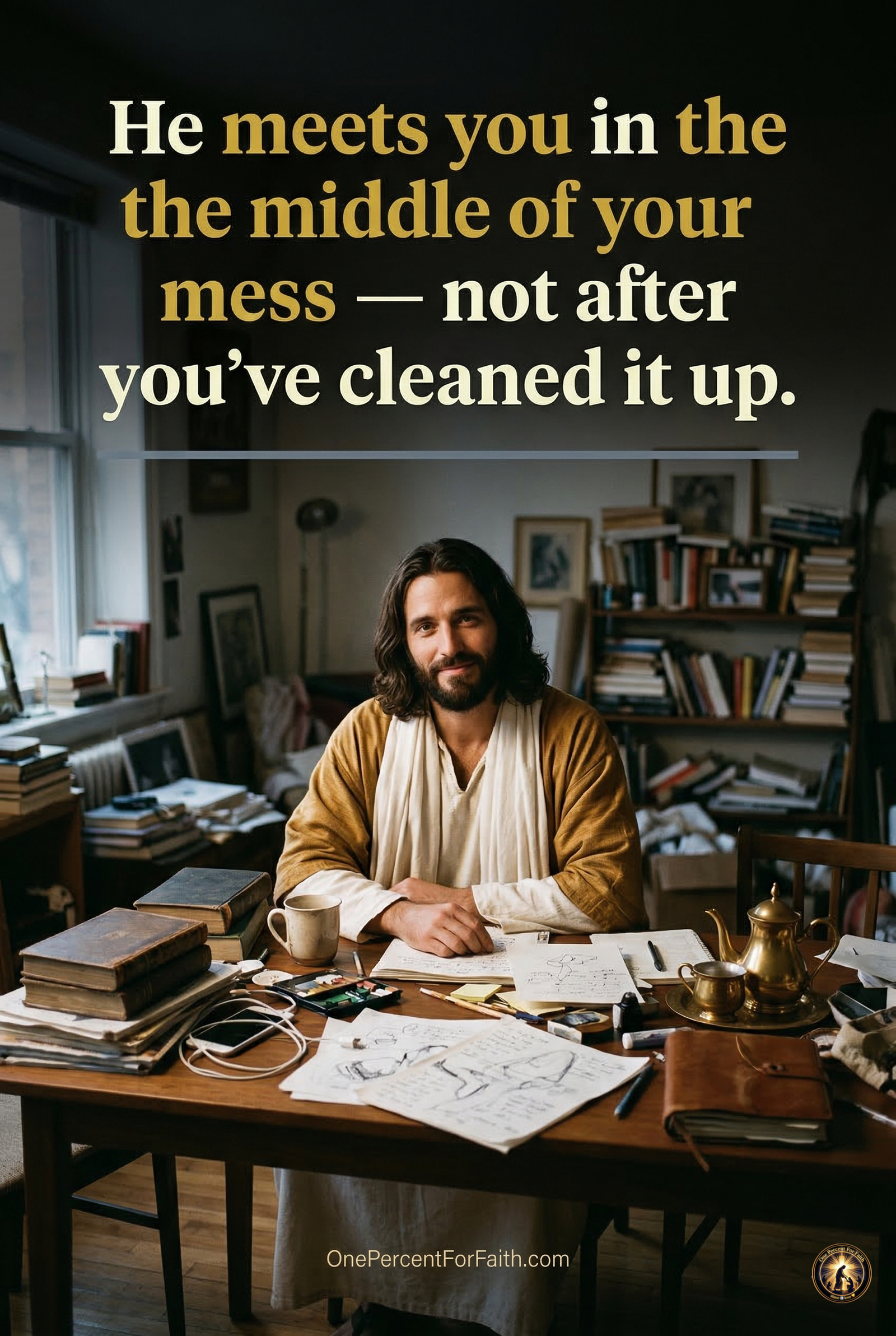
“He meets you in the middle of your mess — not after you’ve cleaned it up.”
If you’ve ever postponed prayer because you felt unworthy of having it, this one is for you. There is a deeply human tendency to believe that access to God is earned through tidiness — spiritual, emotional, behavioral. You’ll reach out once things calm down. Once you stop making the same mistake. Once you feel like you deserve the conversation.
But that’s not the Jesus of the Gospels. The Jesus of the Gospels walked toward lepers. Stopped for a woman bleeding for twelve years. Had dinner with people everyone else avoided. His movement was always toward — never waiting at a comfortable distance for people to qualify.
You don’t have to show up polished. You just have to show up.
You Already Have His Full Attention

“You don’t have to earn His attention. You already have it.”
The lie that most quietly damages faith isn’t that God doesn’t exist. It’s that He’s busy with bigger concerns — wars, disasters, people with more serious problems. Your anxiety feels small. Your loneliness feels petty. You talk yourself out of bringing it to Him before you even start.
But consider what it means that He knows the number of hairs on your head (Luke 12:7). That’s not a metaphor for approximation. That’s the language of someone paying close attention. Not to your performance. To you. The specific, particular, sometimes-struggling version of you that woke up this morning.
That kind of attention doesn’t run out. It doesn’t get redirected. And it was never something you had to compete for.
Gentleness Was Always His First Language

“Gentleness was His first language. We just forgot how to listen for it.”
We’re good at recognizing God in the dramatic — the breakthrough, the rescue, the miracle with clear before-and-after edges. But Elijah didn’t find Him in the wind or the earthquake or the fire. He found Him in the still small voice (1 Kings 19:12). And that pattern repeats more than we notice.
The soft prompting that made you call someone you hadn’t spoken to in years. The unexpected calm in a moment that should have unraveled you. The quiet sense that you were not, in fact, alone in something you hadn’t told anyone. Those aren’t coincidences dressed up as comfort. That’s a voice choosing gentleness deliberately.
Learning to listen for it is its own kind of spiritual practice.
The Hands That Stilled the Storm Are Holding Yours
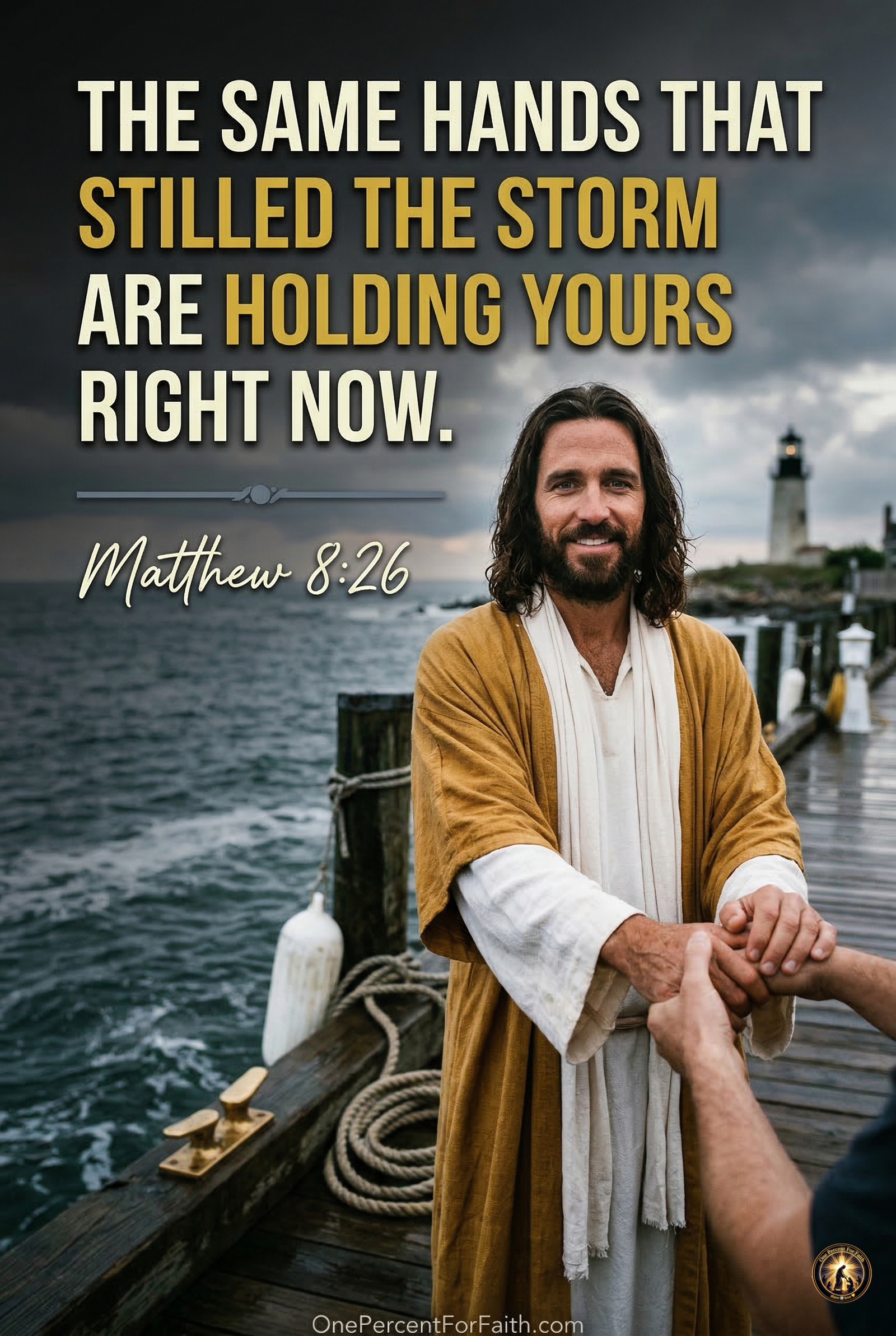
“The same hands that stilled the storm are holding yours right now.”
There’s a scene in Mark 4 where the disciples are terrified, and Jesus is asleep in the boat. They wake Him in a panic. He calms the water. Then He asks them — not unkindly, but pointedly — “Why are you so afraid? Do you still have no faith?”
What strikes me about that moment isn’t the miracle. It’s the proximity. He was in the boat with them. Not watching from a distance, not sending help from elsewhere. Present, in the same vessel, in the same storm. Whatever you’re inside of right now — the anxiety, the waiting, the thing you don’t know how to name — that hasn’t changed the proximity.
He’s in the boat.
Your Worst Days Are Not Your Defining Ones

“He doesn’t see your worst days as your defining ones.”
The human mind tends to anchor identity to failure. You remember the thing you said that you can’t unsay. The choice that cost you something. The version of yourself you’re not proud of. And you carry it, quietly, as a kind of defining document — proof of what you really are underneath.
But Romans 8:1 says there is no condemnation for those in Christ Jesus. That’s not a motivational reframe. That’s a structural reality about how God accounts for you. He is not building a case. He is not keeping the file.
The grace isn’t that He overlooked your worst moments. It’s that He absorbed them and chose you anyway.
Grace Is Something You Wake Up Inside Of
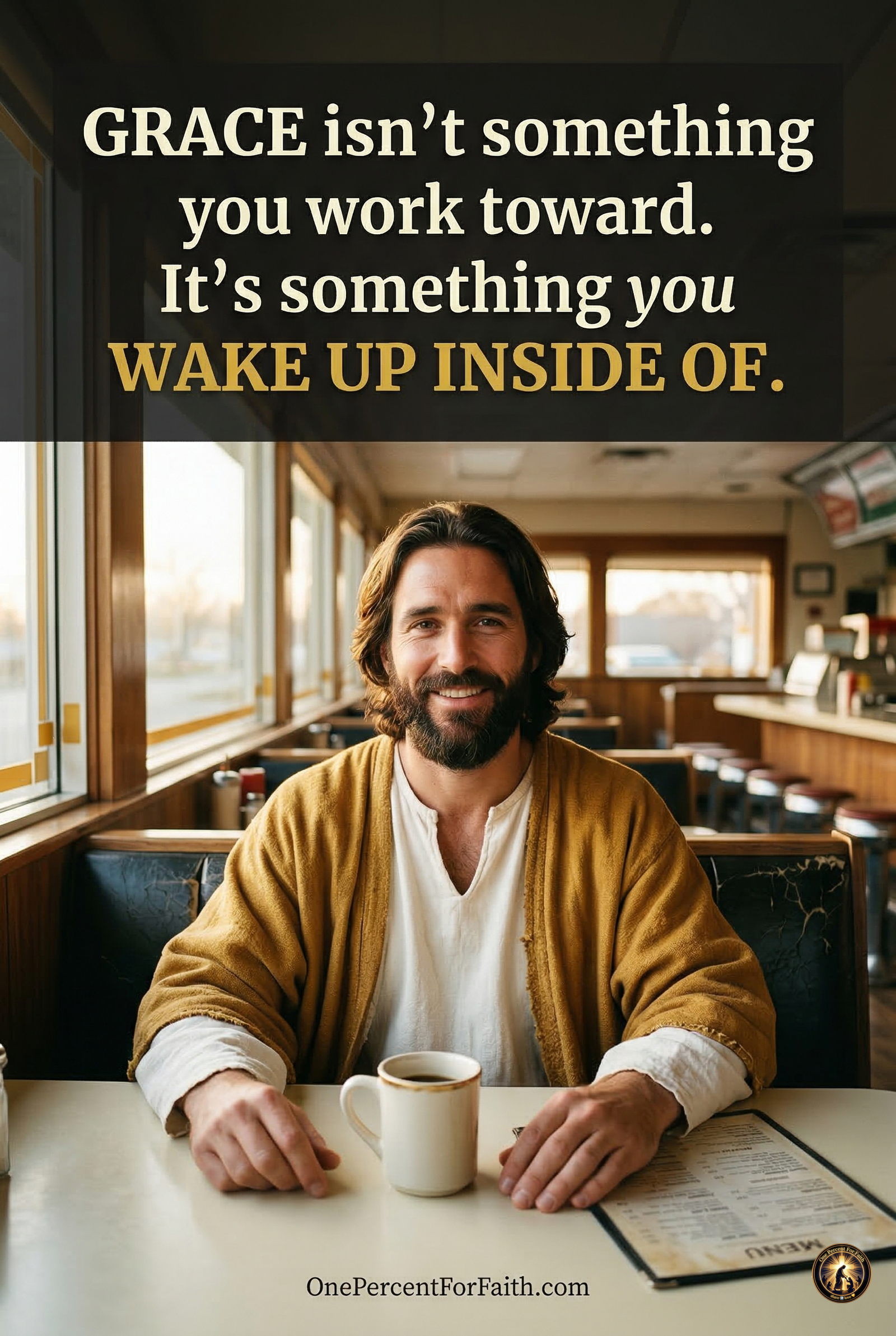
“Grace isn’t something you work toward. It’s something you wake up inside of.”
Ephesians 2:8-9 makes this almost uncomfortably clear — “For it is by grace you have been saved, through faith — and this is not from yourselves, it is the gift of God, not by works.” And yet the instinct to earn it persists, quietly, in how we talk to ourselves every morning.
You wake up and immediately audit. What did you do wrong yesterday. What you need to do better today. As if the access to His love is a performance review you might fail.
Grace doesn’t work on a merit system. It’s the thing already surrounding you before you decide whether you deserve to be in the room.
He Saw You Before You Saw Yourself

“He saw you before you saw yourself — and He chose you anyway.”
Jeremiah 1:5 captures something that should, if you sit with it long enough, genuinely undo you: “Before I formed you in the womb I knew you, before you were born I set you apart.” That’s not a general statement about humanity. That’s a specific claim about you — before your personality developed, before your choices shaped you, before you became whoever you’ve become.
He didn’t choose a version of you that doesn’t exist yet. He didn’t choose a cleaned-up hypothetical. He chose you with full information. Before you had the chance to disappoint anyone, including yourself.
That’s not a small thing. Let it be a large thing.
Your Tears Are Not Wasted
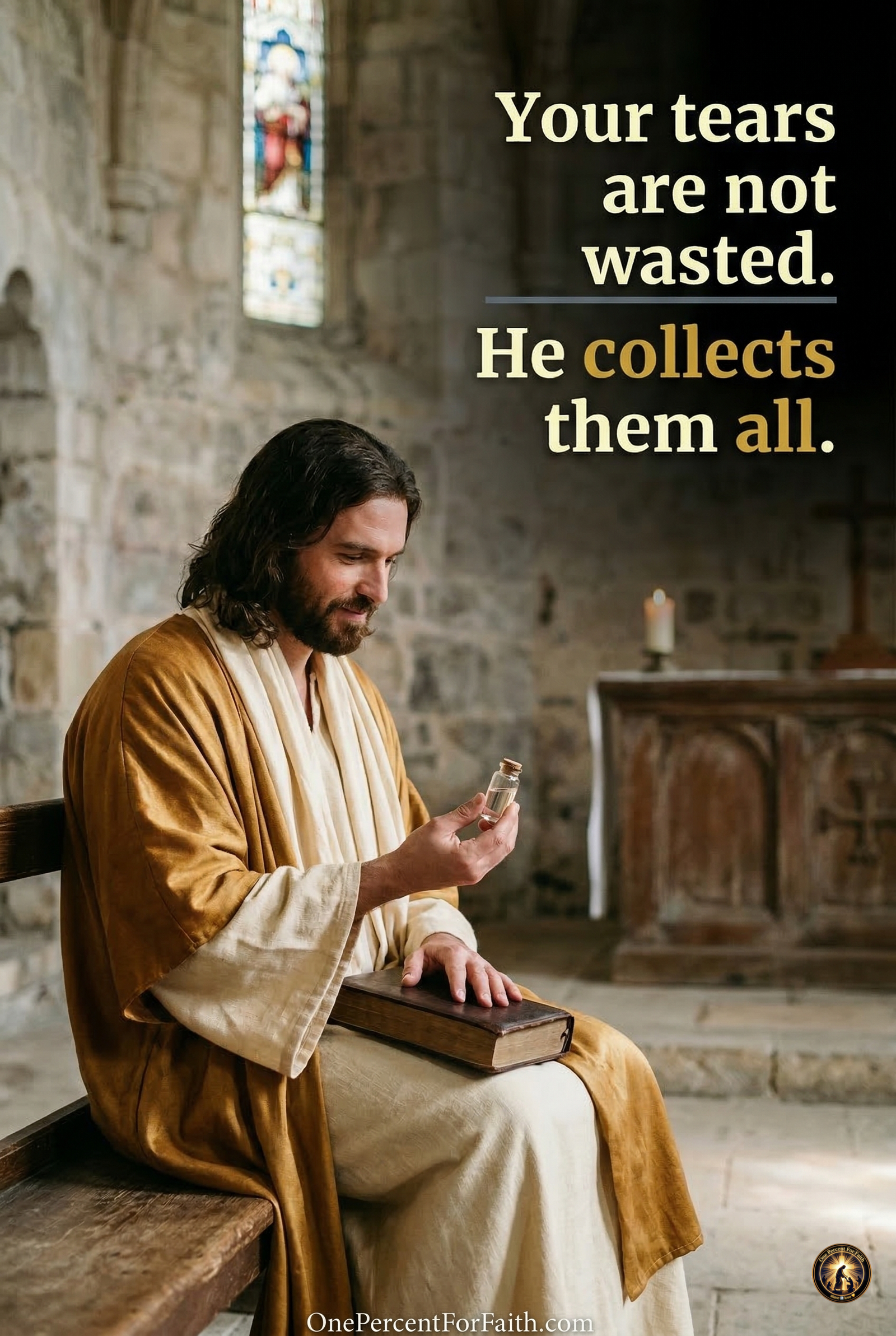
“Your tears are not wasted. He collects them all.”
Psalm 56:8 is one of the more quietly stunning verses in the Bible — “You have kept count of my tossings; put my tears in your bottle.” In ancient near-eastern culture, collecting tears in a bottle was an act of profound remembrance and care. It meant the grief mattered. It meant someone was paying attention to it.
Nothing you’ve cried over has gone unnoticed. Not the grief you explained to other people, and not the grief you couldn’t explain to anyone. Every hard night. Every moment in the car. Every silent weight that didn’t have a name.
He kept count. It all mattered. It still does.
Rest Is an Act of Trust
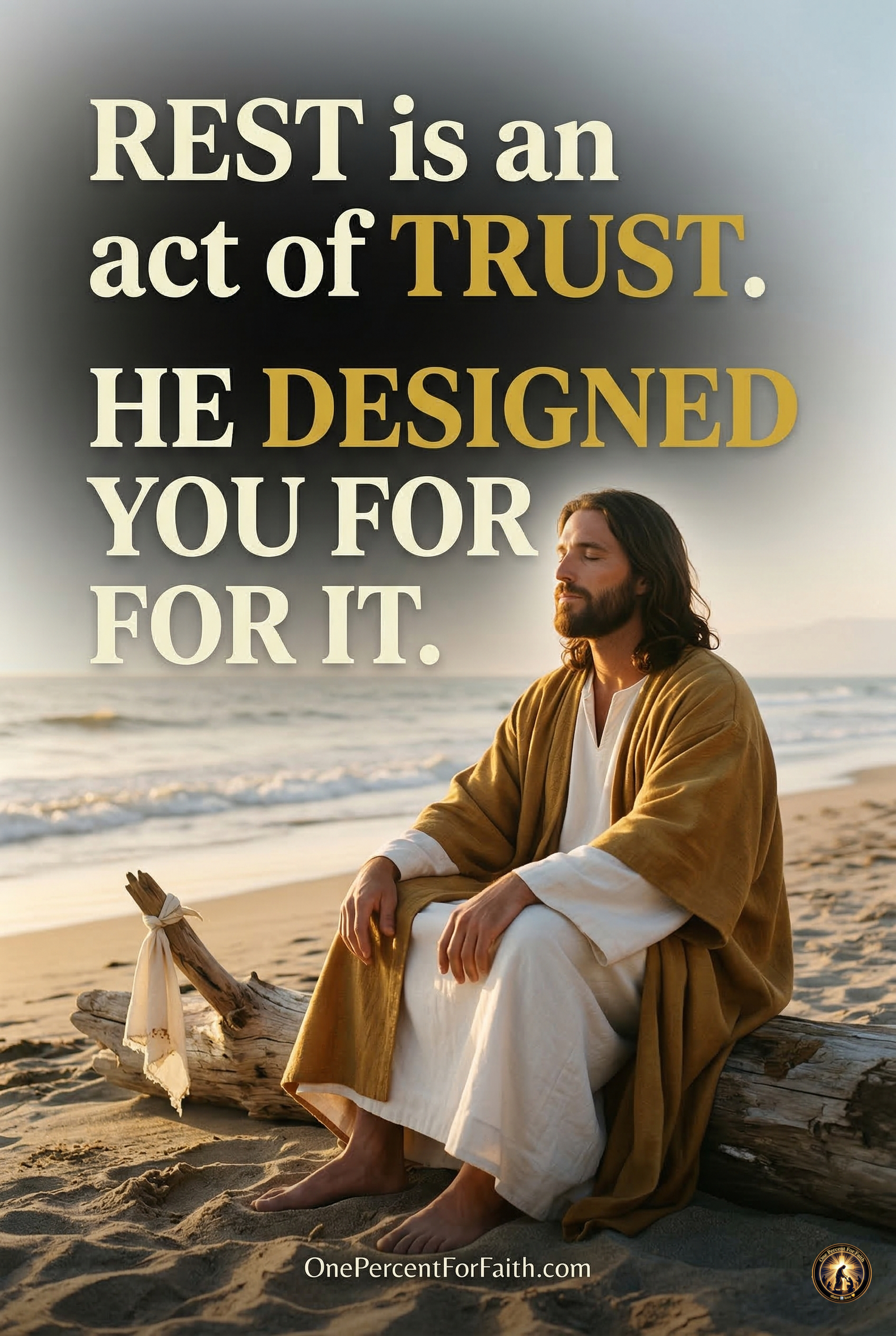
“Rest is an act of trust. He designed you for it.”
Matthew 11:28 — “Come to me, all you who are weary and burdened, and I will give you rest.” The word rest in that passage doesn’t mean sleep. It means relief from labor, from the pressure of having to sustain everything on your own effort.
Most of us are chronically over-functioning spiritually. We stay anxious because staying anxious feels responsible. We keep carrying because putting things down feels like giving up. But rest, in the Biblical sense, is not passivity. It is the active decision to trust that the thing holding the universe together is not your grip.
You can put it down. You were never meant to hold it forever.
Love Moves Toward the Imperfect
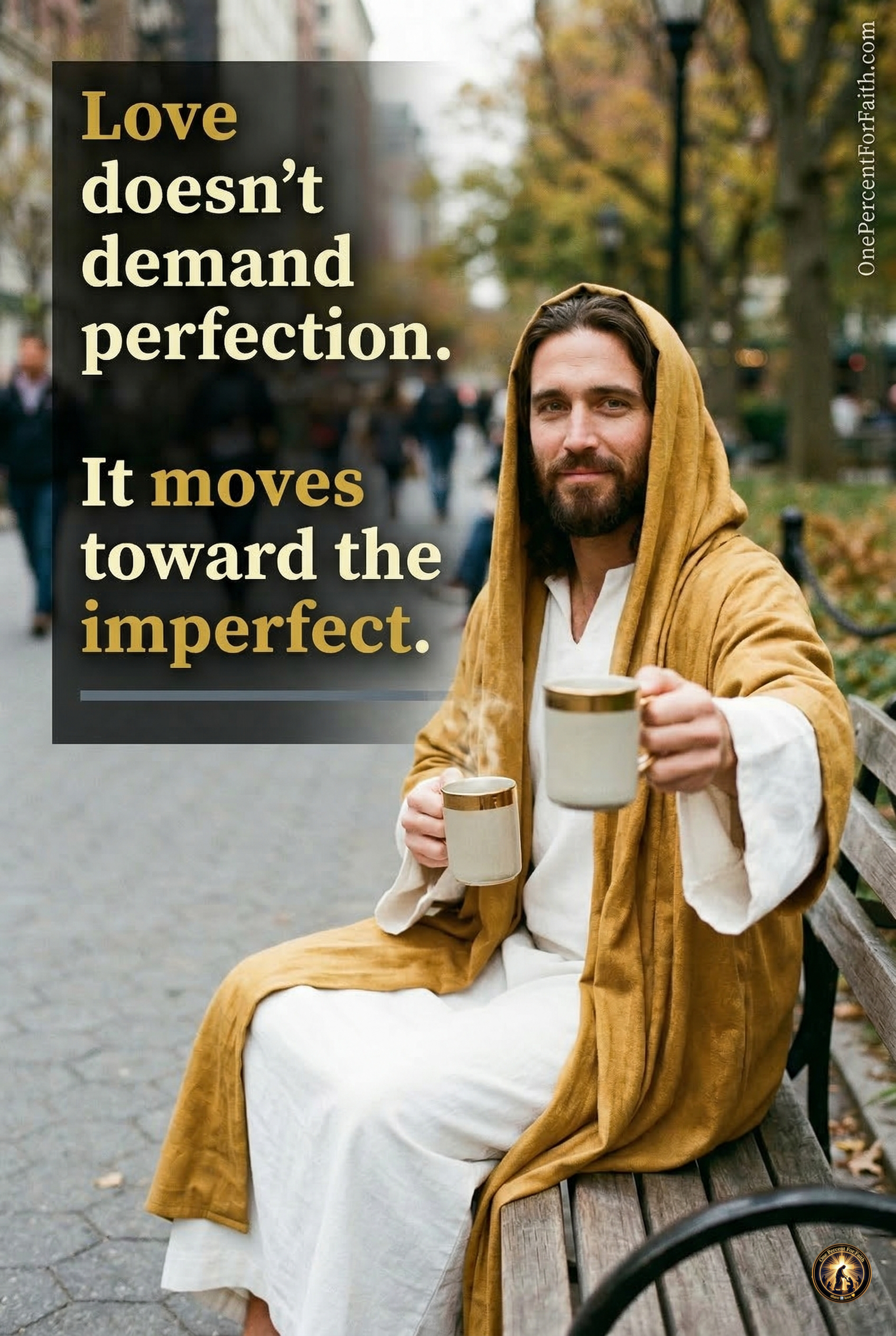
“Love doesn’t demand perfection. It moves toward the imperfect.”
The parable of the prodigal son (Luke 15:11-32) is one of those stories that should feel more surprising than it does, because we’ve heard it so many times we’ve smoothed out the scandalous part. The father doesn’t just wait. He sees the son while he was still a great way off and runs to him.
He ran. That matters. He didn’t wait for an explanation. He didn’t make the son prove that this time was different. He moved toward the mess before the apology was finished.
That’s the God you’re dealing with. Not standing with arms crossed waiting for the right answer. Running toward you while you’re still figuring out what to say.
He Is Not Disappointed in You
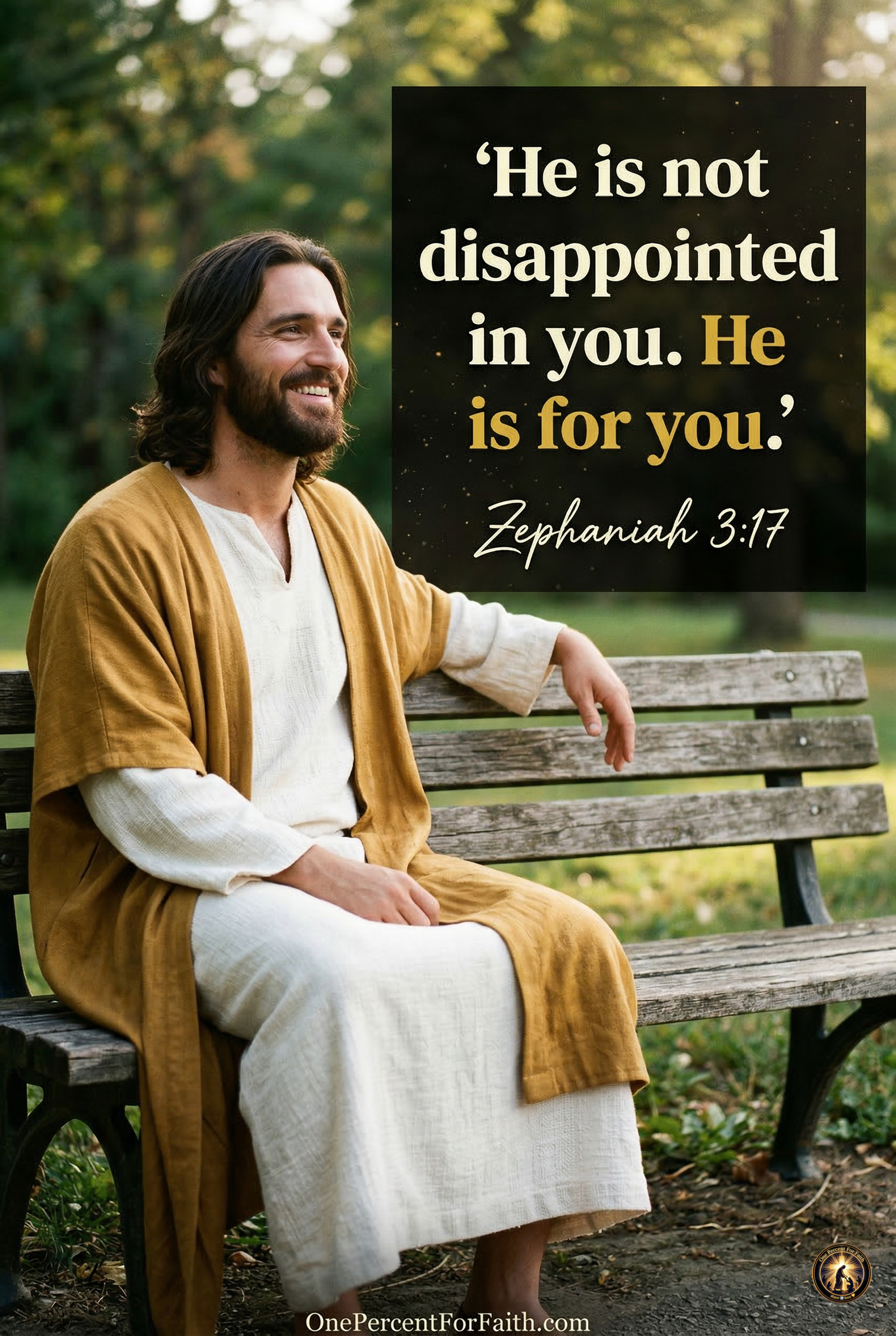
“He is not disappointed in you. He is for you.”
Romans 8:31 — “If God is for us, who can be against us?” The word “for” there is positional. It’s not a mood — it’s an orientation. It means He is aligned with your flourishing. Not merely tolerating you. Not reserving judgment. Not watching to see what you do next.
The voice in your head that sounds like constant mild disappointment isn’t His. That voice has another origin. His voice, in Scripture, consistently moves toward comfort, toward equipping, toward lifting. Even in correction, it’s calibrated for restoration — not humiliation.
You don’t have to brace for Him. You can move toward Him.
You Were Never Meant to Carry This Alone
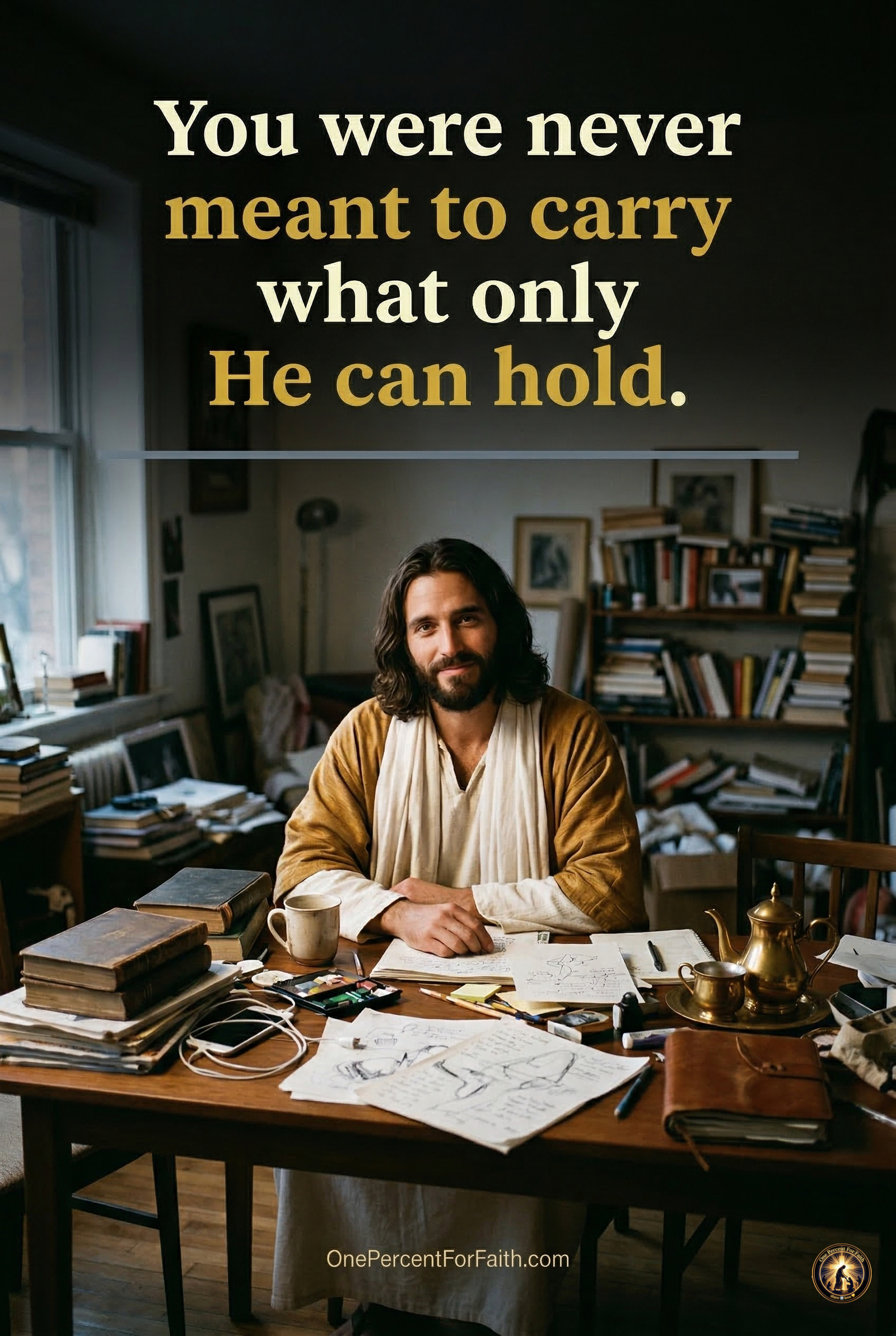
“You were never meant to carry what only He can hold.”
1 Peter 5:7 — “Cast all your anxiety on him, because he cares for you.” The word “cast” implies force. It implies an intentional throw, not a gentle setting down. As if the writers understood that for most of us, releasing anxiety requires something that feels a little violent against our instinct to hold.
You were made to bring things to Him — not to manage them solo and update Him on your progress. The burdens you’ve been carrying quietly, the ones you’ve convinced yourself are too small or too complicated or too embarrassing to name — those specifically qualify.
He can hold what you cannot.
Healing Doesn’t Always Announce Itself
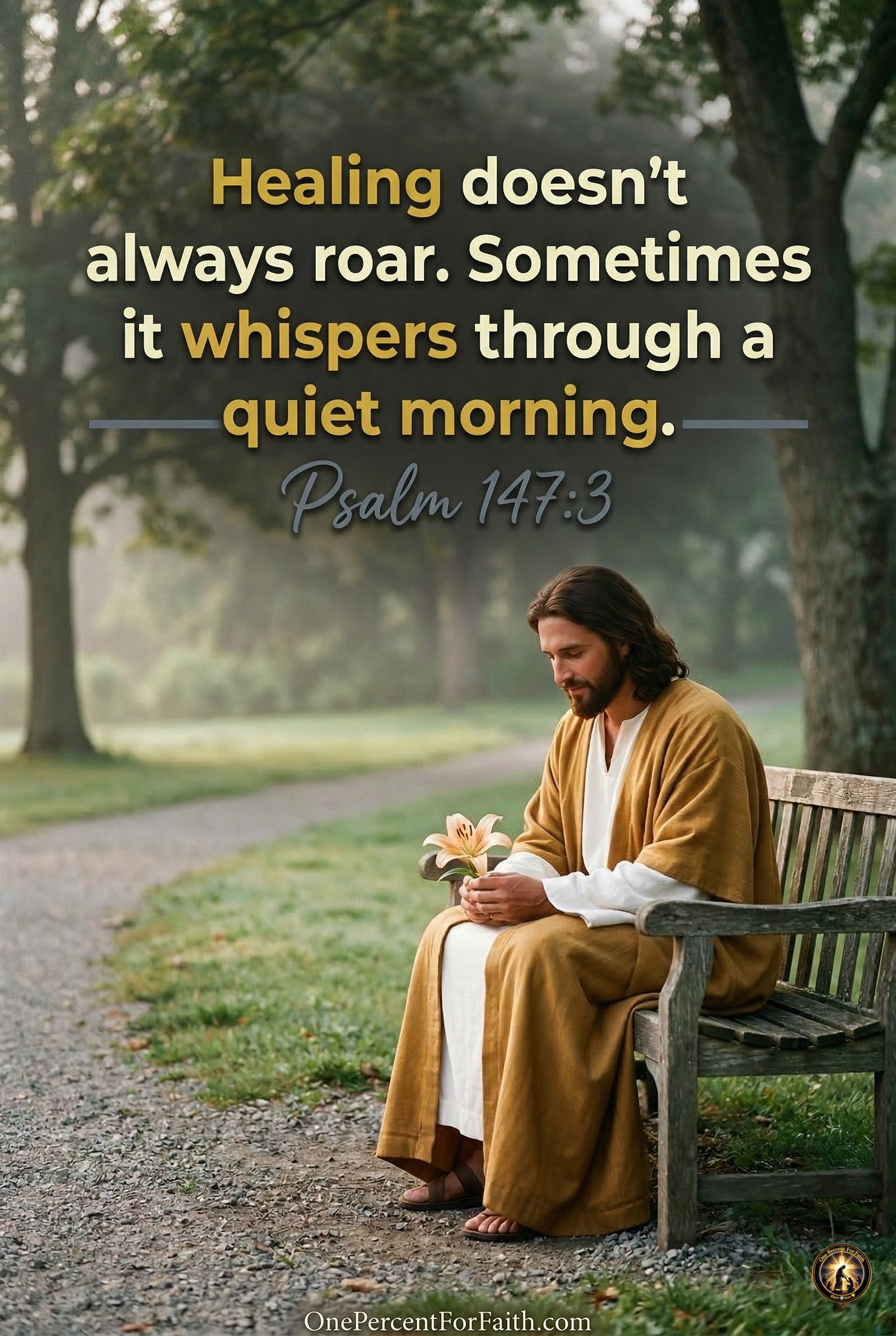
“Healing doesn’t always roar. Sometimes it whispers through a quiet morning.”
We expect transformation to be dramatic. A turning point. A clear before and after. But most of the time, healing happens in layers — a morning where the weight is slightly lighter, a thought pattern that quietly breaks, a moment of genuine peace that arrives without fanfare and almost without notice.
Don’t miss those. They’re not lesser miracles because they’re quiet. They might be more personal, because they were shaped for exactly you — not for a testimony, not for a stage, just for a Tuesday where you finally felt like yourself again.
That’s still Him. That’s still real.
He Knows Your Name, Not Just Your Need

“He knows your name, not just your need.”
Isaiah 43:1 — “I have called you by name; you are mine.” There’s a difference between being known as a category of problem and being known as a person. You might be anxious, hurting, lost, grieving — but none of those labels are the primary thing He sees. He sees you.
Not the version you present on good days. Not the version that makes people comfortable. The actual interior version — the one who’s uncertain and sometimes afraid and hoping quietly that all of this is real.
He knows that one. And He called her by name.
A Quiet Place to Land
You probably didn’t come here looking for a theology lesson. You came because something in you needed softening. And that instinct — to look for tenderness when you’re worn down — that’s not weakness. That’s a kind of wisdom the heart holds even when the mind forgets.
These words won’t resolve everything. Some of the hard things will still be hard tomorrow. But there’s something that happens when you stop bracing and start receiving — when you let the possibility in that you are genuinely loved, not in a vague spiritual sense but in a specific, attentive, running-toward-you sense. Things shift. Quietly. In the good direction.
You don’t have to figure out how to feel it right now. Just leave the door open a little.
Questions People Actually Ask
Why do “pink Jesus” quotes resonate so much with women right now?
Partly aesthetic, partly cultural. A lot of traditional religious imagery is visually heavy — dark wood, solemn tones, formality. The softer aesthetic signals permission to approach faith without performance. For women who grew up in environments where faith felt like a standard to meet, the visual softness becomes an emotional cue that this version of the conversation is different.
Can a quote or verse actually change how you feel about God?
Not on its own, usually. But language shapes perception over time. When you repeatedly encounter God described in relational, tender, specific terms rather than transactional or punitive ones, it gradually rewires what your nervous system expects when you approach prayer or Scripture. The quote isn’t the transformation — it’s the door.
What if I don’t feel anything when I read these verses?
That’s more common than people admit, and it doesn’t mean something is wrong with you. Emotional numbness in faith often follows a period of disappointment — unanswered prayer, hard seasons, things that didn’t resolve the way you believed they would. Reading with low feeling isn’t failure. Showing up anyway is its own kind of faith.
How do I hold onto these feelings past the moment I read something?
Write them down. Not because journaling is a spiritual superpower, but because the act of transcription slows the reading down and creates a physical anchor. A verse on your phone screen at 7am that you scroll past is different from a verse you copied into your notebook at midnight. The friction matters.
Is it okay to want a “softer” version of Jesus than what I was raised with?
Yes. And it’s worth asking whether the version you were raised with was accurate in the first place. The Jesus of the Gospels is consistently described as compassionate, approachable, and moving toward the marginalized — women, the sick, the socially excluded. The softness isn’t a modern rebranding. It was always there.