Stress has a way of shrinking everything.
Your world gets small. Your chest gets tight. Your thoughts loop. Even faith can feel far away—not because you don’t believe, but because your nervous system is louder than your hope.
I’ve noticed something over the years: when life is calm, almost any Bible verse sounds comforting. When life is not calm, only a few verses actually land.
This post is about those verses.
Not the pretty ones you cross-stitch.
The deep ones.
The ones that meet you inside pressure, uncertainty, and mental overload—and don’t flinch.
I’ll share the verses. But more importantly, I’ll talk about why they work when stress is high. Because peace isn’t a vibe. It’s a recalibration.
Why Stress Changes How Scripture Hits Us
Stress hijacks the brain. That’s not spiritual weakness. That’s biology.
When you’re overwhelmed:
- Your brain scans for threat.
- Abstract reassurance feels hollow.
- Long explanations don’t stick.
So verses that bring peace in stressful times tend to do a few things:
- They slow the moment, not solve the future.
- They shift responsibility off your shoulders.
- They speak in images, not arguments.
Keep that in mind as you read.
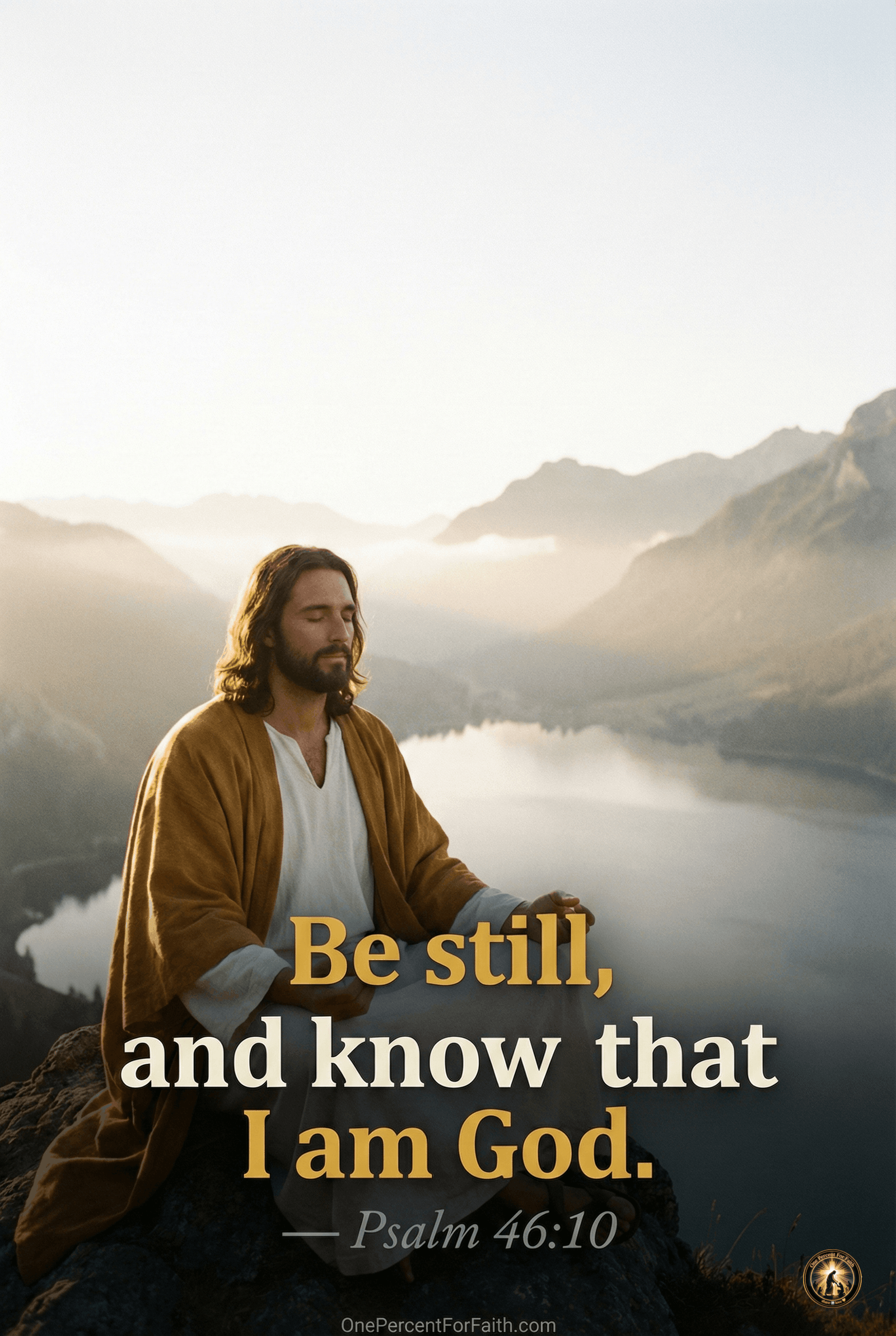
1. “Be still, and know that I am God.” — Psalm 46:10
This verse is often quoted like a gentle suggestion.
It’s not.
In Hebrew, “be still” can mean stop striving, let go, even cease fighting. It’s a command to drop your grip.
When stress is high, we’re usually:
- Overthinking
- Over-planning
- Over-controlling
This verse doesn’t tell you how things will work out.
It tells you you don’t have to hold everything together right now.
That’s the peace.
Not answers.
Release.
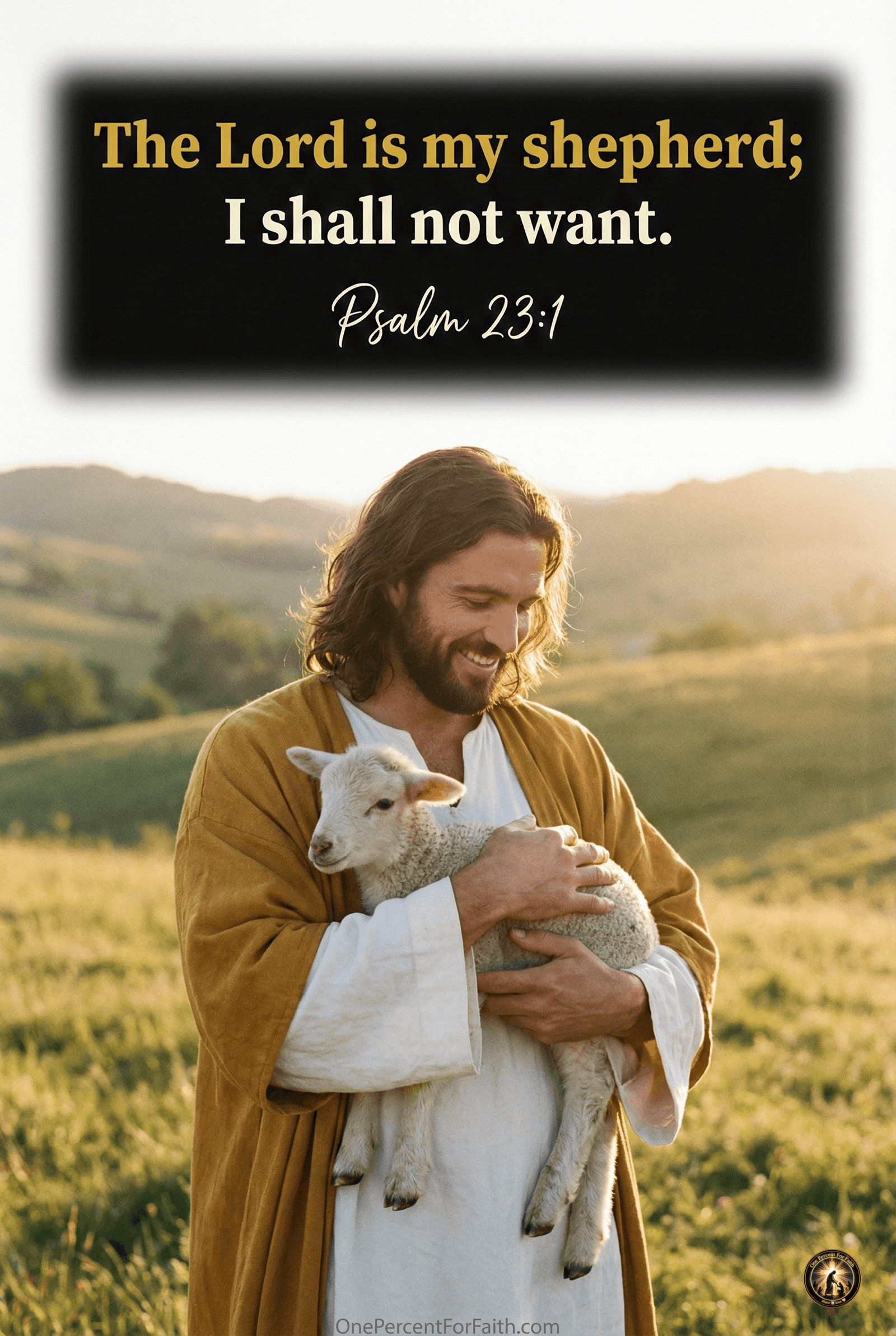
2. “The Lord is my shepherd; I shall not want.” — Psalm 23:1
We hear this at funerals, which is unfortunate. It’s actually a verse for anxious living.
A shepherd decides:
- Where the sheep go
- When they rest
- What dangers matter today
“Sheep” don’t plan five steps ahead. They follow.
“I shall not want” doesn’t mean you’ll get everything. It means nothing essential will be missing—even if it feels that way right now.
In stress, your brain says: What if this ruins everything?
This verse quietly says: You’re still being led.
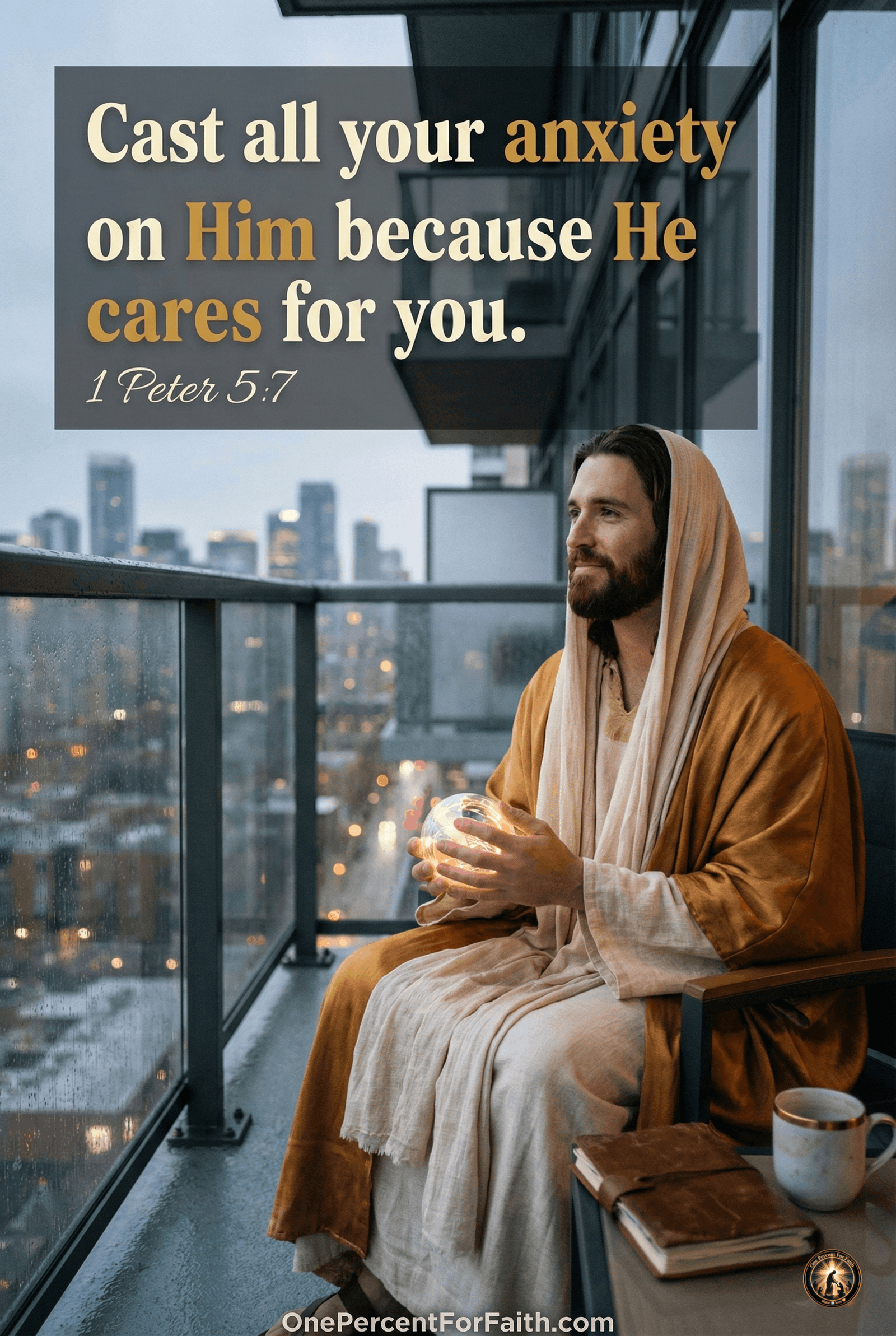
3. “Cast all your anxiety on Him because He cares for you.” — 1 Peter 5:7
Notice the word all.
Not the reasonable anxiety.
Not the spiritual-looking anxiety.
All of it.
This verse assumes anxiety will exist. It doesn’t shame it. It redirects it.
And the reason given is simple: because He cares.
Not because you prayed correctly.
Not because you earned peace.
Because care precedes calm.
That matters when stress makes you feel unseen.
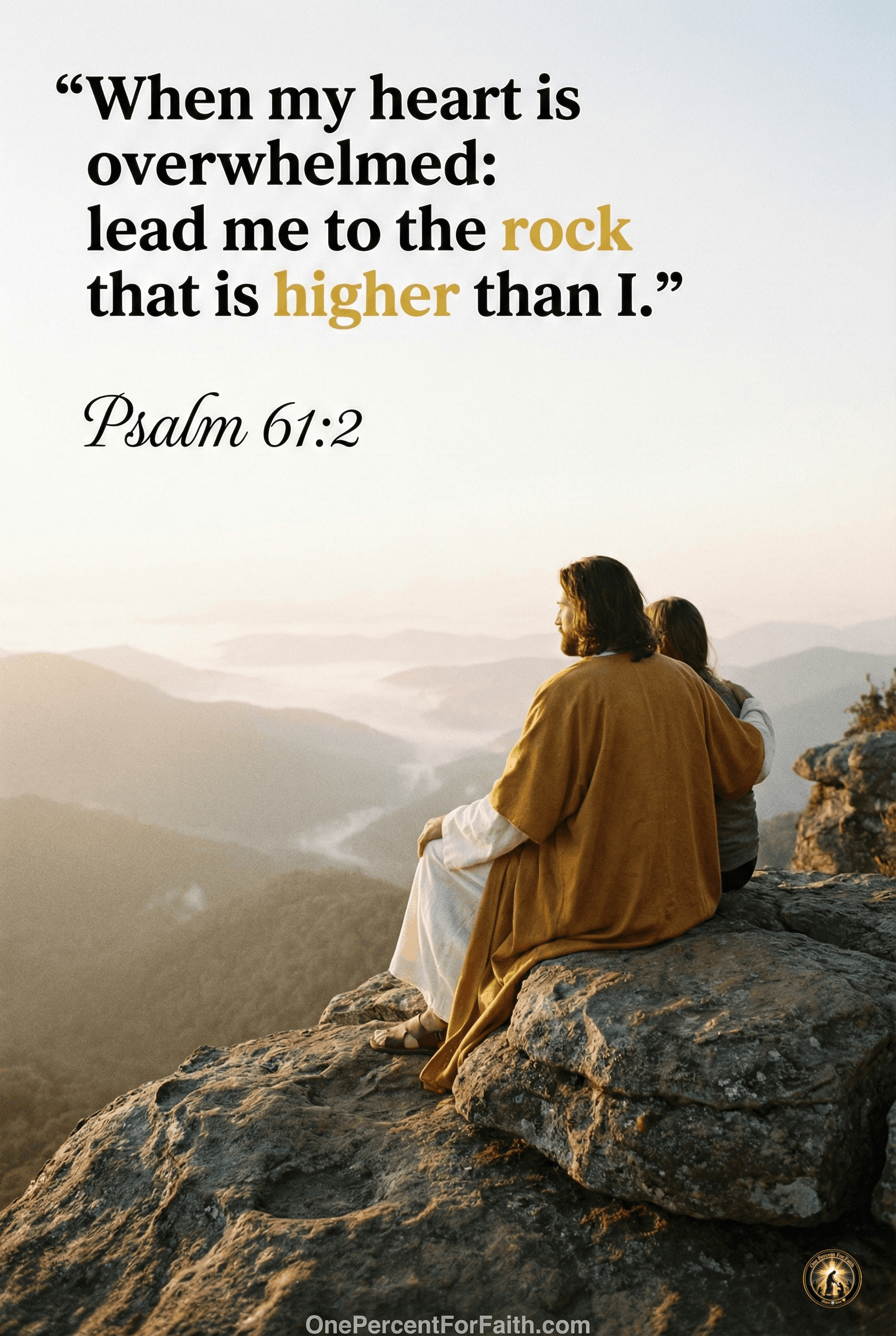
4. “When my heart is overwhelmed: lead me to the rock that is higher than I.” — Psalm 61:2
This is one of the most honest verses in Scripture.
No pretending.
No spiritual gloss.
Just: I’m overwhelmed.
And the solution isn’t “try harder.”
It’s elevation.
When stress collapses your perspective, you don’t need more effort. You need a higher reference point—something steadier than your emotions.
This verse doesn’t say you climb the rock.
It says you’re led.
That’s quiet mercy.
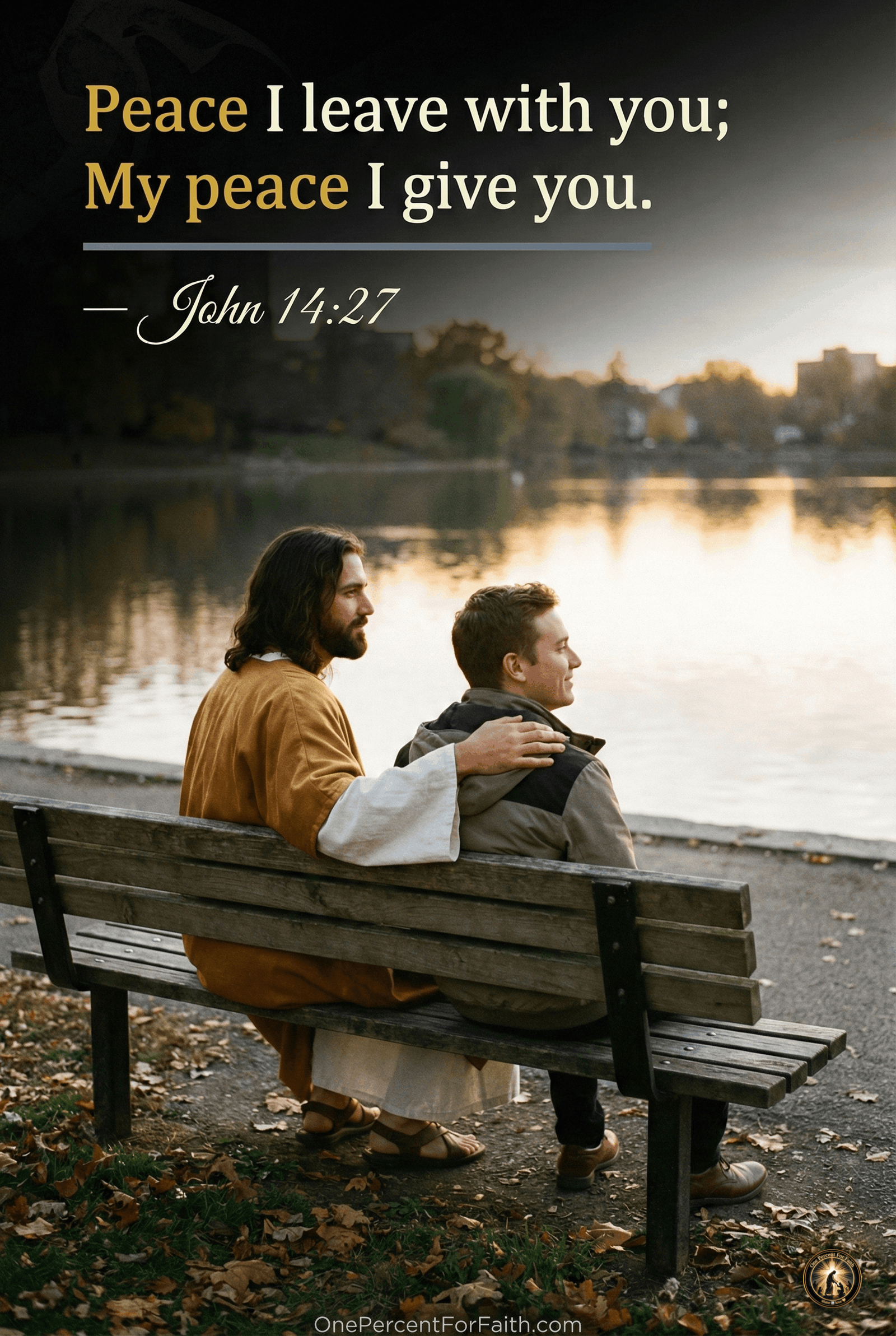
5. “Peace I leave with you; My peace I give you.” — John 14:27
Jesus doesn’t promise the absence of trouble here. In fact, He explicitly says trouble will come.
What He offers instead is a different kind of peace.
Not:
- Circumstantial
- Fragile
- Dependent on outcomes
But something internal. Transferable. Given.
“I do not give to you as the world gives.”
The world’s peace requires control.
This peace survives chaos.
That’s why it works during stress.
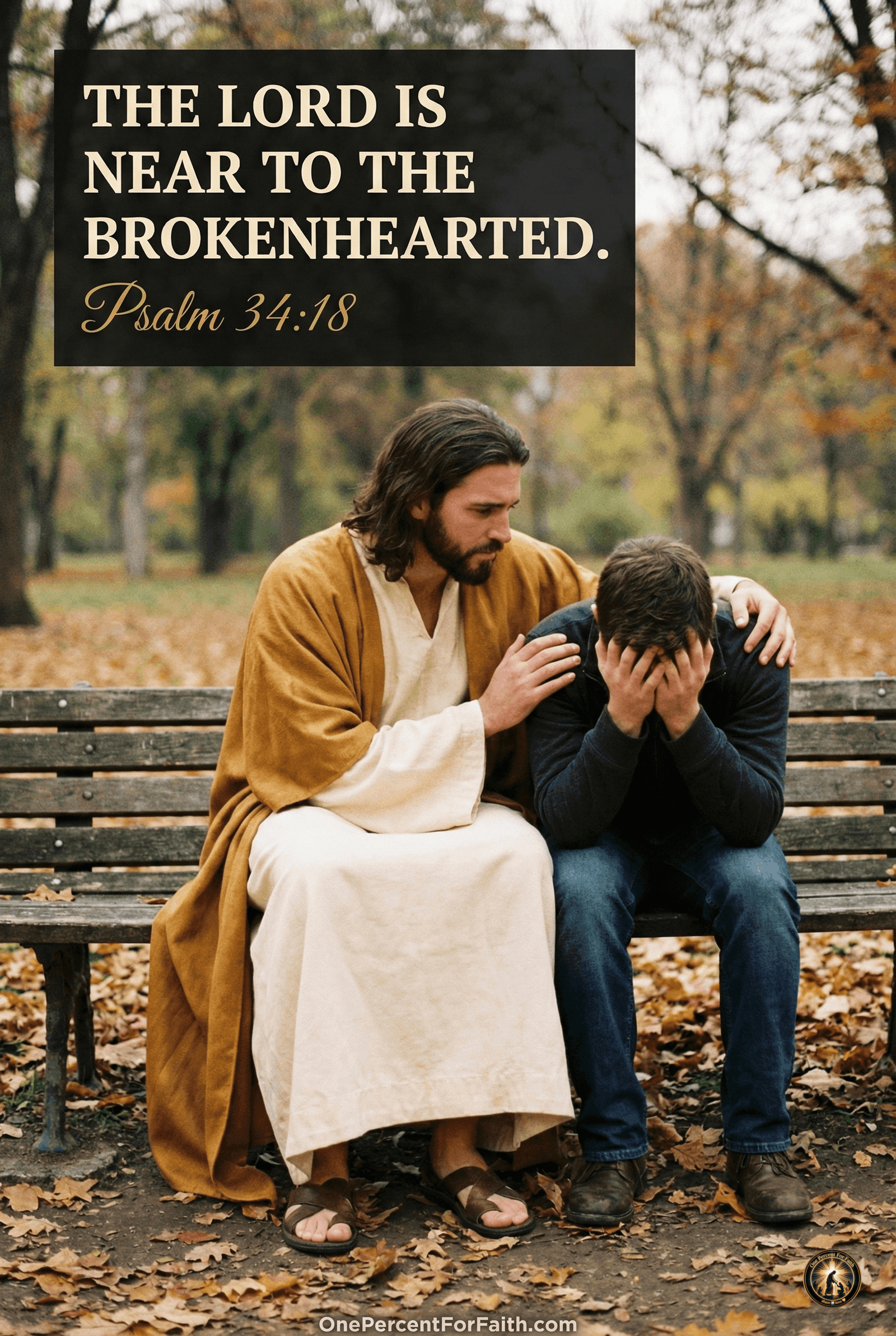
6. “The Lord is near to the brokenhearted.” — Psalm 34:18
Stress often carries shame.
You think:
- I should be handling this better.
- Other people seem fine.
- Why am I falling apart?
This verse dismantles that narrative.
God isn’t near to the composed.
He’s near to the brokenhearted.
Near doesn’t mean fixing immediately.
It means presence without judgment.
Sometimes peace begins there.
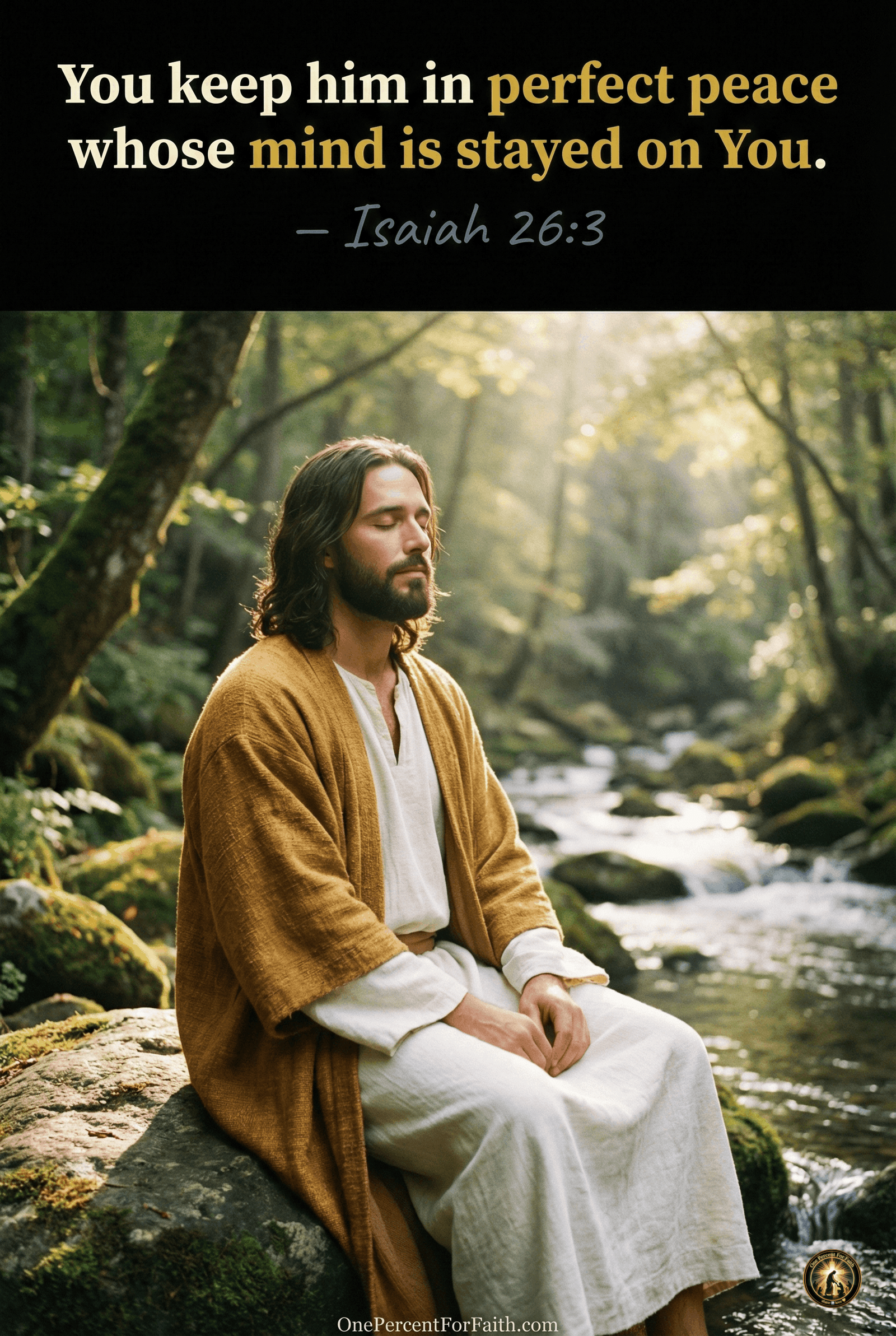
7. “You keep him in perfect peace whose mind is stayed on You.” — Isaiah 26:3
This verse gets misunderstood.
It’s not saying, “If you think about God enough, stress disappears.”
“Stayed” means anchored. Fixed. Held.
In stressful times, your mind bounces:
- Worst-case scenarios
- Regret
- Fear loops
Peace comes not from constant focus, but from having something solid to return to.
Like an anchor in rough water.
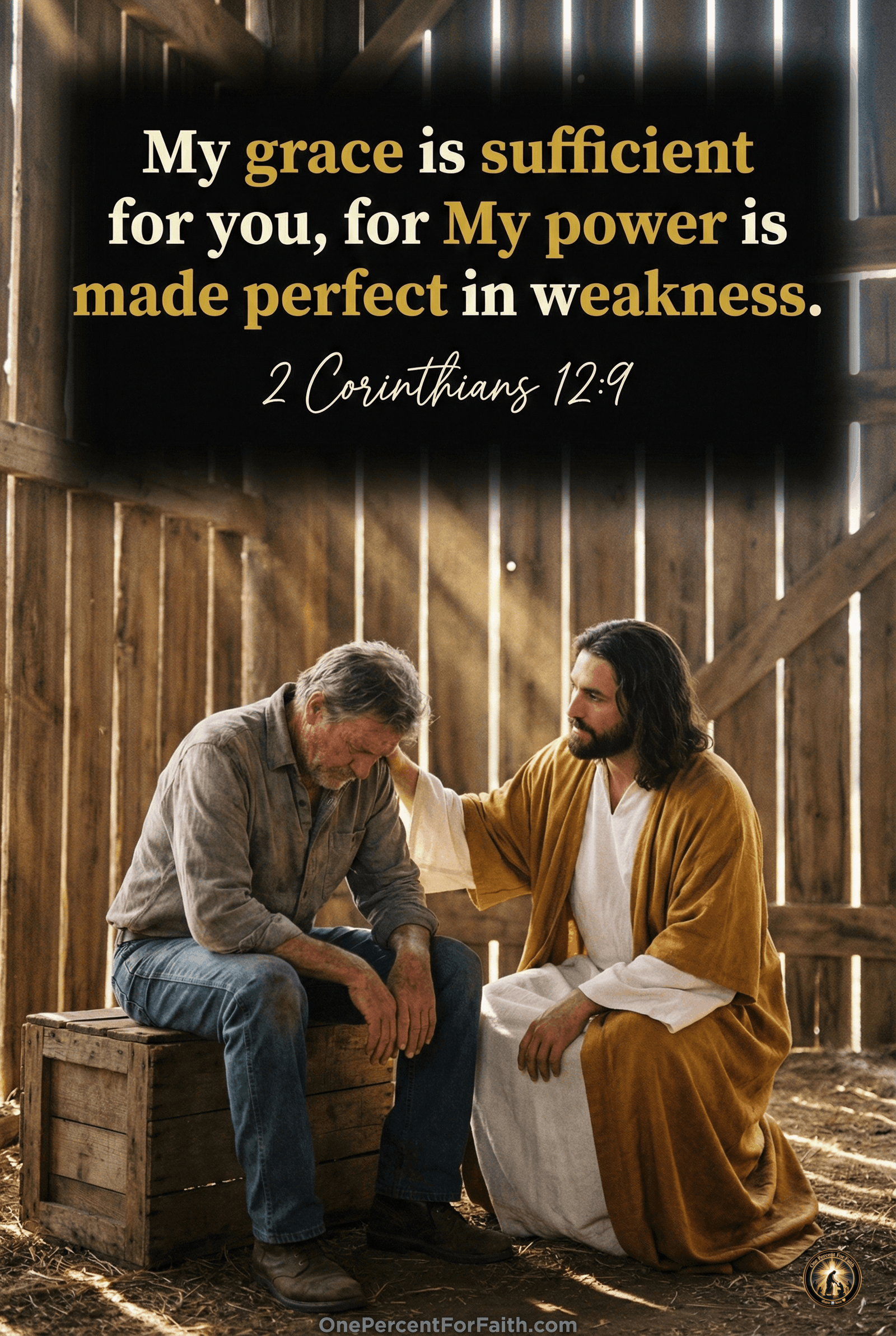
8. “My grace is sufficient for you, for My power is made perfect in weakness.” — 2 Corinthians 12:9
This verse runs counter to productivity culture.
We’re taught:
- Push through
- Optimize
- Power up
God says something else.
Weakness is not a failure state.
It’s a connection point.
When stress exposes your limits, grace doesn’t wait for you to recover. It meets you there.
That reframes everything.
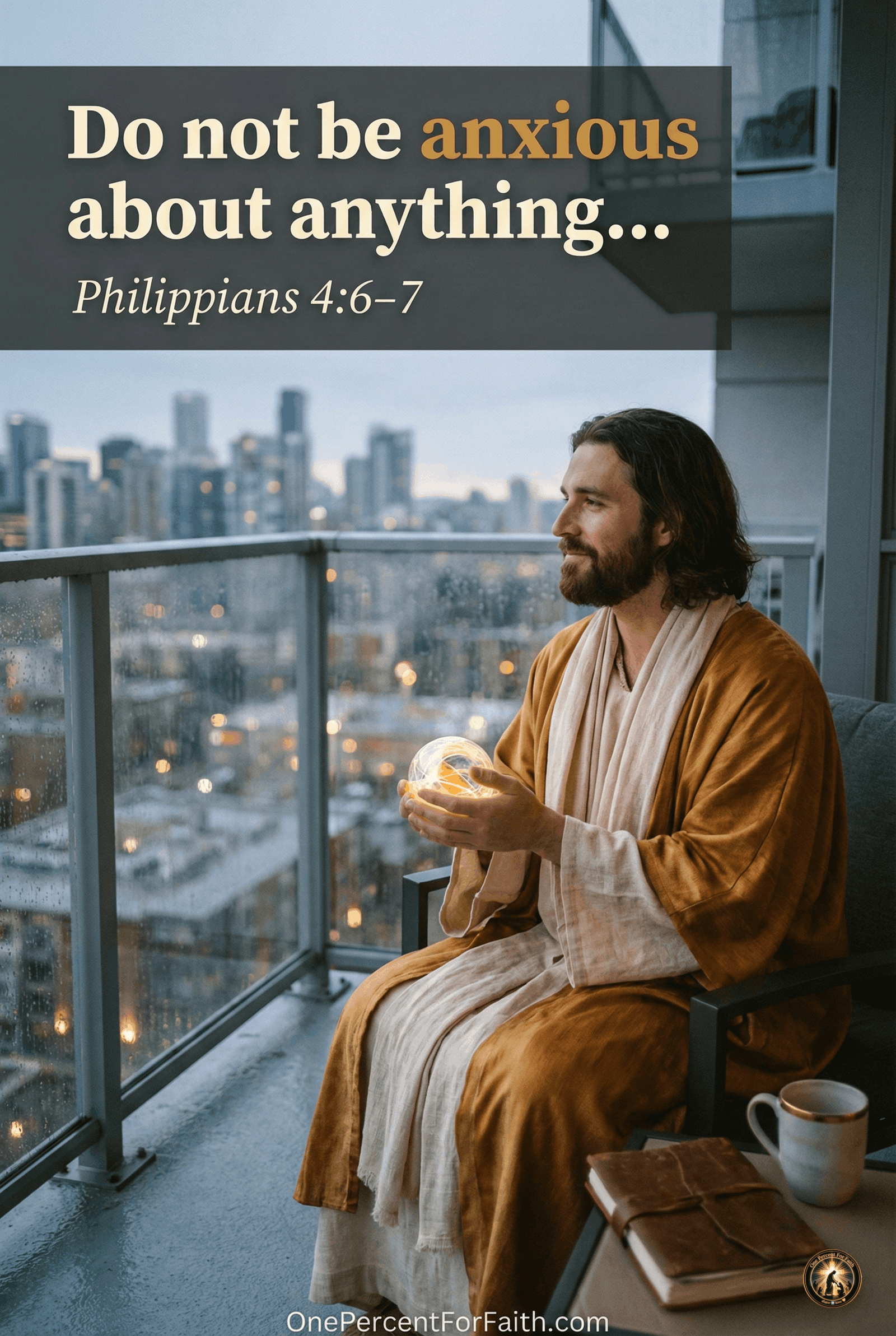
9. “Do not be anxious about anything…” — Philippians 4:6–7
Yes, this verse starts with a command. But it doesn’t end there.
It gives a process:
- Acknowledge
- Pray
- Give thanks
- Receive peace
And the peace described does something specific:
It guards your heart and mind.
That’s military language.
Peace isn’t a feeling here. It’s protection.
Especially useful when your thoughts won’t stop.
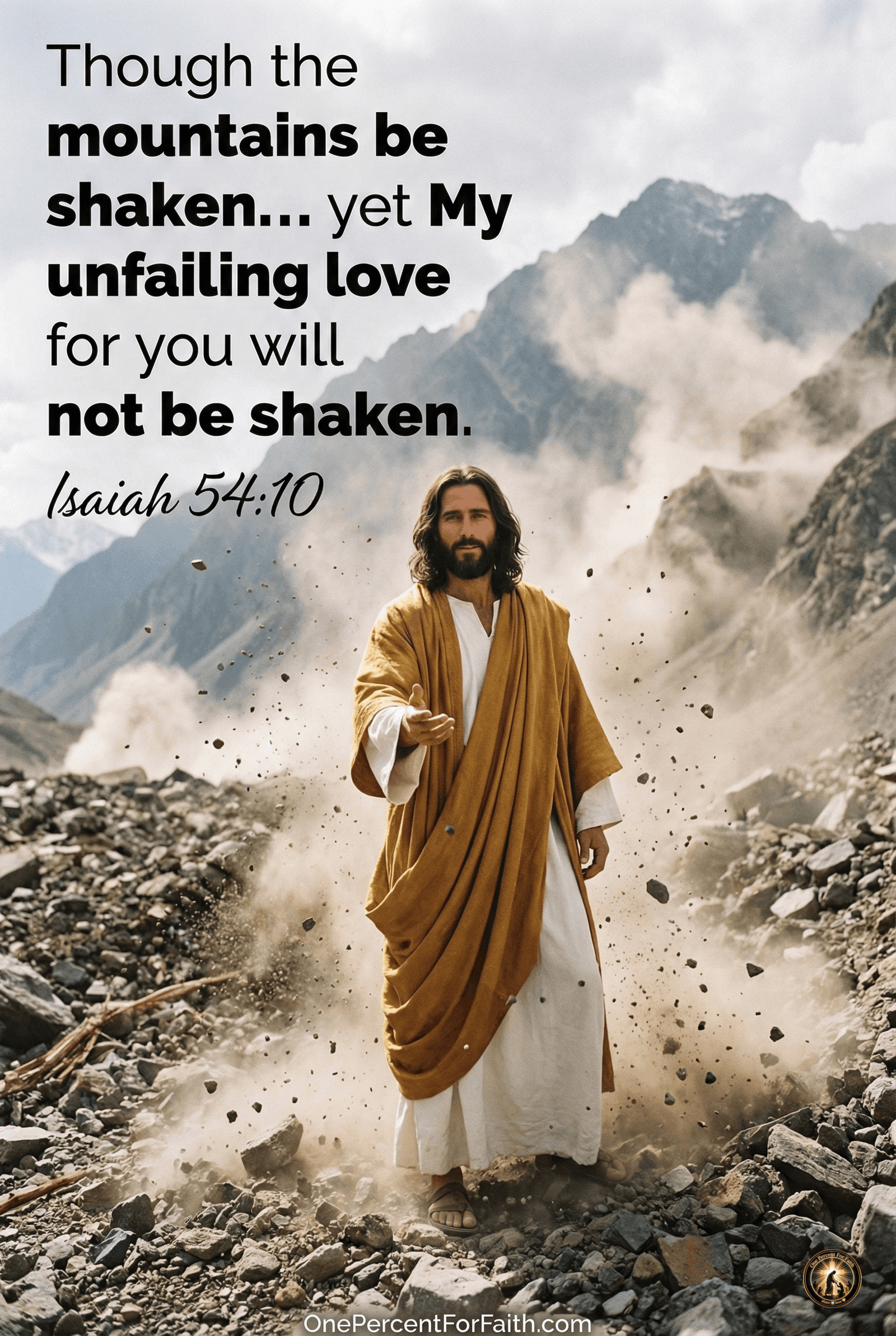
10. “Though the mountains be shaken… yet My unfailing love for you will not be shaken.” — Isaiah 54:10
Stress feels like instability everywhere.
This verse zooms out and says:
Even if the most permanent things fall apart, love remains.
Not conditional love.
Not earned love.
Unfailing love.
That’s not poetic fluff. That’s psychological grounding.
How to Actually Use These Verses When You’re Stressed
Reading is one thing. Applying is another.
Here’s what tends to work better than verse-hopping:
- Pick one verse for the week. Not ten.
- Read it out loud. Stress lives in the body.
- Don’t analyze it. Let it sit.
- Repeat it when your thoughts spiral—not to stop them, but to interrupt them.
Peace often arrives quietly.
Don’t rush past it.
A Quick Reality Check
Bible verses don’t erase stress magically.
They:
- Reframe it
- Contain it
- Keep it from swallowing you whole
If you’re in a season where peace feels thin, that doesn’t mean your faith is weak. It usually means the weight is real.
Scripture was written by people who knew that feeling.
That’s why it still works.
Frequently Asked Questions
What is the best Bible verse for stress and anxiety?
It depends on the kind of stress. Psalm 46:10 helps with control issues. Philippians 4:6–7 helps with racing thoughts. Psalm 61:2 helps when you’re emotionally overwhelmed.
Can Bible verses really reduce stress?
They don’t replace therapy or rest, but they can lower mental intensity by shifting focus, responsibility, and perspective—similar to grounding techniques.
Should I read Bible verses silently or out loud?
Out loud often works better during stress. Hearing your own voice slows breathing and interrupts anxious loops.
What if Bible verses don’t bring immediate peace?
That’s normal. Peace is often gradual. Think of Scripture as stabilizing pressure, not instant relief.
Are there Bible verses specifically about inner peace?
Yes. John 14:27, Isaiah 26:3, and Psalm 29:11 directly address inner peace rather than external circumstances.
If you’re stressed right now, don’t try to fix everything tonight.
Just sit with one verse.
Let it hold you for a minute.
That’s often enough to start.