
Love gets romanticized.
We frame it in soft lighting. Wedding songs. Instagram captions. Matching hoodies.
But real relationships? They’re loud. Misunderstood. Sometimes boring. Sometimes brutal.
That’s why encouraging relationship Bible verses about love matter. Not the Pinterest versions. The real ones. The kind that hit when you’re annoyed, disappointed, or quietly wondering, “Is this even worth it?”
Let’s go there.
Love Is Patient — But That’s the Hard Part

“Love is patient, love is kind…” — First Corinthians 13:4–7
Everyone quotes this at weddings.
Nobody talks about what patience actually costs.
Patience means:
- You don’t escalate.
- You don’t win the argument.
- You sit in discomfort.
That’s not poetic. That’s discipline.
Most relationship tension isn’t about love disappearing. It’s about impatience growing faster than commitment.
If both people slow down instead of reacting? Half the damage never happens.
And here’s the uncomfortable part: patience doesn’t feel romantic. It feels unfair sometimes. But it builds something steady. Something boring in a good way.
Love Isn’t Just a Feeling. It’s a Choice on the Worst Day.

“Above all, love each other deeply…” — First Peter 4:8
Deep love shows up when the vibe is gone.
When you’re tired. When they’re wrong. When you don’t feel understood.
Anybody can love when it’s easy.
Deep love absorbs friction.
This verse doesn’t promise butterflies. It implies effort.
And effort is underrated in modern relationships.
We’ve been taught that “if it’s right, it won’t feel hard.”
That’s not biblical. That’s cultural.
Two Are Better Than One — But Only If They Work Like Two

“Two are better than one…” — Ecclesiastes 4:9–10
People use this to justify staying together.
But read it carefully. It talks about mutual support.
If one falls, the other lifts.
If both fall? That’s partnership failure.
This verse isn’t romantic. It’s practical.
It assumes:
- You both contribute.
- You both show up.
- You both carry weight.
Encouragement in relationships isn’t passive. It’s structural.
Ask yourself:
If one of you collapsed emotionally, financially, spiritually — would the other realistically lift?
That’s what this verse is pointing to.
Love Without Humility Turns Into Power Struggles

“Be completely humble and gentle…” — Ephesians 4:2
Humility is not weakness.
It’s choosing understanding over ego.
Most arguments are not about the issue.
They’re about control.
Who’s right?
Who apologizes first?
Who gets the last word?
Humility interrupts that spiral.
It says, “Winning this isn’t worth losing us.”
That’s mature love.
And it’s rare.
Real Love Reflects Something Bigger
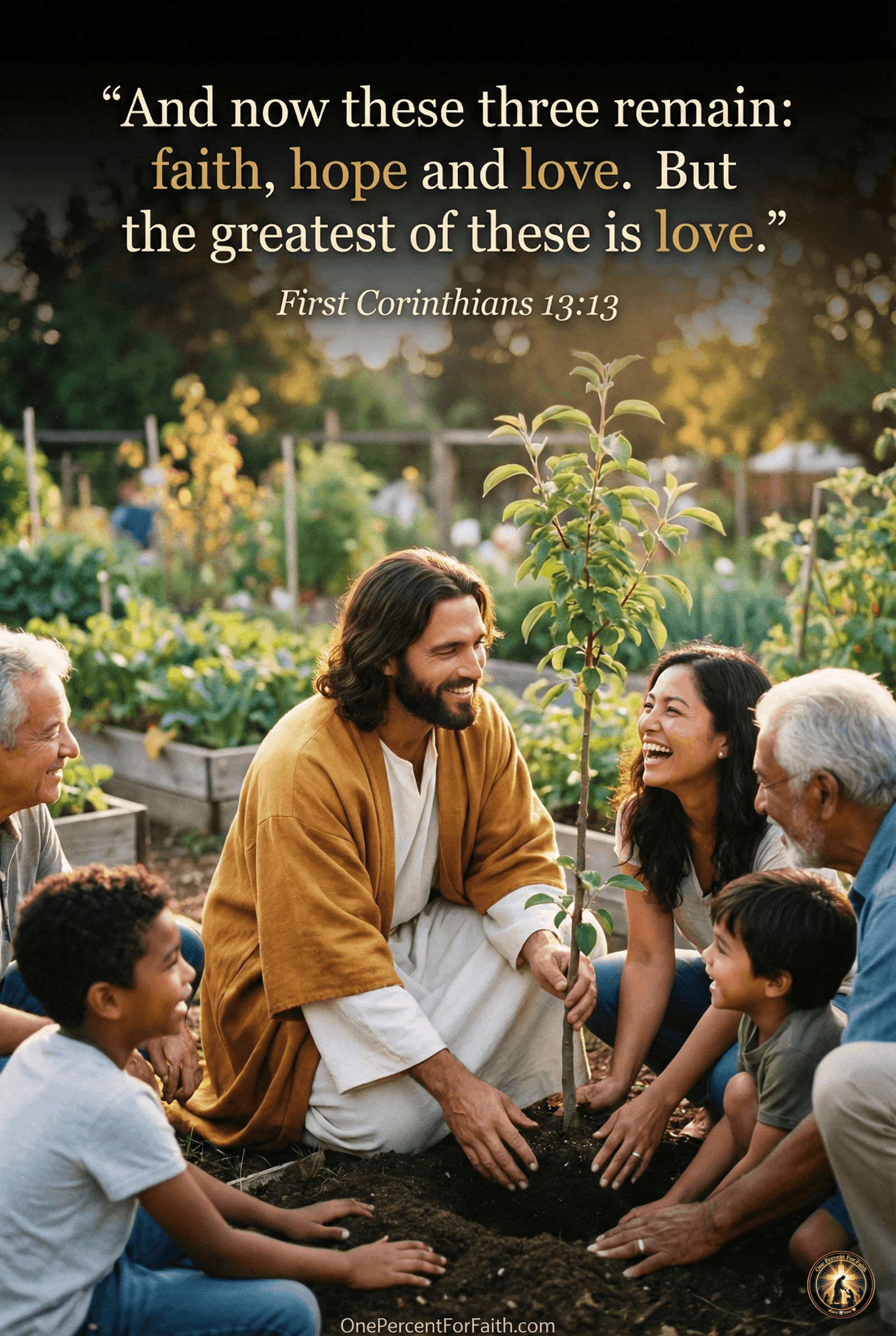
“And now these three remain: faith, hope and love. But the greatest of these is love.” — First Corinthians 13:13
Notice the hierarchy.
Love isn’t just emotional attachment. It’s foundational.
Faith anchors you.
Hope pulls you forward.
Love sustains both.
If your relationship has affection but no faith or hope? It will feel fragile.
Encouragement doesn’t come from chemistry alone.
It comes from shared direction.
Where are you two going?
What are you building?
Love grows when it has purpose.
Forgiveness Is the Quiet Engine of Long-Term Love

“Bear with each other and forgive one another…” — Colossians 3:13
No relationship survives without forgiveness.
None.
The longer you’re together, the more opportunities you’ll have to resent each other.
That’s not pessimism. That’s reality.
Forgiveness doesn’t erase memory.
It prevents corrosion.
You can technically stay together without forgiving.
But the atmosphere changes. It gets cold.
Encouragement in love often looks like letting go before bitterness sets roots.
What These Verses Really Teach About Relationships
If we strip the surface layer, here’s the pattern:
- Love requires restraint.
- Love requires forgiveness.
- Love requires shared purpose.
- Love requires humility.
- Love requires effort.
None of that is trendy.
But it works.
And here’s the paradox:
The more intentional love becomes, the more natural it eventually feels.
Like training a muscle. At first it burns. Later it strengthens.
FAQ: Encouraging Relationship Bible Verses About Love
What is the most powerful Bible verse about love in relationships?
Many people point to First Corinthians 13:4–7 because it defines love behaviorally — not emotionally. It shifts the focus from feeling to action, which is crucial for real relationships.
Which Bible verse helps couples during conflict?
Ephesians 4:2 is powerful during arguments. It emphasizes humility and patience — the two traits that de-escalate most tension.
What Bible verse talks about partnership in marriage?
Ecclesiastes 4:9–10 highlights mutual support. It frames love as cooperation, not dependency.
How can Bible verses strengthen a struggling relationship?
They re-anchor you to principle instead of emotion. When feelings fluctuate (and they will), scripture reminds you of your commitment structure — patience, forgiveness, humility, devotion.
Are these verses only for married couples?
No. These apply to dating, engagement, and marriage. The principles of love don’t change with relationship labels — only the responsibility level increases.
Love isn’t sustained by hype.
It’s sustained by repeated, quiet choices.
Not glamorous.
Not viral.
But solid.
And honestly? That kind of love feels better in the long run.