Discover beautiful Christmas Jesus quotes that bring deep meaning to the season. Save these faith-filled holiday scripture quotes & share the true spirit of Christmas!
Christmas has a way of surfacing things you haven’t dealt with. The lights go up, the music loops, and somewhere in the middle of all of it, you’re left wondering why none of it feels like enough. You’re not broken for feeling that way. That quiet tension has been the backdrop of Christmas since the very beginning — a world that needed something it couldn’t manufacture for itself.
The quotes and verses here weren’t written to decorate a season. They were spoken into real darkness. Bethlehem wasn’t a romantic setting. It was cold, inconvenient, and politically unstable. And that’s exactly where these words were born. That matters more than most Christmas content will tell you.
Read these slowly. Not all of them will land the same way. Some will meet you exactly where you are. Others might only make sense in a different December than this one.
The First Thing Heaven Said at Christmas Was “Don’t Be Afraid”
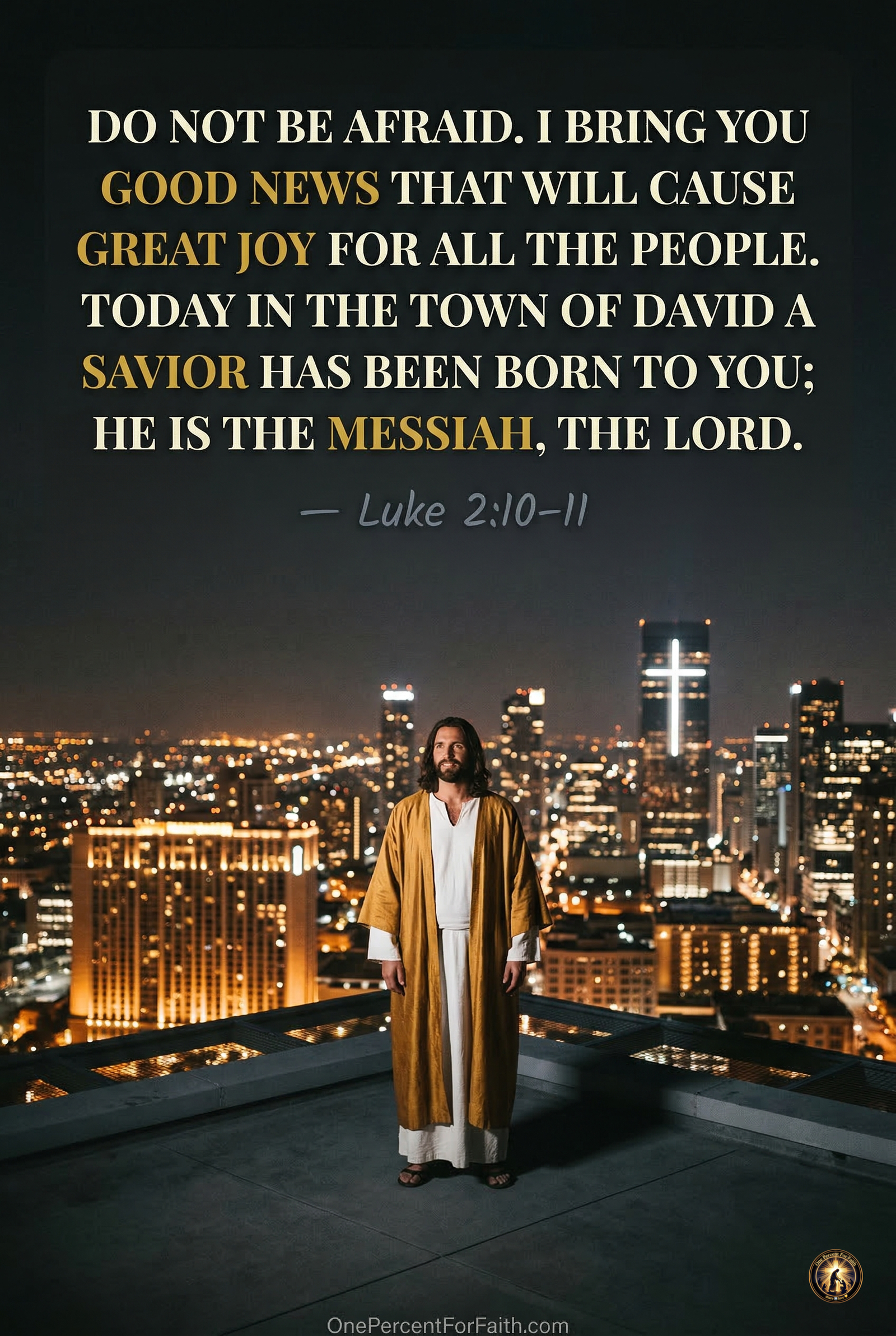
“Do not be afraid. I bring you good news that will cause great joy for all the people. Today in the town of David a Savior has been born to you; he is the Messiah, the Lord.” — Luke 2:10–11
The angel didn’t open with theology. The first words out of heaven on the night of Christ’s birth were don’t be afraid. That’s worth sitting with. Whatever you’re walking into this Christmas — the first one without someone you loved, the one where the finances are tight, the one where a relationship is quietly unraveling — those words were spoken before any of that was explained.
Fear has a way of making Christmas feel conditional. Like you can only receive the joy once things stabilize, once the hard thing resolves. But the announcement came to shepherds on a night shift. Ordinary people, unsuspecting, in the middle of an unremarkable Tuesday. The joy wasn’t dependent on them being ready.
You don’t have to be ready. The news is still good.
When Infinity Chose to Fit Into Something Small
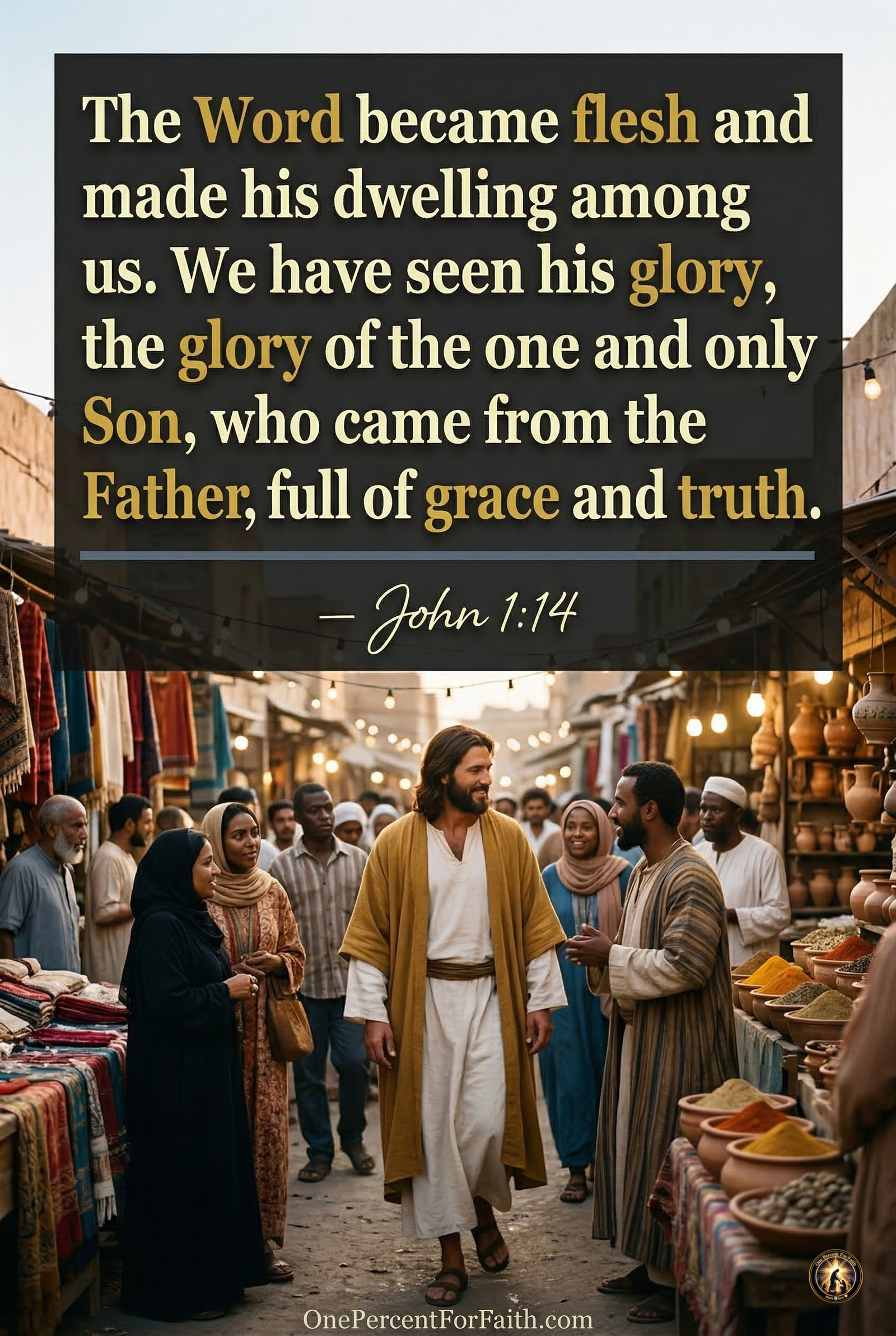
“The Word became flesh and made his dwelling among us. We have seen his glory, the glory of the one and only Son, who came from the Father, full of grace and truth.” — John 1:14
John could have written the Christmas story as a birth announcement. Instead, he wrote it as a metaphysical event. The Word — the same force that spoke the universe into existence — became flesh. Skin and bone. An infant who couldn’t hold his own head up.
There’s something almost uncomfortable about that if you think about it long enough. The infinite compressing itself into the finite. Not because it had to, but because love tends to close distance. That’s what grace does. It doesn’t wait for you to become worth it. It moves toward you.
The glory John describes wasn’t what the world expected. It arrived in a manger, in a city where nobody had reserved a room. If you’re in a season where you feel overlooked, this verse is a quiet reminder that God’s greatest entrance was entirely unannounced.
The Peace Announced Before the World Quieted Down
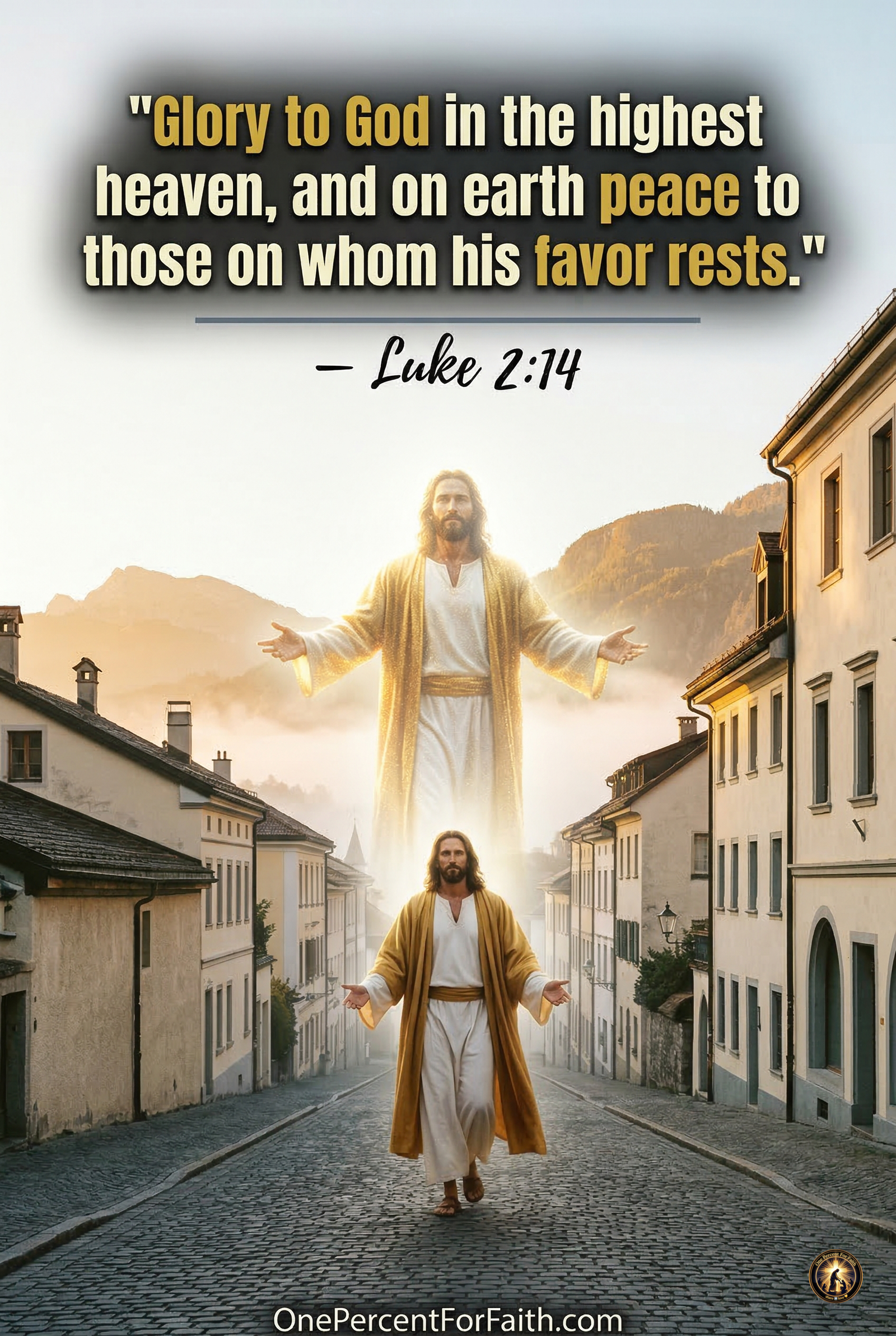
“Glory to God in the highest heaven, and on earth peace to those on whom his favor rests.” — Luke 2:14
This wasn’t peace declared after the war ended. It was peace declared into an occupied territory — Rome-controlled Judea, a world that had no structural reason to be calm. The announcement of peace at Christmas has always been a statement about something that exists beneath the surface of circumstances.
Peace as the world gives it is situational. It requires the right conditions — no conflict, no uncertainty, nothing unresolved. The peace connected to Christ’s arrival is different. It’s not the absence of trouble. It’s a stillness that can coexist with trouble.
If you’re waiting for life to settle before you allow yourself to feel peace, this verse suggests you may be waiting for the wrong signal. The peace was the gift — not the reward for things finally working out.
The Verse That Christmas Was Always Building Toward
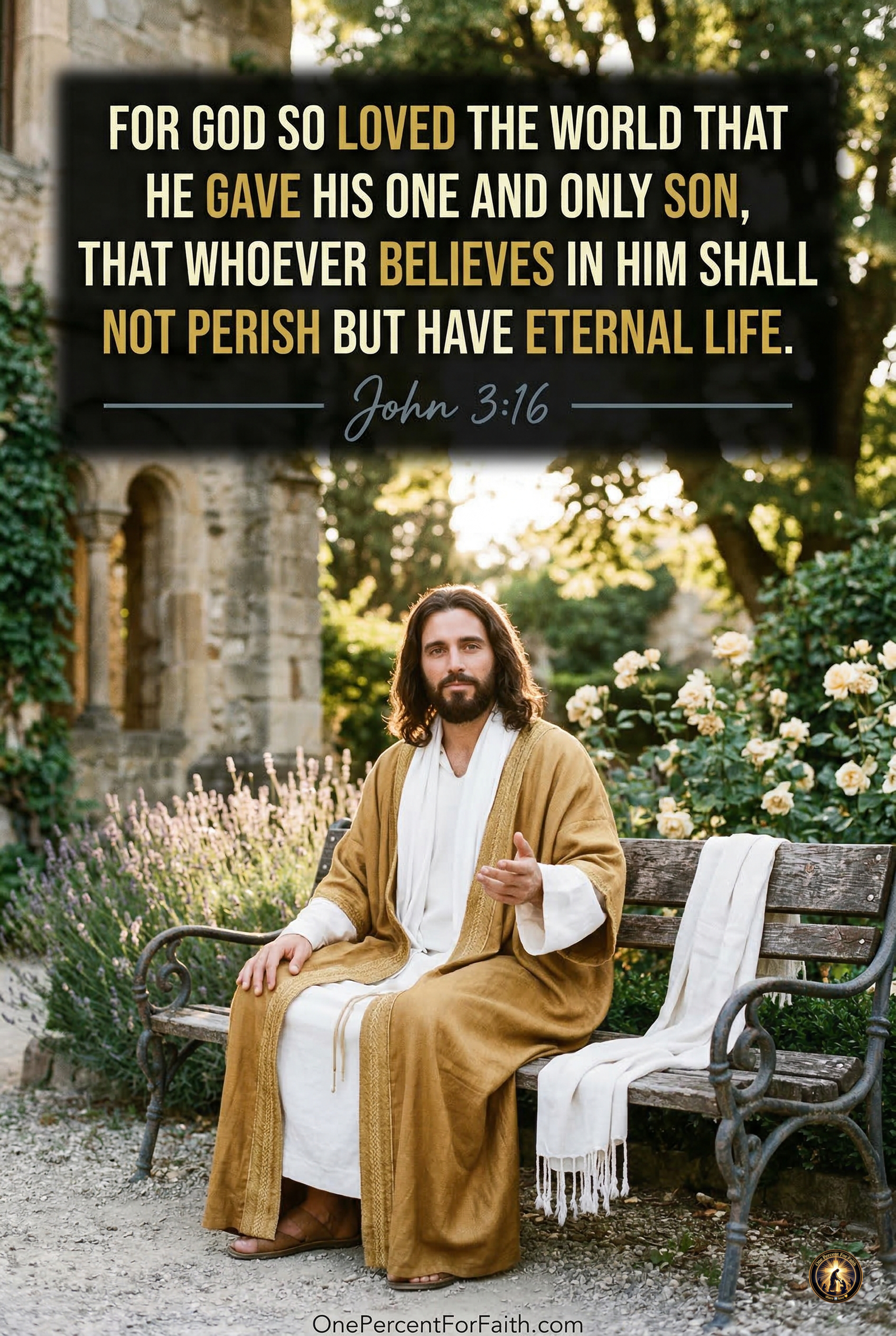
“For God so loved the world that he gave his one and only Son, that whoever believes in him shall not perish but have eternal life.” — John 3:16
Every manger scene, every candle, every carol is a footnote to this. The birth was not the end of the story. It was the beginning of the answer. God gave — not loaned. Not provisionally. The word “gave” has permanence to it.
What makes this verse Christmas-specific isn’t the word “believe” — it’s the word “gave.” Christmas is the event where the giving began. The child in Bethlehem was already, in a sense, walking toward the cross. The whole movement of the incarnation was love deciding to go all the way.
If you’ve spent Christmas feeling like you have to earn your place at the table — in your family, in your faith, in your own life — this verse pushes back hard on that. You were the reason for the giving.
What Light Actually Does in Dark Rooms
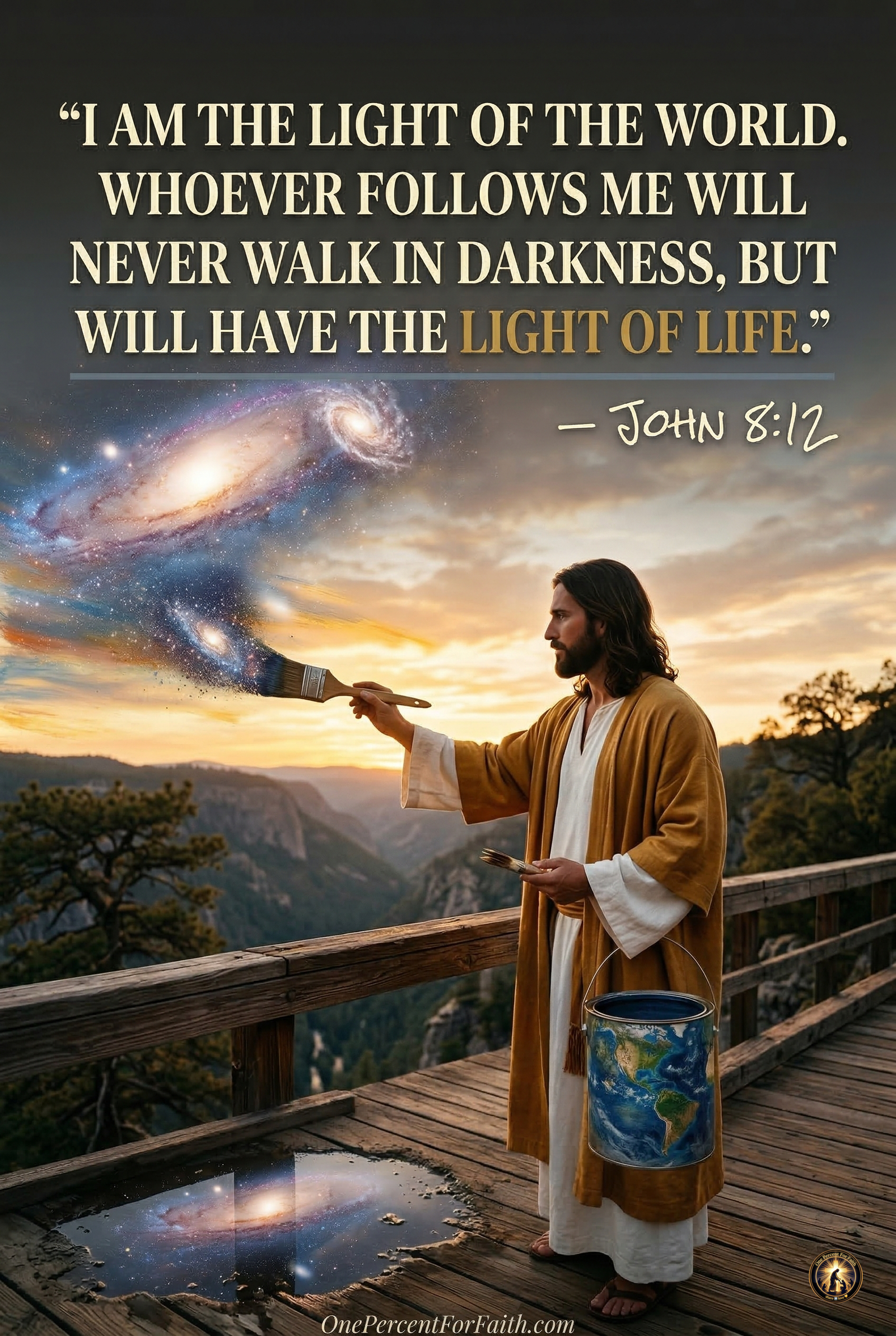
“I am the light of the world. Whoever follows me will never walk in darkness, but will have the light of life.” — John 8:12
Light doesn’t argue with darkness. It doesn’t negotiate. It just changes what’s visible. That’s what this declaration from Jesus does — it reframes what Christmas is actually celebrating. Not a warm aesthetic. Not nostalgia. A light with specific effects.
Darkness in scripture isn’t only about evil. It’s about disorientation. Not knowing which direction is forward. If that’s where you are this Christmas — uncertain, confused about what to do next — this isn’t a platitude. It’s a navigational offer.
Follow. That’s the operative word. Light requires movement toward it. Christmas is the annual reminder that the light is still on, still moving, and still worth orienting yourself toward.
God Has a Pattern of Choosing the Small Town
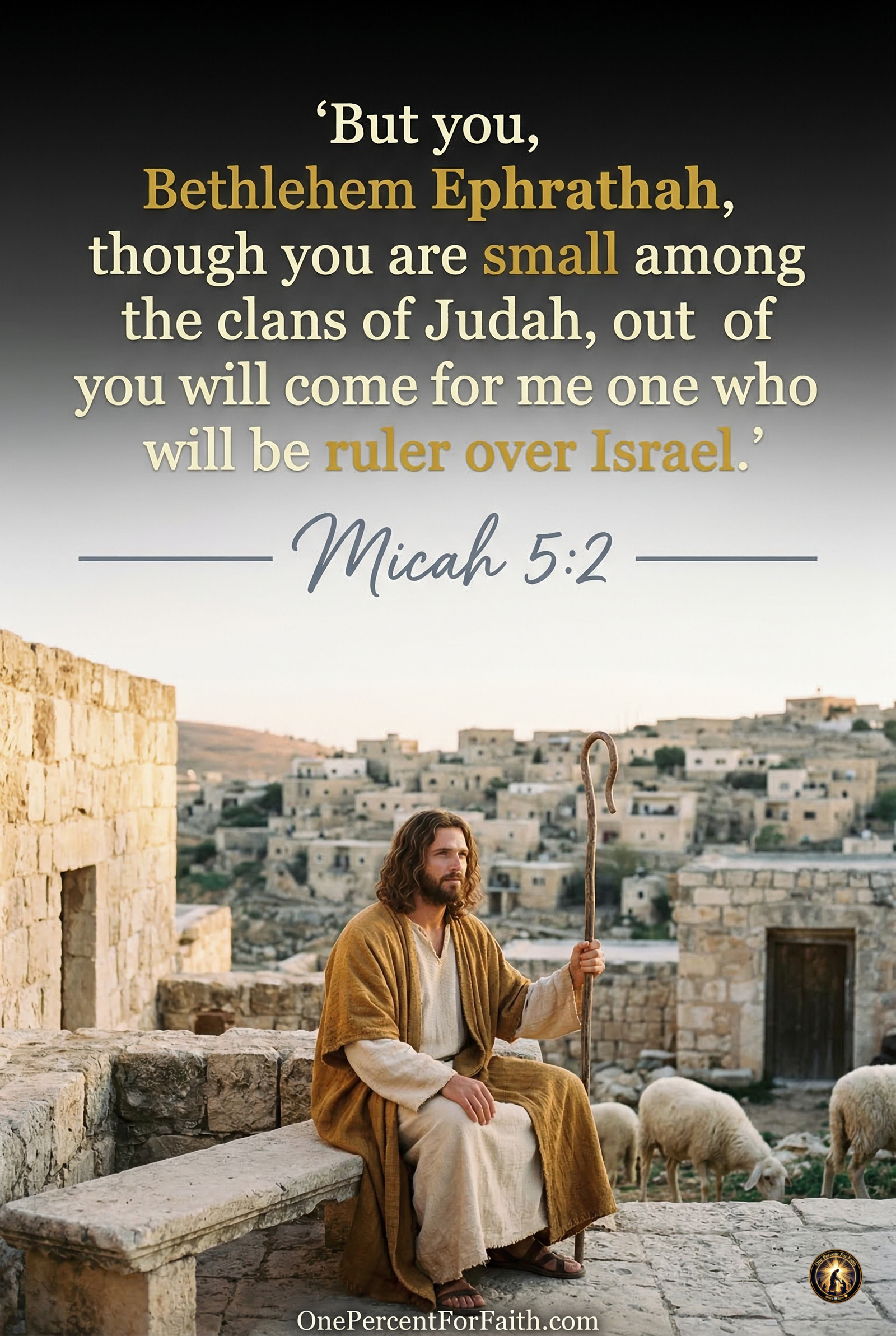
“But you, Bethlehem Ephrathah, though you are small among the clans of Judah, out of you will come for me one who will be ruler over Israel.” — Micah 5:2
Bethlehem was not on anyone’s shortlist. Jerusalem was the power center. Bethlehem was agricultural, peripheral, easily overlooked. And Micah, writing seven centuries before the birth, pinpointed it anyway. That’s not coincidence. That’s a theological pattern.
God tends to choose the thing the world passes over. The youngest son. The barren woman. The small town. If you’re in a season where you feel like you don’t register on anyone’s radar — like your life is happening in the minor leagues — this verse has something specific to say to you.
The place of origin doesn’t determine the significance of what’s born there. Christmas began in a small place, with small people, and changed everything.
The Kind of Peace That Doesn’t Require Good Circumstances
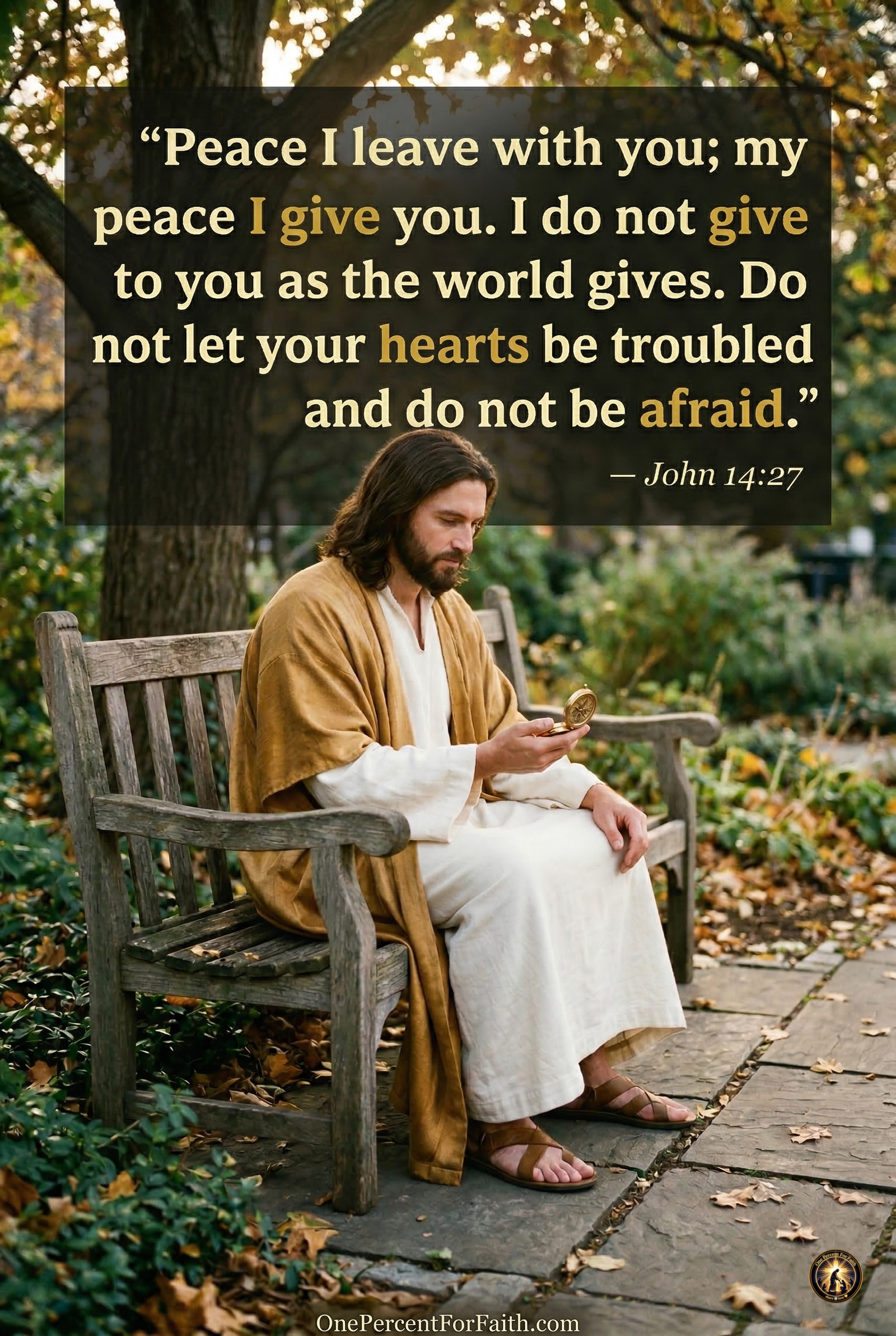
“Peace I leave with you; my peace I give you. I do not give to you as the world gives. Do not let your hearts be troubled and do not be afraid.” — John 14:27
Jesus said this the night before his crucifixion. That context matters enormously. He was not speaking from a position of comfort. He was hours from the worst thing imaginable. And he was giving peace — not borrowing it, not performing it. Giving it.
The peace of Christ is not the peace of resolved problems. If it were, Jesus could not have offered it that night. It is something more structural — a settled sense that underneath the chaos, something is held. That’s distinct from how the world packages peace, which is essentially just “wait until things improve.”
This Christmas, if your table is incomplete, if your health is uncertain, if your future is genuinely unclear — this verse is not asking you to pretend. It’s offering something that can coexist with all of that.
He Said Come — Not Perform, Not Fix Yourself First
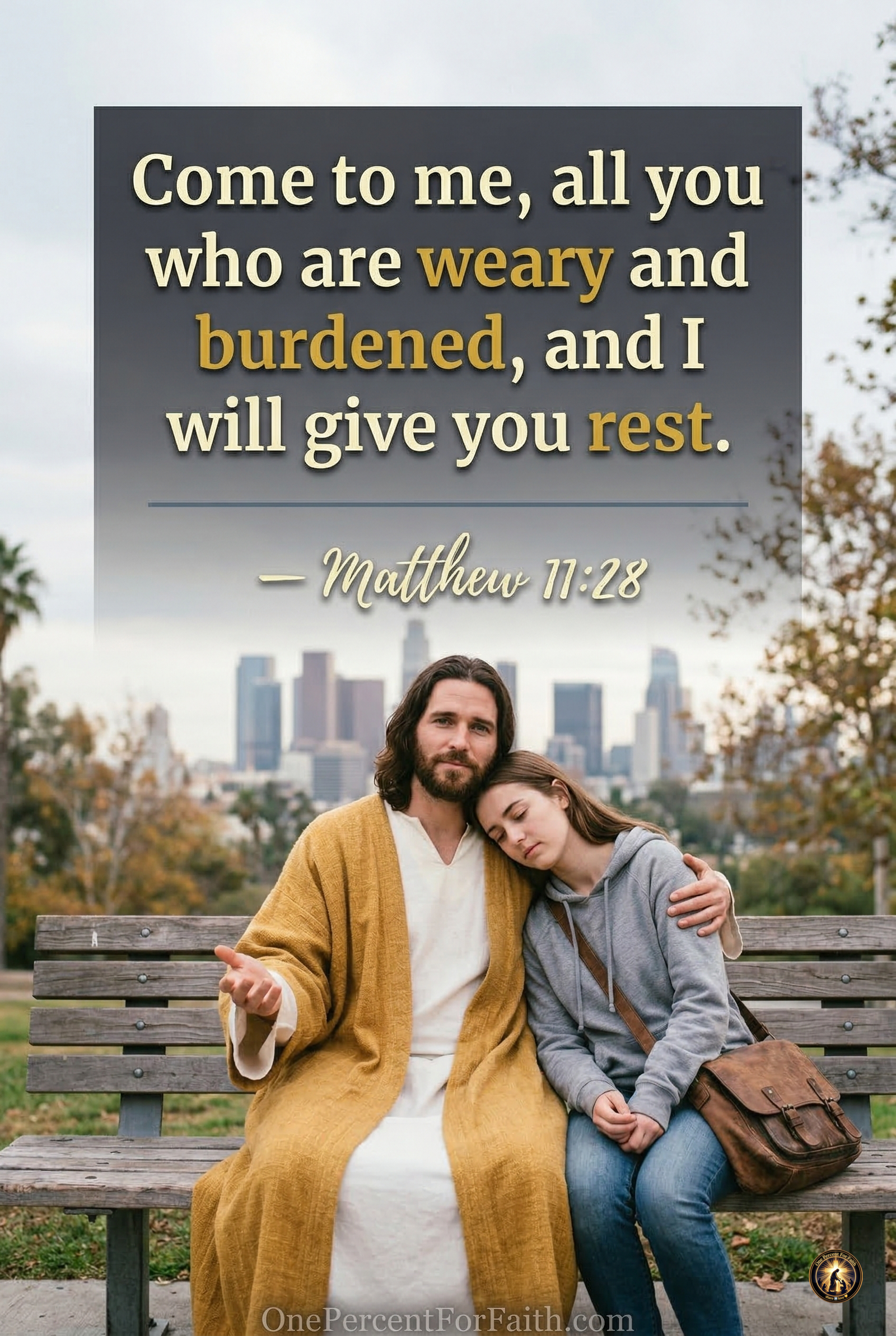
“Come to me, all you who are weary and burdened, and I will give you rest.” — Matthew 11:28
The invitation is unconditional on the front end. Weary. Burdened. Not “once you’ve cleaned yourself up.” Not “after you’ve had a spiritual breakthrough.” The entry requirement is exhaustion, not readiness.
Christmas puts enormous emotional weight on people. There’s the expectation to be joyful, present, generous, grateful — and sometimes you’re running on empty. This verse was not written for people at the top of their game. It was written for people who are quietly done.
If that’s you this December, this may be the most important invitation in this entire list. Not because it’s easy. But because it’s addressed specifically to the tired one — the one who’s been doing too much for too long.
The Job Description He Read Out Loud in His Hometown
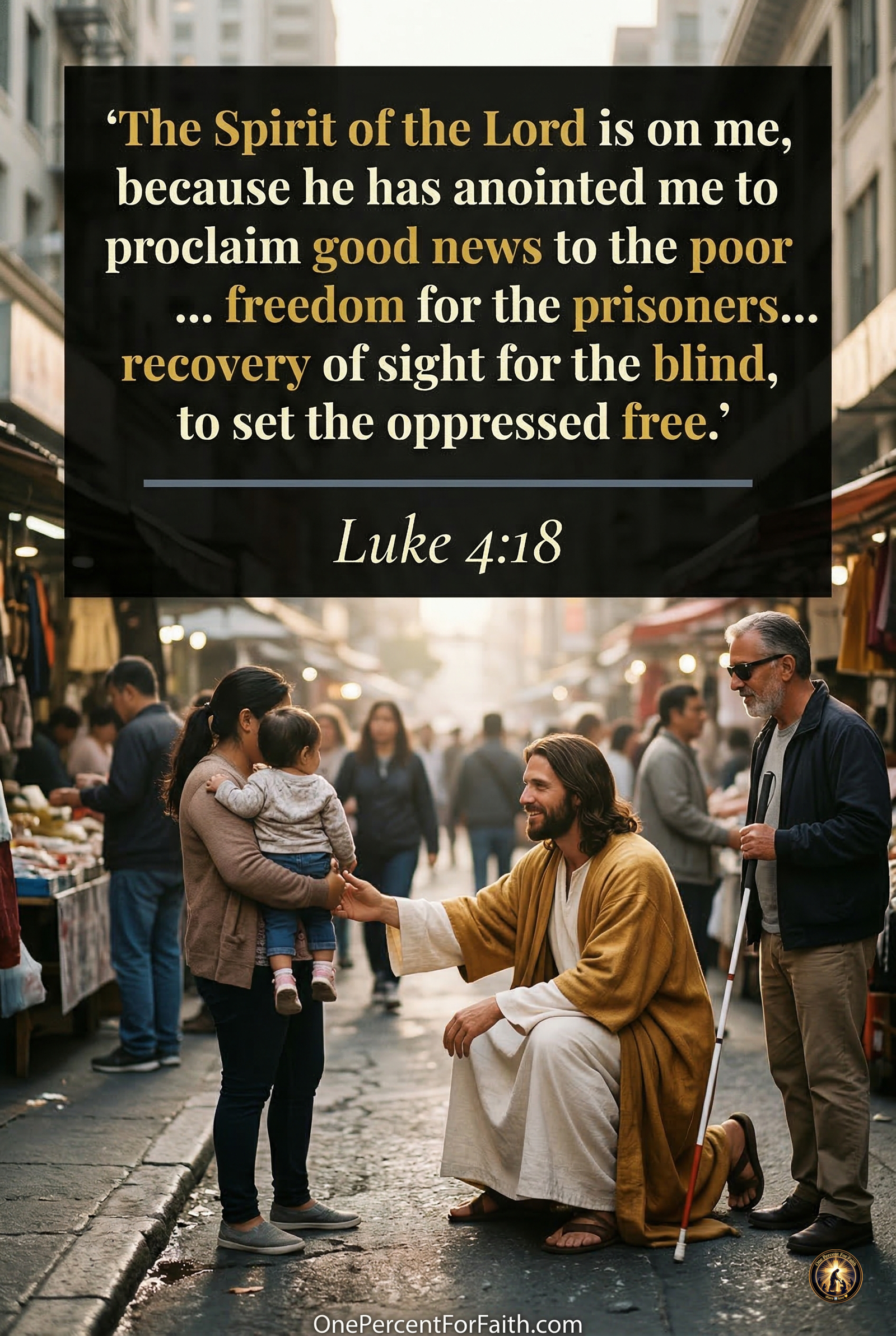
“The Spirit of the Lord is on me, because he has anointed me to proclaim good news to the poor… freedom for the prisoners… recovery of sight for the blind, to set the oppressed free.” — Luke 4:18
Jesus quoted Isaiah in his own synagogue and said: this is about me. This is the mission statement. Not abstract theology — a specific list of people he came for. The poor. The prisoner. The blind. The oppressed.
This verse doesn’t make most Christmas cards. It should. Because it tells you exactly who the baby in Bethlehem grew up to be, and what he was actually doing here. Christmas is not just a warm story about a miraculous birth. It’s the opening act of a rescue operation.
If you feel like you’re on that list — in some kind of prison, in some kind of blindness, in some kind of quiet oppression — this verse names you as someone he came specifically for. That’s not motivational language. That’s the job description he read out loud.
Where You Land After All of This
These aren’t twelve things to believe harder or perform better. They’re twelve angles on the same event — the same invasion of the ordinary by something that refuses to stay abstract. Christmas is the season where that becomes visible again, if you slow down long enough to let it.
The tension you walked in with — the tired feeling, the grief, the unanswered questions — doesn’t resolve into a neat bow by December 26th. But these words have a way of sitting with you through that. Not explaining everything. Just holding the room while you figure out what you actually believe. Maybe that’s enough for this Christmas. Not certainty. Just presence.
Frequently Asked Questions
Why do Jesus’s words feel different during Christmas compared to the rest of the year?
Because Christmas centers on the incarnation — the moment God chose to enter human experience. When you read Jesus’s words knowing that the same person chose to be born cold and poor in a borrowed stable, the weight of those words changes. They’re not coming from a distant authority. They’re coming from someone who showed up.
Are there quotes Jesus said specifically about Christmas?
Jesus wasn’t present to narrate his own birth — so the direct Christmas material comes from the prophets (Isaiah, Micah) and the Gospel accounts in Matthew, Luke, and John. Jesus’s own words — about light, rest, peace, and purpose — are Christmas-relevant because they reveal who that child became and why his arrival mattered. They complete the picture.
How do I actually use these verses when Christmas is emotionally painful?
Don’t force them to comfort you on a timeline. Some won’t land right now, and that’s honest. Start with the ones that address where you are — Luke 2:10 if you’re afraid, Matthew 11:28 if you’re exhausted, John 14:27 if circumstances feel out of control. Read one at a time, slowly. The goal isn’t information. It’s contact.
What makes Christmas Jesus quotes different from regular Christmas inspiration?
Most Christmas inspiration is about the season — the feeling of hope, warmth, belonging. These verses make specific claims about a specific person and what he came to do. They’re not mood-setters. They’re theological declarations that ask something of the reader. That’s a different category of content, and it produces a different effect when you sit with it.
Can a Bible verse actually shift something emotionally during a hard Christmas?
Not through information alone. But there’s a difference between scanning and dwelling. When you read a verse like “God with us” slowly, in a quiet moment, while you’re carrying something real — something shifts. Not because the words are magic, but because you’re allowing a different framework into the room. That’s not manipulation. That’s how any deep idea works on a person over time.
Why does grief feel louder at Christmas, and is there a verse that speaks to that specifically?
Christmas amplifies contrast. The cultural expectation of joy makes the absence of joy more visible. Most of these verses were written into exactly that atmosphere — not triumphant seasons, but desperate ones. Luke 2:19 (Mary holding things quietly in her heart) and John 14:27 (peace that doesn’t require good circumstances) were written for people living with an ache they couldn’t fully explain. You’re not the first.